Quick Answer — How Many Eggs Do Ants Lay?
You want a clear picture fast so you can act with confidence. Ant queens lay anywhere from a handful of eggs per day in small household species to hundreds or even thousands daily in high‑output species when conditions are perfect. Output swings with species, the queen’s age, nutrition, and the season. For your home, the practical takeaway is simple: if food and moisture are easy, egg production rises, brood expands, and trails intensify. Cut the conditions, and you slow the nursery.
Typical daily range at a glance
Small, common house ants may produce tens of eggs per day under modest conditions. Larger or particularly prolific species can reach the high hundreds in peak periods. Newly mated queens start modestly, then ramp up as workers grow the colony and stabilise the nest.
Why output varies by species, colony type, and season
Different ant species follow different strategies. Some invest in slow, steady broods; others explode when warmth and food align. Monogyne colonies focus output through one queen; polygyne colonies compound output across several queens. Spring warmth and strong foraging spur the biggest surges.
Queen Output vs. Overall Colony Growth
A queen’s daily count matters, but colony growth depends on the entire system: the number of queens, the depth of the worker force, and how well the nest maintains the nursery micro‑climate. Understand those levers and you understand what you’re up against.
Single‑queen (monogyne) vs multi‑queen (polygyne)
In single‑queen colonies, one queen drives all egg production. In multi‑queen colonies, each queen adds her own output, so brood volume scales quickly. That difference explains why some infestations feel slow and others feel like they double overnight.
Queen age, nutrition, and pheromonal control
Young queens often ramp faster; older queens may slow. Nutrition shapes everything: steady protein fuels larvae and future workers, while sugars power foraging. Queen pheromones stabilise the brood cycle and help allocate resources to where the colony needs them most.
Worker population and brood “carrying capacity”
Workers feed, clean, move, and regulate the brood. More workers generally mean more brood capacity because care scales with workforce size. If foraging is strong and the micro‑climate stays stable, the colony can support larger waves of eggs through to adulthood.
Factors That Drive Egg Production
You influence the colony more than you think. Temperature, moisture, and food define the ceiling for egg production. Your job is to lower that ceiling.
Temperature and humidity bands that boost laying
Warm, steady conditions paired with gentle humidity promote egg laying and speedy development. Sudden chills or dry air slow everything. That’s why under‑appliance voids and boiler cupboards feel like brood magnets.
Protein vs. carbohydrate balance
Ants use carbohydrates for energy and protein to raise brood. When protein sources abound—crumbs, pet food, scraps—larvae thrive, and the queen’s output converts into workers faster. Limit protein access and brood throughput drops.
Seasonal cycles: spring ramp‑up, summer peak, autumn taper
Spring warms nests and opens food sources, so production rises. Summer often brings the highest output as foraging booms. Autumn tapers with shorter days and cooler nights; winter slows cycles unless the nest enjoys indoor warmth.
Stressors that suppress output (disturbance, drought, toxins)
Heavy disturbance, desiccation, or the wrong kind of insecticide can push colonies to pause egg production, relocate nurseries, or split (bud) into satellites. Calm, targeted pressure is more effective than random spraying.
From Egg to Adult — The Timing That Matters
When you map timing, you stop guessing. Eggs hatch into larvae, larvae pupate, and pupae become adults. Each stage has a rhythm that you can learn to predict trail surges and plan your interventions.
Life stages: egg → larva → pupa → adult
Eggs are tiny, pale, and oval. Larvae look like small, legless grubs. Pupae often resemble little rice grains and may sit inside cocoons in some species. Adults emerge as workers, males, or potential queens.
Typical duration per stage
At comfortable indoor temperatures, eggs can hatch within a week or two, larvae often develop over a few weeks with good food, and pupae complete in another couple of weeks. Cooler conditions slow each phase; warmer, stable conditions speed them.
How timing maps to visible trail surges
Expect a jump in foraging when larvae demand protein and when new workers emerge. Those are your best windows for bait acceptance—especially slow‑acting gels along active runs.
Inside the Nursery (Brood Care & Movement)
Ant nurseries are carefully managed. Workers cluster eggs for protection, regulate heat and moisture, and relocate if conditions shift. If you expose a chamber, you’ll see frantic rescue—eggs and larvae moved first.
Clustering, grooming, and egg transport
Workers clump eggs into tidy bundles. Regular grooming keeps them clean and slightly tacky so they hold together. If threatened, workers carry whole clusters to a safer pocket.
Micro‑climate control in chambers
Nests use deeper chambers for warmth and humidity, shallower pockets for ventilation. Workers shuttle brood to maintain that balance through the day.
Relocation behaviour after disturbance
Lift a board, shift an appliance, or vacuum a crack and you may trigger relocation. Don’t chase the bundle—use the disturbance to steer foraging towards bait.
Species Snapshots (Comparative Ranges)
You don’t need to name every ant, but a rough sense of strategy helps. Some species build fast with high brood output; others move slower but persist.
Small household species vs. larger garden species
Small house ants tend to run tighter nests and can ramp quickly in kitchens and bathrooms where food and warmth meet. Larger garden species often require more space, and their brood peaks track outdoor conditions.
Fire ants and other high‑output builders
Highly prolific species can push daily egg counts into the high hundreds at peak. They build rapidly under warm, humid conditions and abundant protein. Their colonies can rebound if you cut workers but leave the nursery intact.
Carpenter/wood‑nesting ants with slower strategies
Wood‑nesting species favour structure and moisture over speed. They typically show slower brood cycles but can persist for years if the moisture issue remains. During summer, alates can appear; if you’re curious about flight timings and patterns, see where flying ants come from for a quick primer.
Estimating Egg Numbers at Home
You won’t count eggs directly. Instead, you’ll read the colony. Look at trails, traffic strength, and how often you see brood being moved. Those cues estimate egg throughput without opening walls.
Reading trail intensity and forager return rates
Watch the number of ants per minute on a main runway and how fast they return with food. Strong, steady traffic suggests a large or growing brood. If colours seem to influence where scouts linger around packaging and containers, the notes in colours that attract ants can help you interpret what you’re seeing.
Spotting nursery hubs in walls, floors, and soil
Pay close attention to warm voids, expansion gaps, and slab joints. If you see repeated rescue behaviour—workers carrying pale bundles after you disturb an area—you’ve found a nursery hub.
Clues that suggest multiple queens are present
Persistent activity across several hubs, high traffic in multiple directions, and rapid rebounds after partial control can all point to multiple queens feeding several nurseries.
Myths vs. Facts About Egg Counts
Clear away the noise and you’ll make better calls. These are the claims that waste the most time.
“Eggs equal adults soon” — why that’s misleading
Development takes time and depends on temperature and food. A large pile of eggs today does not mean a swarm tomorrow; the pipeline moves in stages.
“Killing workers reduces laying” — rebound effects
Knocking down workers with sprays can reduce traffic for a moment, but it rarely touches the queen. If food remains easy, the colony compensates, and you get a rebound.
“All species lay similar numbers” — not even close
Species, colony structure, and environment change everything. That’s why a one‑size‑fits‑all plan disappoints.
What Big Egg Numbers Mean for Control
Big brood means big appetite. You win by shaping the environment and feeding the colony a slow answer it can’t detect.
Targeting food streams during brood build‑ups
When larvae demand protein and trails spike, place protein‑leaning or balanced baits near active routes. Keep placements small, frequent, and close to where ants pause.
Why slow‑acting baits beat contact sprays near nurseries
Slow baits travel through the workforce and into the nursery chain. Sprays splinter colonies and trigger budding, leaving the queen untouched and the problem larger.
Scheduling interventions with brood cycles
Bait hard when you see larval demand and new worker surges. Maintain placements for several days, refresh as they dehydrate, and only seal once traffic collapses.
Monitoring Without Guesswork
Treat ant work like a small project. A notebook and simple checkpoints keep you honest and show you what’s changing.
Simple traffic checkpoints and log sheets
Mark two or three runway points and count passes for 60 seconds. Log morning and evening for a week. You’ll see patterns and know if bait is landing.
Using temperature and season notes to predict surges
Note indoor temperatures, weather swings, and heating schedules. Warm spells often precede brood movement and foraging spikes.
When to rotate bait types (sweet vs. protein)
If uptake stalls after a few days, change bait type and move placements several centimetres along the route. Offer choice and see what wins.
Prevention That Lowers Future Egg Output
You reduce egg production by cutting what sustains it. That means drying things out, closing easy paths, and removing simple calories.
Deny moisture: fix leaks and ventilate voids
Repair weeps under sinks, insulate cold pipes, and run extraction where steam lingers. Drier voids equal slower nurseries.
Seal access points and remove bridging vegetation
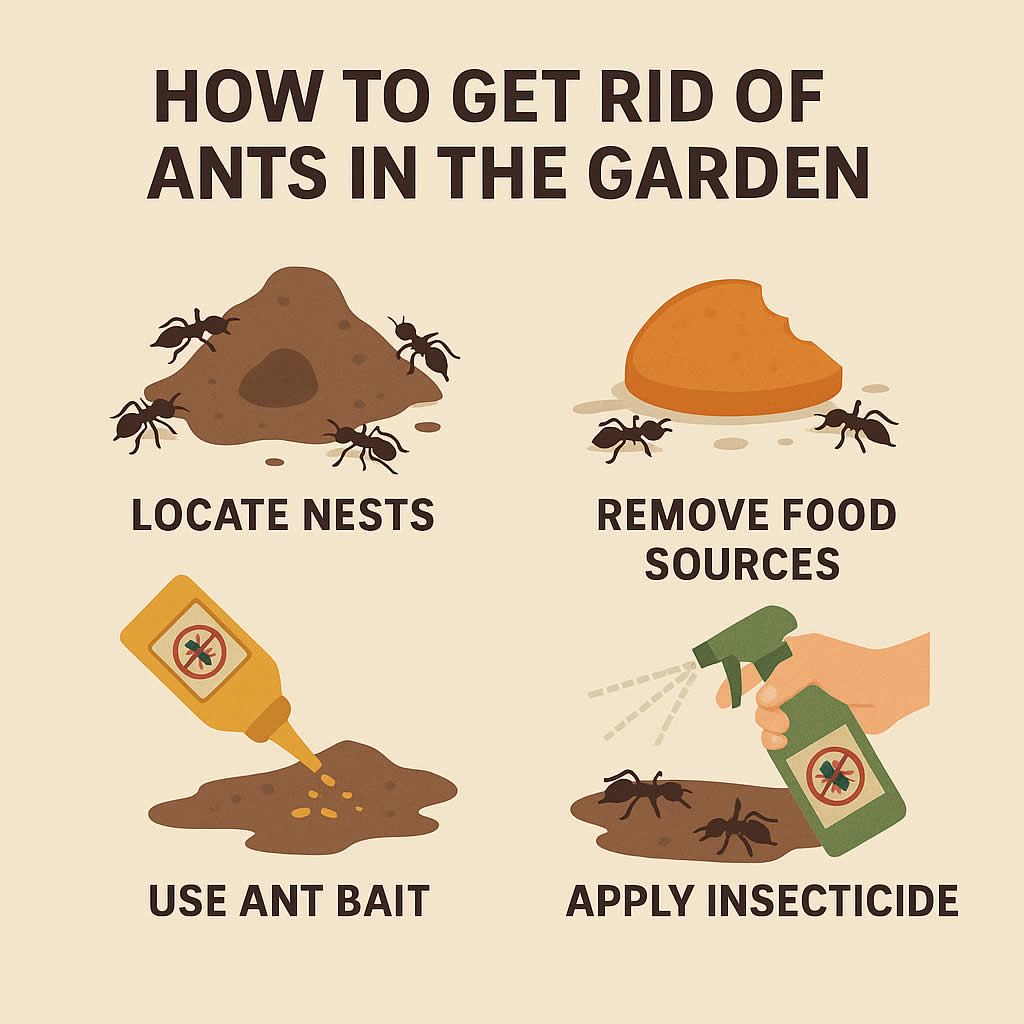
Seal at skirting lines, pipe penetrations, and thresholds. Outside, trim branches that touch sills and lift debris against foundations. If your beds and borders are bursting with activity, follow this step‑by‑step to clear ants from the garden and reduce pressure on the house.
Food hygiene: airtight storage, nightly wipe‑downs
Close cereal, sugar, and pet food. Clear bowls overnight. Wipe counters and plinth lines before bed so scouts don’t get rewarded.
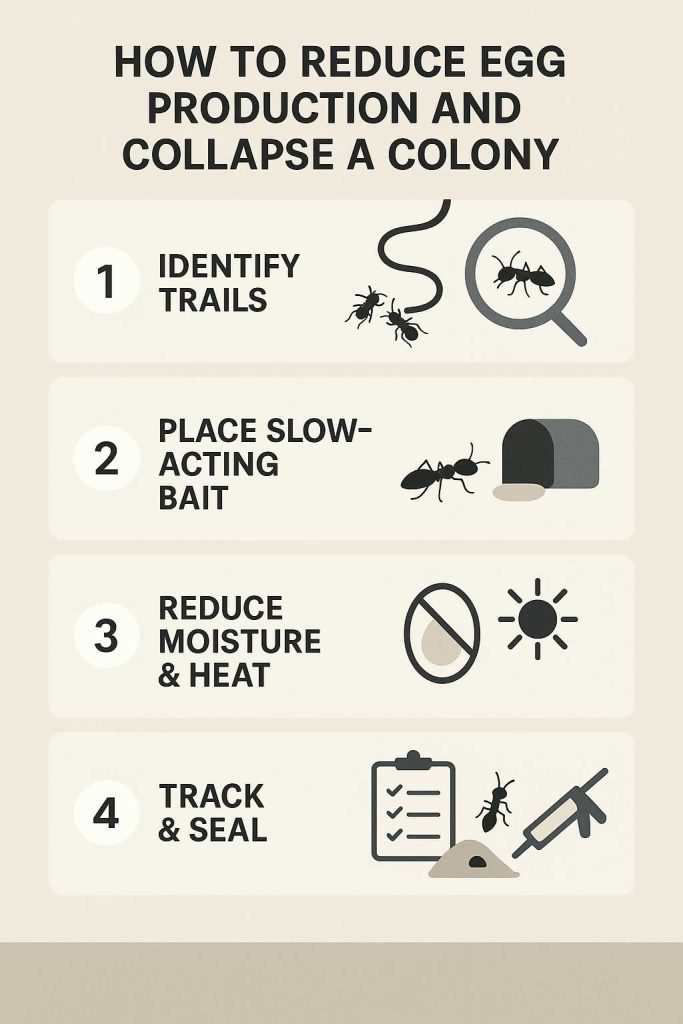
How To Guide — Reduce Egg Production And Collapse A Colony
This is the short, do‑this‑now plan. Follow it step by step and you’ll make steady progress without chaos.
Identify species and main trails
Watch where lines start, where they merge, and where they disappear into cracks. Species ID helps, but trail mapping is the priority.
Place slow‑acting bait along active routes (not on eggs)
Use small dots where ants pause—edge lines, corners, beneath appliances. Keep it accessible and undisturbed.
Reduce moisture and heat sources near suspected nurseries
Open vents, run extraction, and fix small leaks. Cooler, drier voids slow the pipeline from egg to worker.
Track results, refresh bait, and only then seal entry points
Count traffic at the same checkpoints daily. Refresh bait as needed. Once counts drop and stay down, seal the routes.
Reassess after 7–14 days; rotate bait if traffic rebounds
If activity returns, switch bait type and shift placements. Look for missed hubs and repeat the process.
Checklist — Use This During Inspection And Treatment
Keep this list with your torch and a notebook. Tick items as you go so you don’t miss crucial steps.
Colony type ✔︎ Season ✔︎ Forage strength ✔︎ Brood signs ✔︎ Micro‑climate ✔︎
Entry points mapped and photographed
Bait placements logged with date/time
Moisture issues noted and scheduled for repair
Follow‑up dates set; outcome recorded
When To Call a Professional
There’s a sensible point to hand over. Recognise it early and you save time, frustration, and money.
Red flags that DIY won’t keep up with brood growth
Multiple nursery hubs you can’t reach, rapid rebounds after bait cycles, or ongoing structural moisture suggest pro‑level complexity.
What a pro inspection covers (species ID, nest mapping, integrated plan)
Expect a methodical survey that identifies species, maps nests and trails, and sets an integrated plan—baiting, dusting in voids, moisture fixes, and sealing order.
Quick Reference (On‑Site)
Use this to steer decisions in the moment while you’re inspecting.
Output range by species ✔︎ Development timing ✔︎ Best bait phase ✔︎ Sealing order ✔︎
- Output range by species: Small house ants = lower daily counts; prolific warm‑loving species = higher daily counts, especially in summer.
- Development timing: Eggs→larvae→pupae→adults lengthens in cool rooms, shortens in warm, stable voids. If you notice winged forms seasonally and want the context, revisit where flying ants come from.
- Best bait phase: During larval demand and new worker emergence; keep placements fresh and distributed. For outdoor pressure, combine baiting with steps that clear ants from the garden.
- Sealing order: Bait first, confirm decline, then seal. Leave a path out; don’t trap a nest inside walls.
Final Thoughts
You don’t need exact numbers to win—you need the pattern. When you understand why egg output rises and which conditions feed it, you can remove the fuel, feed the colony a slow solution, and lock the door behind them. Stay steady, track what changes, and work with the brood cycle rather than against it. That’s how you shrink a problem that once felt unstoppable into one quiet, tidy result you barely think about again.