When bed bugs settle into wooden bed frames, the experience can feel deeply unsettling because the insects take advantage of every tiny gap around joints, slats and decorative detailing. You may notice activity near your mattress first, but wooden structures often become the main harbourage point when the infestation grows. Understanding how bed bugs behave around timber helps you act calmly and confidently, especially when mattresses are involved.
As you look closer at the frame, you begin to see how the insects use cracks, screw holes and slat edges as safe hiding places. This can feel overwhelming at first, yet wooden surfaces respond very well to heat, cleaning and patient step-by-step treatment. Once you understand the process, you regain control and prevent the problem spreading to your mattress or surrounding furniture.
Why Bed Bugs Hide in Wooden Furniture
Bed bugs in wooden bed frames are easy to miss because wood naturally contains tiny imperfections, grooves and joins that create ideal spaces for insects to hide. Bed bugs in wooden structures prefer these dark, narrow recesses because they feel protected from movement and light. Even if your mattress shows bites or spots, the actual activity may be happening deep within the frame.
As bed bugs in wooden frames multiply, they spread into slat ends, headboard joints, screw recesses and underside fittings. You may notice a faint sweet smell, small dark dots or pale shed skins long before you see live insects. Because these signs are subtle, examining your mattress and frame together provides a clearer picture of what is happening.
Where Bed Bugs Gather in Wooden Bed Frames
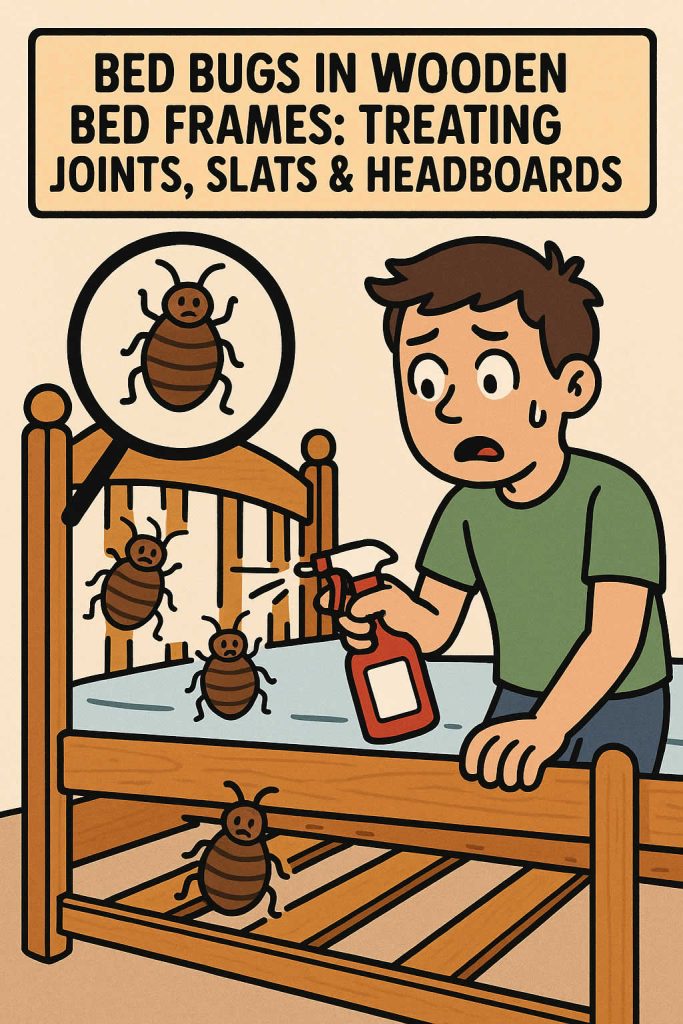
Bed bugs hide in wooden bed frames by slipping into the smallest places. They prefer areas close to your mattress because that keeps them near a food source while staying hidden during the day. You will often find them tucked behind the headboard, pressed inside tiny cracks, or gathered near screw holes.
The more gaps your frame contains, the more potential hiding points bed bugs can create. You may also find activity on the wooden slats that support your mattress, especially at the ends where the slats meet the frame.
- Cracks along the grain of the wood
- Screw holes, joints and brackets
- Gaps behind the headboard
- Underside slats and slat supports
- Decorative grooves or carved areas
How Bed Bugs Spread Between Frames and Mattresses
Bed bugs spread between wooden frames and mattresses by moving along seams, edges and slats during the night. They walk from their hiding places in the frame to the mattress surface when you sleep, then return to the wood at dawn. This regular movement means you may find spotting on the mattress even when the main infestation sits inside the frame.
Because mattresses provide warmth, soft fabric and a stable resting surface, the insects naturally gravitate towards them. However, the frame remains their preferred long-term hiding place because wood offers more secure shelter.
Preparing Wooden Bed Frames for Treatment
Preparing the bed frame for cleaning involves removing the mattress slowly, placing it against a wall, and accessing every slat and joint. Move gently to avoid dislodging insects around the room. Soft furnishings such as blankets or toppers should be bagged immediately for high-heat washing.
A bright light makes inspection clearer, especially when checking cracks or screw holes. Patience is essential here; the calmer you work, the more thoroughly you will identify each harbourage.
- Remove the mattress and inspect all its seams
- Bag soft items ready for heat treatment
- Turn the frame carefully if possible
- Inspect the underside and slat connections
- Check every joint and decorative groove
Safe Methods for Treating Bed Bugs in Wood
Treating bed bugs in wooden frames requires careful, steady work. Wood reacts well to heat, but extreme temperatures or moisture can cause warping. A balanced approach using vacuuming, warm air and insecticides formulated for household surfaces gives the best results.
Start by vacuuming the entire frame with a crevice attachment. Keep the nozzle pressed against cracks, slat edges and joints. Move slowly and deliberately so you capture adults, nymphs and loose eggs.
Warm air encourages insects to emerge from deep recesses. A hairdryer on a warm—not hot—setting helps loosen their grip without harming the wood. Do not use excessive steam, as this can cause swelling or cracking.
If you apply insecticides, use light controlled sprays designed for wooden furniture. Always test a small hidden patch first and avoid saturating the surface.
Why Multiple Treatments Are Needed
Wooden frames require repeat treatments because bed bugs lay eggs deep inside cracks that are difficult to reach in one attempt. Even after thorough work, new nymphs may hatch within ten to fourteen days. Staying patient and repeating each step ensures long-term success.
Your confidence grows each time you revisit the frame because you know exactly where to check. Repeating the process allows you to interrupt the life cycle before the insects spread back into your mattress.
Heat Treatment for Wooden Bed Frames
Heat treatments are highly effective for wooden structures, but you must apply heat gradually. Professionals use controlled heat systems that raise the temperature evenly, ensuring every harbourage point receives enough warmth without damaging the frame.
If you treat the frame yourself, focus on warm, indirect air blown slowly into cracks. Keep the device moving to avoid over-heating the wood. Allow the frame to cool naturally in a ventilated room.
- Use warm air rather than intense heat
- Protect fragile carved areas
- Avoid high-moisture steam
- Work gently and steadily across each section
Treating Mattresses to Stop Reinfestation
Treating the mattress at the same time protects you from bed bugs returning to the frame. Bed bugs often hide inside mattress seams, handles or stitching when the infestation becomes larger. Working on the mattress and frame together ensures you remove all sources.
Washable items such as covers or protectors should be laundered at 60°C. The mattress itself should be vacuumed thoroughly and inspected along every seam. Using a certified encasement can protect it from future activity and stop insects hiding inside the fabric.
Cleaning the Bedroom to Prevent Bed Bug Spread
Cleaning the surrounding area helps prevent bed bugs from forming new harbourage points. Wooden frames sit close to floors, skirting boards and nearby furniture, making these areas vulnerable to spreading insects.
Vacuum floors carefully, especially along edges. Curtains, rugs and bedside furniture may need attention if you’ve seen activity nearby. Treating everything in one focused effort helps you feel in control.
- Vacuum carpets and floor edges
• Check bedside tables for small cracks
• Wash nearby fabrics at high heat
• Seal items that cannot be washed
Preventing Bed Bugs Returning to Bed Frames
Preventing bed bugs from returning to wooden frames involves building simple routines. The more consistently you check seams, joints and your mattress, the earlier you will detect any issue. Bed bugs dislike disruption, so your inspections naturally reduce the chance of reinfestation.
You may feel more confident once the cleaning becomes familiar. Regular vacuuming, reducing clutter and standing the mattress upright occasionally helps you maintain an environment bed bugs struggle to colonise.
- Inspect cracks weekly
• Vacuum slats and joints often
• Keep the area around the bed clear
• Use protective mattress encasements
• Avoid bringing in second-hand furniture without checking it first
Managing Severe Bed Bug Infestations
Severe bed bug infestations inside wooden frames may feel overwhelming, especially when insects spread into floorboards, skirting and surrounding furniture. Calling a professional gives you peace of mind and ensures deep harbourages are treated correctly.
Professionals use advanced heat systems, targeted insecticides and specialist tools that reach into the narrowest joints. They also inspect the mattress and surrounding rooms to prevent further spread.
Asking for help shows that you’re taking strong, proactive steps to protect your home. It is not a failure — it’s a confident choice.
Restoring Comfort After Treatment
Once treatment is complete and your wooden bed frame feels safe again, you may notice a renewed sense of calm in the bedroom. Your mattress feels cleaner, the room feels fresher, and you regain confidence using the space.
Keeping a simple weekly routine helps maintain this comfort. A few minutes of inspection and cleaning can prevent future issues and protect both the frame and your mattress.
Step-by-Step Bed Bug Removal Guide
- Inspect all joints with a bright light
- Vacuum cracks, slats and screw holes slowly
- Treat mattress seams and handles carefully
- Apply warm air to draw insects out of wood
- Use furniture-safe insecticides sparingly
- Repeat treatment after ten to fourteen days
- Check surrounding rooms for early activity
Our Final Say!
Bed bugs in wooden bed frames can be removed successfully when you approach the task steadily and thoroughly. By treating the frame, slats, headboard and mattress together, you disrupt the insects’ routine and eliminate their hiding places. With careful cleaning, warm air, and repeated inspections, your bedroom becomes a calmer, safer and more comfortable place once again.