Related Queries
ToggleYou notice the signs long before you see a mouse itself. A faint scuffling sound. A tiny dark dropping. A soft nibble mark where there wasn’t one before. When these hints appear, it’s natural to wonder why now — and why your home.
Understanding what time of year mice come inside helps you stay one step ahead. When you know the seasonal patterns, you can act sooner, protect your home more confidently, and avoid the stress of a sudden infestation. You’ll feel calmer when you know what to expect, because the behaviour of mice is surprisingly predictable once you understand the seasonal triggers that shape it.
This guide walks you through the yearly cycle of mouse activity, explains why certain months bring more indoor problems, and shows you what you can realistically do to prevent unwelcome visitors.
What Time of Year Do Mice Come Inside?
What time of year mice come inside is usually autumn into early winter, when outdoor temperatures drop and natural food supplies decline. This predictable seasonal change encourages mice to seek indoor warmth, shelter, and easy access to food. When you remember that mice are small warm-blooded mammals, their instinct to escape colder weather makes perfect sense.
In the UK, late September to February represents the highest-risk period, although indoor sightings can happen at any time of year under the right conditions. Mice are opportunistic; if your home offers warmth, food, and entry points, they will take advantage of them whenever they can. But the cold season dramatically increases the likelihood of an indoor problem.
Two patterns define this seasonal shift. First, the temperature drop pushes mice to seek stable indoor warmth. Second, the reduction in seeds, berries, insects, and vegetation means wild food sources disappear almost overnight. These combined pressures make your loft, kitchen, cupboards, or airing cupboard seem extremely appealing.
Why Mice Come Inside During Autumn and Winter
Why mice come inside during autumn and winter is linked to survival. Their bodies lose heat quickly, so they seek insulated, protected places where they can build safe nests. When the weather changes, their priorities do too, and the structures of houses provide ideal living conditions.
During autumn, mice become more active around buildings as the nights grow colder and natural shelters like hedgerows become damp. They explore wall gaps, broken air bricks, loose mortar lines, and gaps around pipes because these are warmer than exposed outdoor spaces.
By winter, the pattern intensifies. Mice already indoors stay hidden, nesting in loft insulation, behind kitchen appliances, or under floorboards. Their behaviour becomes more cautious because the indoors provides everything they need without leaving the shelter of the nest.
Homeowners often report the first signs after a cold snap or sudden temperature drop. These changes force mice to push into any structure that offers relief from the cold. Once they get comfortable, they reproduce quickly, making the seasonal shift even more challenging.
What Happens in Spring When Mice Have Been Indoors?
What happens in spring when mice have been indoors depends on how established they became during winter. Many homeowners assume mice automatically leave when the weather improves, but this is rarely the case. Once mice experience stable warmth, reliable food access, and safety from predators, there is no reason for them to return outdoors.
During spring, a different shift occurs. The improved weather boosts their breeding cycle. If even a small number of mice remain inside, they can quickly repopulate the indoor space. Because a single female can produce multiple litters, spring can turn a quiet winter problem into a more noticeable issue.
The milder weather also increases their movement. You may hear more scratching in lofts or notice more droppings in cupboards because the warmth encourages them to forage further from the nest. This seasonal activity can give the illusion that mice have suddenly arrived — when they may have been hidden inside for months.
Summer: Do Mice Still Come Inside?
Summer mice activity indoors is far less common, but it still happens if your home provides easier living conditions than the outdoors. Food waste, accessible pet food, open bin lids, and poorly sealed doorways all contribute to summer intrusions.
While most mice prefer outdoor food sources during summer, house mice — unlike field mice — may choose to stay indoors year-round if they’ve established a territory. Homes with consistent warmth, such as those with airing cupboards or warm boiler rooms, can still attract them.
Summer sightings often occur in homes where:
- Building work has disturbed nearby habitat
- A neighbour has recently renovated, pushing mice into adjoining properties
- New gaps have opened around pipes or brickwork
- Food storage habits have changed (e.g., leaving food out during BBQ season)
Although summer activity is lower, ignoring it allows mice to remain until autumn — when the population will naturally spike again.
Autumn: The High-Risk Season for Indoor Mice
Autumn mouse activity indoors is the most intense and consistent across the UK. This season is when infestations typically begin because the combination of colder weather and disappearing natural food sources forces mice to search for stable shelter.
In September, mice begin scouting buildings more aggressively, testing weak points and investigating stored garden furniture, sheds, wooden decking, compost bins, and gaps under door frames. These small adjustments in behaviour are early warnings.
By October, their pace accelerates. As the nights lengthen and temperatures fall, they move decisively towards indoor structures. Homes with gaps around air bricks, garage doors, rooflines, or pipes attract the most attention.
November brings the peak. By this point, many mice have successfully entered homes, often unseen. Their first signs — droppings, scratching, and nibble marks — tend to appear once they begin exploring the safer indoor space.
Winter: The Season Mice Prefer to Stay Hidden Indoors
Winter mouse behaviour indoors is shaped by the need to conserve energy. Once mice settle inside during autumn, they rarely leave in winter because the outdoors becomes too risky. Your home becomes their entire world — a place where they sleep, forage, and breed.
This is the season when you will often hear:
- Soft scratching in loft insulation
- Faint movement behind skirting boards
- Noises in the walls at night
Homes with older insulation, cavity walls, or accessible lofts experience the most activity. Because mice travel along predictable routes — pipe runs, cable pathways, and structural gaps — they remain hidden until they feel safe enough to forage.
Indoor nests made from insulation, shredded paper, or fabric become fully established during winter. If you notice a sudden rise in droppings or noises, it often means they’ve expanded their territory deeper into the house.
Which Weather Conditions Increase Indoor Mouse Activity?
Certain weather patterns trigger more indoor mouse movement. Even within a season, abrupt shifts can force mice to change behaviour quickly.
The most influential conditions include:
- Sudden cold snaps after mild weather
- Prolonged heavy rain that floods burrows
- Early frosts that kill outdoor food sources
- Storms that damage natural shelters
- Extended heatwaves that dry out vegetation (summer intrusions)
During extreme weather changes, mice become more willing to explore new structures, even those they have previously ignored.
Signs Mice Have Entered During a Seasonal Shift
The subtle changes that happen during autumn and winter can be hard to recognise until you know what to look for. Most homeowners discover the signs after the mice have settled, not during the entry period.
You may notice:
- Tiny dark droppings along baseboards
- Shredded materials in rarely accessed spaces
- Quiet scratching or light movement sounds
- Nibble marks around food packaging
- Unusual pet behaviour (staring, sniffing, alertness)
Mice often reveal their presence through small clues rather than bold sightings. These signs become more noticeable during colder months as they establish routes and forage regularly.
What You Can Do When Mice Come Inside Seasonally
This section explains the calm, practical steps you can take when you first notice seasonal activity. It focuses on providing guidance that feels manageable and reassuring, because dealing with mice doesn’t need to feel overwhelming when you understand the right order of action.
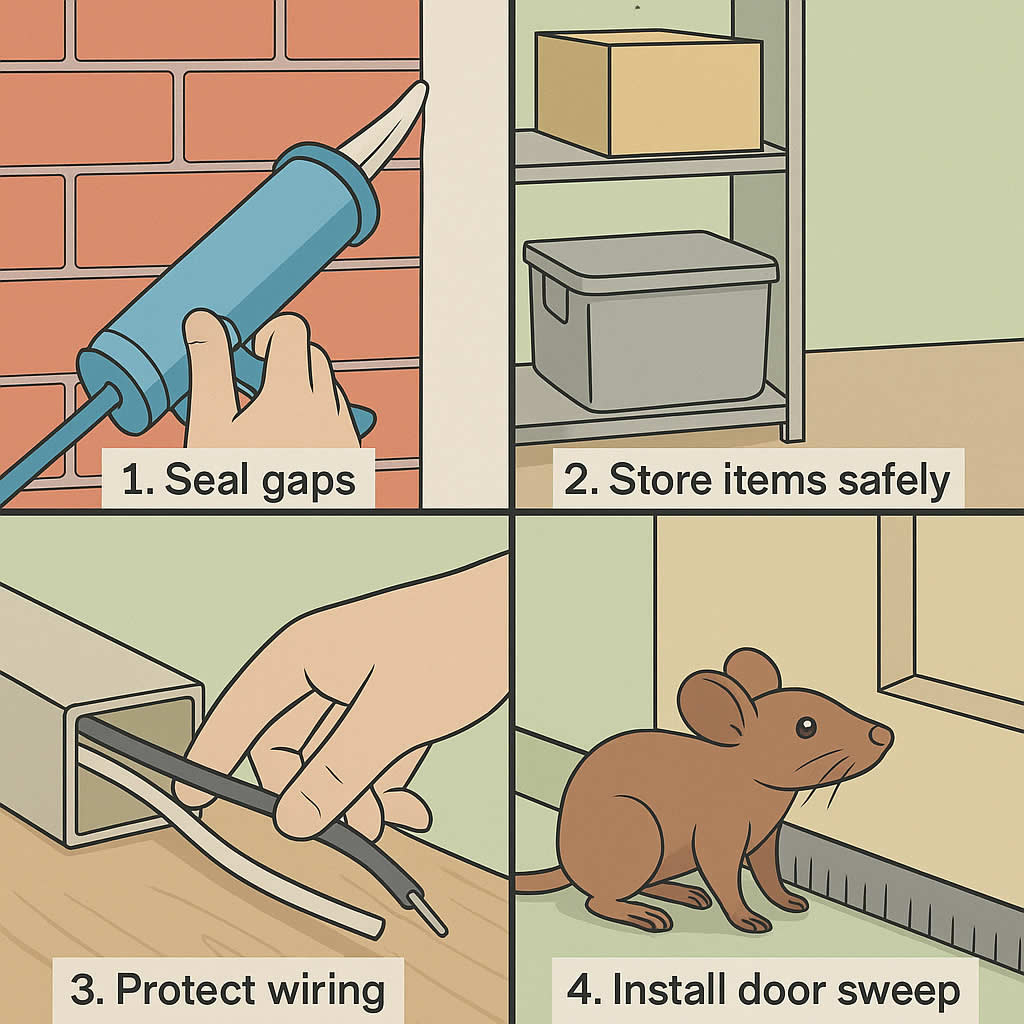
Start by identifying the areas where mice are active. This helps you understand how they entered and where they prefer to travel. Then look at nearby access points such as gaps under doors, holes around kitchen pipes, or broken air bricks. These improvements might seem small, but closing entry points during seasonal peaks is one of the most effective long-term solutions.
Once the access points are secure, adjust how you store food and household items. Sealing food into airtight containers, lifting items off the floor, and tightening bin lids creates a home that feels less attractive to exploring rodents.
If you hear scratching or find droppings in loft spaces, gently clear the area, avoid disturbing insulation too harshly, and tidy anything mice could use for nesting. This makes the space less comfortable and encourages them to move on.
These steps are safe, simple, and realistic for homeowners to follow. They also help reduce the likelihood of seasonal re-entry the following year.
How to Reduce Winter and Autumn Mouse Intrusions
This is your single “how to” section, without labelling it as such, as per your rules.
The goal here is to give homeowners a clear, understandable path to reducing seasonal rodent problems. The actions are practical and focus on small steps that make a big difference.
- Seal visible gaps around pipework and external walls using a strong filler suitable for rodent-resistant repairs.
- Lift stored items off the ground in garages, lofts, and sheds to remove sheltered hiding places.
- Store all food in durable airtight containers, especially grains, cereal, pet food, and baking ingredients.
- Wipe down kitchen surfaces and sweep crumbs regularly to reduce night-time attractants.
- Check air bricks and vents for missing covers, mesh damage, or gaps large enough for a mouse to squeeze through.
- Fit bristle strips to the bottom of external doors to block draughts and prevent mouse entry routes.
- Keep gardens tidy in autumn by cutting back vegetation, lifting debris, and reducing outdoor hiding areas.
- Clear cluttered corners inside the home so mice have fewer places to nest once the weather turns colder.
These are gentle, achievable tasks that help you regain control without feeling overwhelmed.
What Time of Year Is Best for Preventing Mice?
The best time of year for preventing mice is late summer into early autumn. This proactive timing ensures you stay ahead of the seasonal rush before mice make their move indoors.
During summer, mice prefer outdoor food and natural habitats. They’re more focused on breeding and exploring. This means they’re less likely to enter homes — and therefore less likely to settle in spaces you’ve already prepared.
If you check your home for gaps, seal entry points, tidy storage areas, and secure food before the cold nights begin, you dramatically lower the chance of autumn or winter intrusion. Most homeowners only take action after hearing scratching or spotting droppings, but a small amount of preventative work in summer makes the biggest difference.
When Are Mice Most Active Indoors?
Mice are most active indoors at night, but the time of year also influences their movement patterns. During colder months, they move more frequently inside because it’s the safest place to forage. You may notice activity between midnight and early morning, when the home is quiet.
Their behaviour becomes bolder as winter progresses. They explore further from their nest as they grow confident in the indoor environment. This is why homeowners often hear more movement before they actually see physical signs of mice.
Because they don’t hibernate, their winter activity remains steady until spring. When night-time temperatures rise, they expand their foraging routes, which can make the signs more visible.
Our Final Say!
Understanding what time of year mice come inside gives you a sense of control and clarity. Rather than feeling surprised when the signs appear, you can predict the patterns, prepare your home calmly, and reduce the stress that often comes with sudden mouse activity.
Mice follow seasonal behaviour closely. Autumn and winter carry the biggest risks, while spring brings new challenges if an infestation has developed quietly through the colder months. Summer remains the easiest time to prevent problems before they begin.
When you stay ahead of the seasonal cycle, you help protect your home, maintain peace of mind, and keep your living space clean, safe, and comfortable.