Related Queries
ToggleYou’ve probably heard it from a neighbour, seen it on social, or read it on a home-hacks site: “Just put peppermint oil down and the mice will go.” It sounds perfect, doesn’t it? No traps, no poison, no upsetting the kids or pets. Just a fresh, minty kitchen and no rodents.
But does it actually work in real homes, or is it one of those tricks that helps a bit, in some places, for a short time, and then the mice just carry on? Like the article on The Kitchn, let’s look at peppermint oil as a nice idea, but not a full solution.
Why People Love the Peppermint Oil Trick
It smells clean
Peppermint oil makes a kitchen or utility room smell instantly fresher. Unlike chemical sprays, it doesn’t feel harsh or toxic. That’s a big part of the appeal.
It feels safer around families and pets
Most people don’t want bait blocks on the floor when they’ve got toddlers or dogs. Cotton wool with a few drops of oil feels gentler and easier to live with.
It’s cheap and easy
You can pick up a bottle of peppermint oil almost anywhere, and you don’t need any special equipment to use it. For a “let me just try something today” approach, it’s brilliant.
What Mice Actually Rely On
Mice lead with their noses
Mice use scent to find food, to follow the same safe paths, and to identify places where other mice have already been. If you interfere with those smells, you can make that route less attractive. That’s the whole theory behind peppermint oil.
Strong, unfamiliar smells can put them off
A sharp, menthol, minty scent cuts through the normal kitchen smells – crumbs, bin, pet food, warm appliances. When the smell gets too strong, a mouse may choose another way round.
But hunger beats scent
If a mouse knows there’s food in the cupboard or behind the fridge, it can push through the smell. That’s why you should use peppermint, but not stop there.
What Real-World Tests Tend to Show
Peppermint can make them avoid a treated spot
When people put peppermint on cotton balls and tuck them into specific areas – the corner by the cooker, under the sink, near a pipe entry – they often notice the activity there slows down. That means the smell is doing something.
It rarely makes resident mice move out
If mice are already living in your walls or loft, they won’t suddenly abandon the property because the kitchen smells minty. You’ve improved one area, but you haven’t fixed the whole situation.
The effect fades quickly
Essential oils evaporate. Once you can’t smell it, the mouse can’t either. That means you have to renew it often – every couple of days in some spots.
How to Use Peppermint Oil the Right Way
Start with a clean area
Wipe worktops, sweep or hoover the floor, and clean under appliances. If the room smells of food, the mouse will fight the peppermint to get to it. If the room smells neutral, the peppermint stands out more.
Make a strong scent
Use neat peppermint oil on cotton balls, makeup pads, or bits of cloth. You want them damp, not dripping. Place them where you’ve seen droppings, smear marks, or where you know there’s a gap.
Target the routes, not the whole room
Mice run along edges – skirting boards, behind the cooker, around pipes, next to the bin. Put your scented pads there. You’re trying to interrupt the exact run, not perfume the air.
Refresh often
Every 2–3 days is realistic. More if it’s warm. If you walk in and can’t smell mint, it’s time to re-do it.
Keep it off food surfaces
It’s a natural oil but it’s still strong. Keep it away from food prep areas and from places where pets eat.
Where Peppermint Oil Works Best
Light mouse activity
If you’ve spotted one mouse or a few droppings in the week, peppermint can be enough to tell that mouse not this way.
Entry points
Around pipe penetrations, back doors, garage doors, and boiler cupboards – anywhere you suspect they’re slipping in – peppermint is very handy.
Small, contained spaces
Cupboards, under-sink voids, sheds, pantries, holiday lets. It’s easier to hold a smell in a small space than in an open-plan kitchen.
Where Peppermint Oil Won’t Be Enough
Established nests
If you can hear scratching every night, or you’re finding fresh droppings daily, you need more than scent. At that stage, mice already feel safe and know where the food is.
Multiple food sources
If there’s pet food out, bird seed in the utility, snacks in low cupboards, and an unsealed bin, the reward is higher than the risk. Mice will push through it.
Big, draughty rooms
In a kitchen-diner with doors opening all day, your scent will vanish. You can still use peppermint, but you need proofing and maybe traps to back it up.
Make It Part of a Bigger Mouse Plan
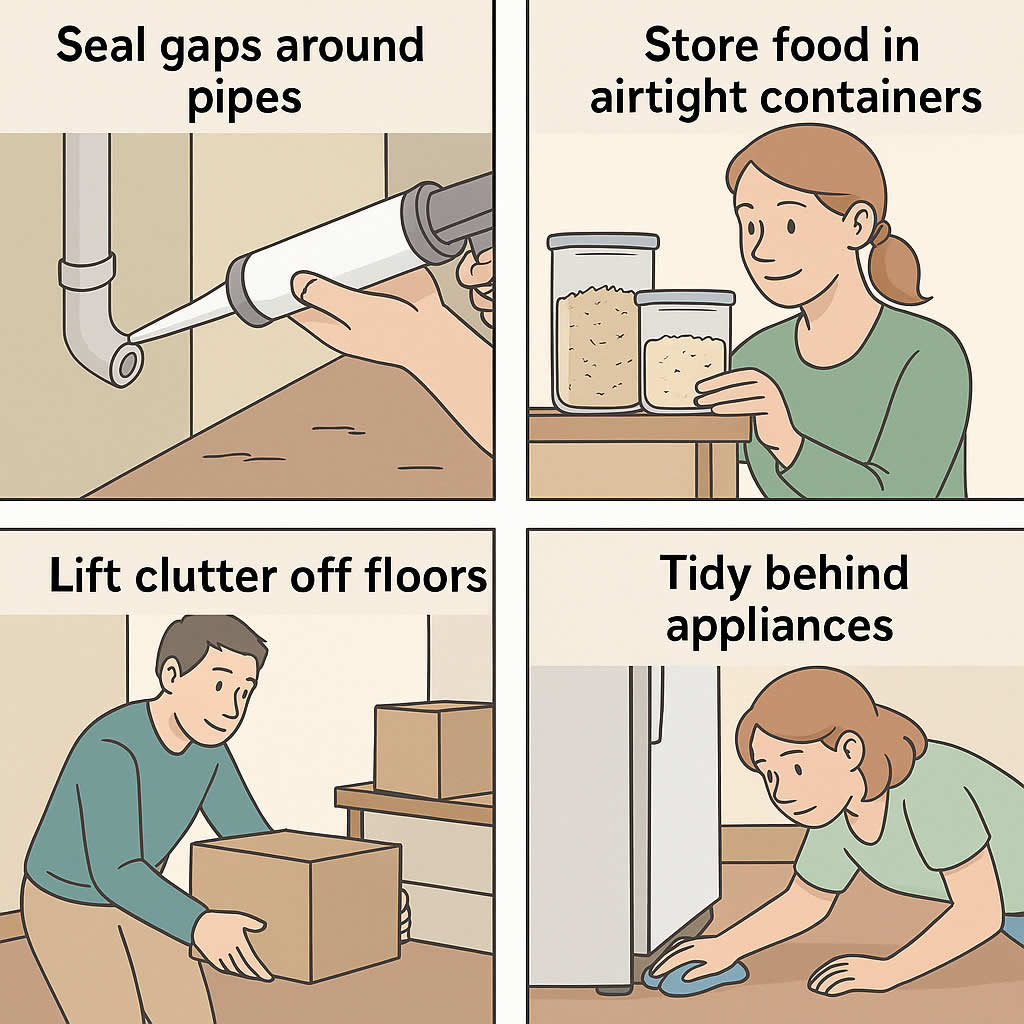
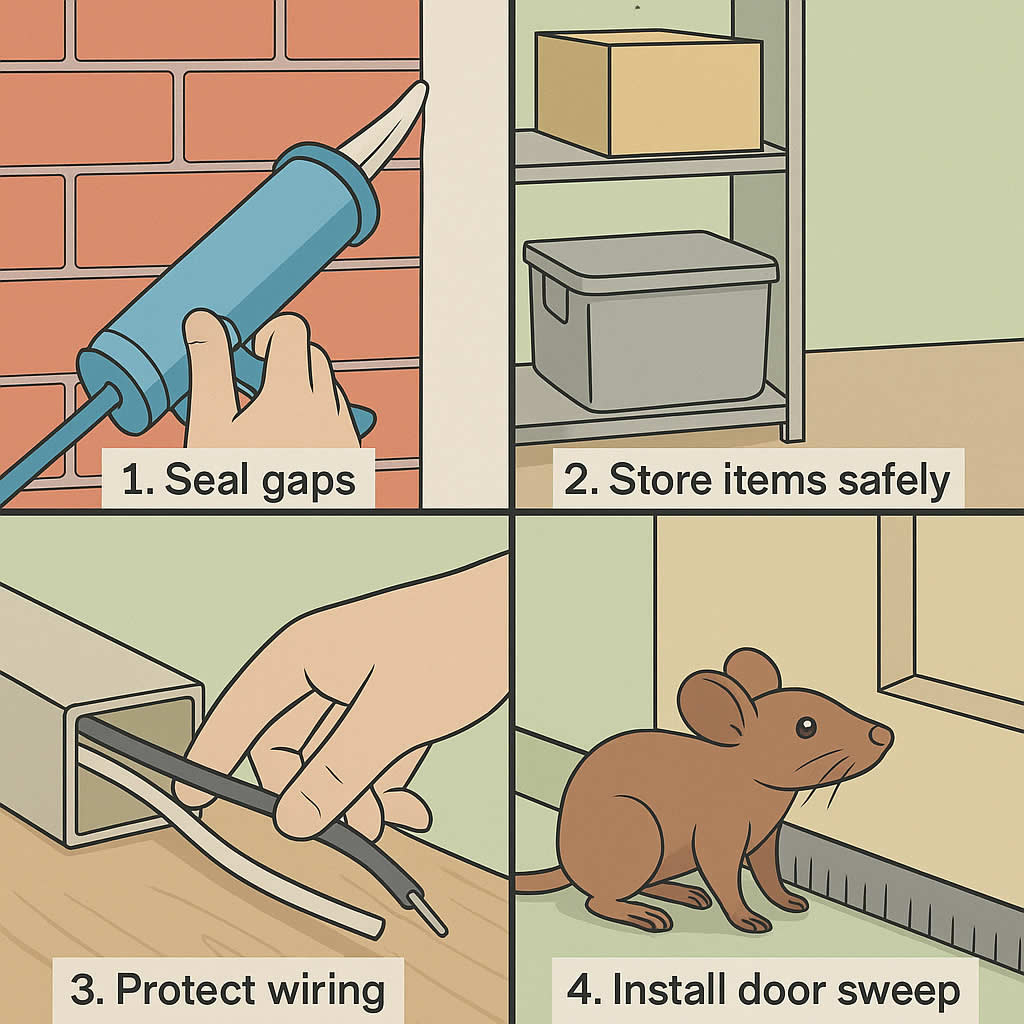
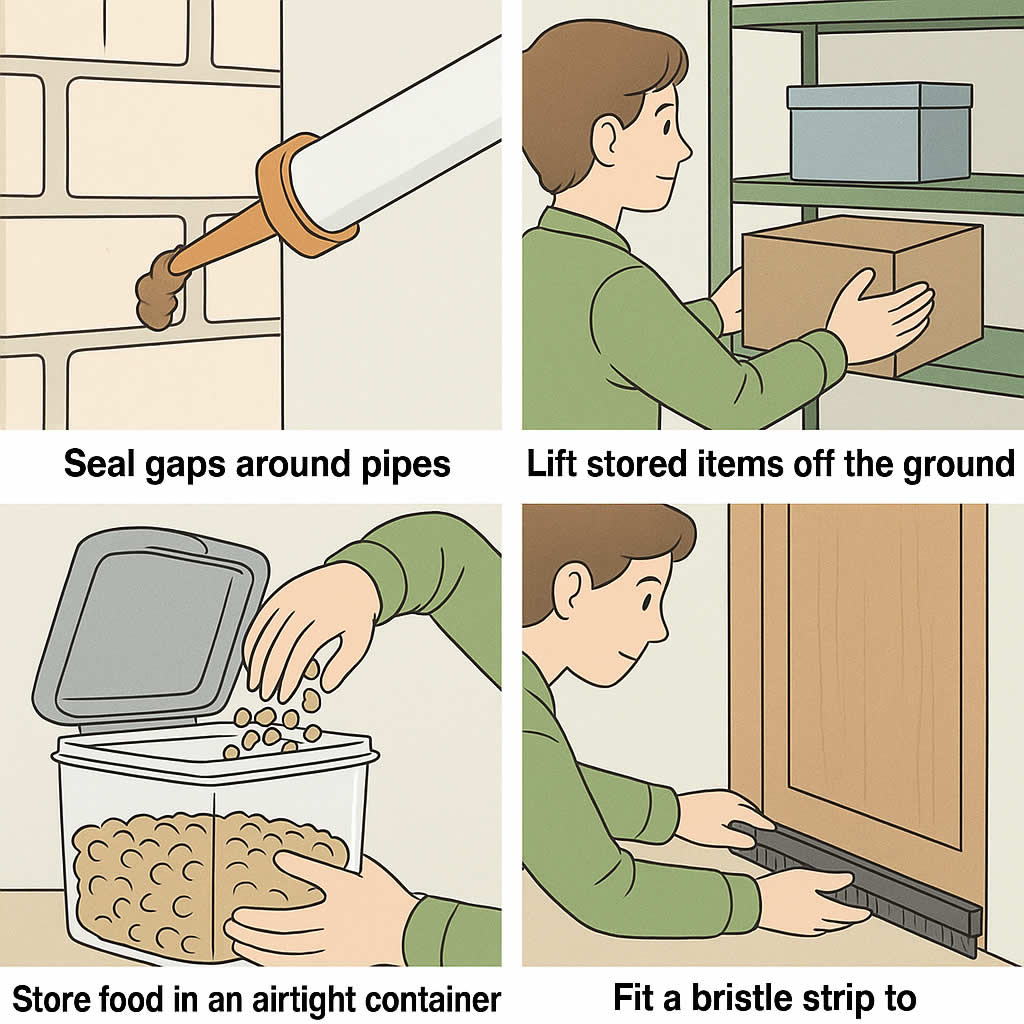
Seal and block
Fill gaps around pipes, use wire wool and filler, add bristle strips to the bottom of doors, fix broken vents. If you keep giving mice a way in, they will keep testing it. Scent just slows them down.
Remove the attraction
Store pasta, cereals, pet food and bird feed in sealed containers. Don’t leave bowls out overnight. Empty the bin frequently. The less it smells like food, the more your peppermint matters.
Add traps where you’ve seen activity
Put snap traps or humane traps along the runs, and use peppermint to steer mice away from other parts of the room. Don’t rely on scent if you’re seeing repeat visits.
Watch for new droppings
If you’ve scented an area and you still get droppings there, that’s the house telling you peppermint alone isn’t enough. Move up to traps or call a pro.
Are There Alternatives to Peppermint?
Other essential oils
Clove, eucalyptus, tea tree and even citronella can be rotated with peppermint so mice don’t get used to one smell. This keeps the route unstable for them.
Vinegar cleaning
White vinegar wipes out the scent trails mice leave for one another. Clean with that first, then add peppermint on top. That combination is stronger than peppermint alone.
Commercial repellents
There are ready-made rodent repellent sachets that use similar plant oils but in controlled concentrations. If you don’t want to keep mixing your own, those can be easier.
So… Does Peppermint Oil Really Repel Mice?
Yes, but only sometimes, and only in small areas. It can make a mouse turn away from a cupboard or a gap. It can reduce how often a mouse crosses a particular bit of floor. And it can make a kitchen smell fresher while you’re dealing with the problem.
No, it does not get rid of mice on its own. If they’re already living in your property, peppermint won’t evict them. You still need to block, tidy, trap or get help.
Final Thoughts
If you like natural options, peppermint oil is worth trying first. It’s affordable, it’s quick, and it won’t make the house smell like chemicals. But don’t let the minty smell convince you the problem has gone if you’re still seeing signs of mice.
Do this:
- Clean and remove food smells.
- Seal the gaps.
- Place strong peppermint pads on the known routes.
- Refresh them often.
- Add traps if you’re still seeing activity.
- Call pest control if it keeps coming back.
Used that way, peppermint oil isn’t a myth – it’s a helpful nudge, not the whole answer.