You’ve spotted the tell‑tale specks, the nibble marks, the late‑night scrabble behind the kickboards. You want a fast, low‑tox way to push mice back while you sort the root cause.
Vinegar helps. It won’t kill mice or clear a big infestation by itself, but used properly it disrupts scent trails, makes favourite routes less appealing, and buys you quiet while you proof and trap.
TL;DR — the short version
Vinegar is a short‑term deterrent, not a cure. Use white vinegar (5%) or cleaning vinegar (6–8%) to spray, wipe, and set soaked cotton in hidden corners. Refresh daily for the first week. At the same time, seal gaps with steel wool and sealant, store food airtight, and place traps on actual runways. The smell tells mice “not welcome”; proofing removes the reason they came.
Set expectations first
You’ll see quick improvements because fresh vinegar hits hard on a mouse’s nose. The effect fades as the smell fades. That’s why cadence matters. Apply consistently for a week, tighten entry points, and you’ll feel the house settle.
Vinegar in Practice
A practical plan beats hopeful dabs and guesswork. Keep your kit simple: a spray bottle, a stack of cloths, cotton balls, gloves, and at least a litre of white vinegar so you don’t run out at the crucial point. If you’ve got cleaning vinegar, the extra acetic acid gives a slightly stronger, longer‑lasting scent, but standard 5% white vinegar works well.
Why vinegar works at all
Mice map rooms with smell. They run the same tight edges because those routes feel safe and smell familiar. Vinegar cuts through those trails. It’s sharp, it’s intrusive, and freshly applied it scrambles the “go this way” signals. You’re not poisoning anything; you’re interrupting habit and pushing movement away from sensitive areas like the cooker, the bin, and the pet‑food corner.
Types and strength
White vinegar (around 5% acetic acid) is your staple. Cleaning vinegar sits closer to 6–8% and hits harder. Apple cider vinegar can stand in if that’s what you have, though it’s pricier and the scent is a touch softer. The key isn’t the brand; it’s freshness and frequency.
Method: spray, then wipe
Mix 1:1 vinegar and water for general cleaning, or use it neat on greasy, well‑worn edges. Start with skirtings, kickboards, and the shadowed line behind appliances. Spray a light, even film, wait thirty seconds, then wipe along the edge so the smell sets into the surface. Work the room clockwise so you don’t miss the corners. Keep it away from sockets and electrics, and test on stone or varnish in an inconspicuous spot.
Method: cotton placements
Soak cotton balls in neat vinegar and tuck them where you can’t spray: behind the fridge motor housing, under the sink, into the gap beside the dishwasher, behind the bin caddy. Place them like markers at any suspected entry point. They release a steady scent for a day or two; you’ll replace them as part of your cadence.
Layer the scent
After you spray edges and set cotton, do a quick pass over worktops, ledges, and the first ten centimetres of wall above the counter. You’re creating a mild, consistent background smell that says this isn’t a friendly route. It’s not about soaking the place; it’s about even, repeated signals.
Targeting beats blanket spraying
Watch for pepper‑like droppings, greasy rub marks low on the wall, cable scuffs, or gnawed cardboard. Those signs mark the runway. Treat those edges first and set traps in the same line, perpendicular to the wall, so a mouse meets the trigger as it hugs the skirting. This pairing—scent where they run, traps where they pass—moves results from “I think it’s quieter” to “it’s stopped”.
Cadence: why the first week matters
Activity drops fastest when you’re relentless early. Refresh soaked cotton every 24–48 hours. Spray and wipe daily for five to seven days. As the signs fade, step down to every other day, then weekly. Don’t rush the taper; let the pattern hold.
Make It Work Long‑Term
Vinegar buys breathing room. Proofing gives you peace. As the house quietens, you shift your effort from smell to structure so the problem doesn’t return with the next cold snap.
Seal the gaps you can fit a pencil into
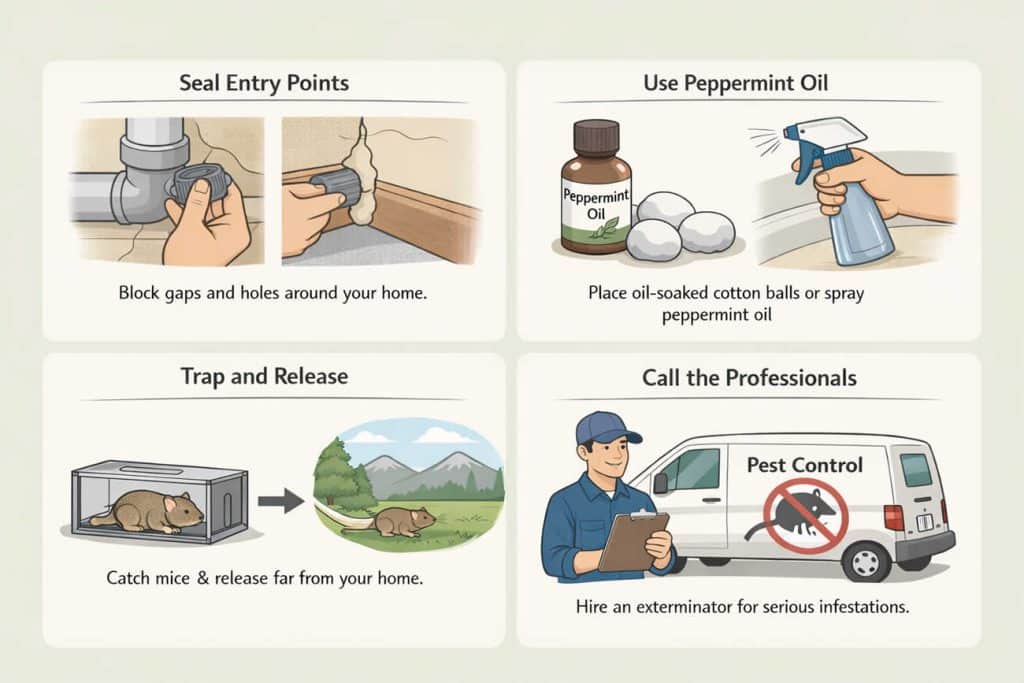
A mouse needs far less than you think. Pack steel wool firmly into 6–10 mm holes around pipes and cable penetrations, then lock it in with a bead of sealant. Fit brush door sweeps to external doors and check the garage threshold for daylight. If you feel a draught, a mouse feels an invitation.
Food control without fuss
Move cereals, grains, and pet food into airtight tubs. Rinse recycling. Empty bins daily if you’re seeing fresh signs. Wipe crumbs, fats, and sticky spills each evening with a light vinegar mix. It’s simple, repeatable, and it strips away reasons to linger.
Trapping that actually works
Place multiple traps on the runways you identified. Push them tight to the wall so the bar is across the mouse’s path. Use a smear of peanut butter or chocolate spread; you want a scent that doesn’t crumble or roll off. Handle traps with gloves to keep human scent down, and position two or three in a row where you’ve seen the most signs. Check them each morning. Keep vinegar off the bait and the trigger—wipe nearby, not on the kit.
Outside‑in thinking
If you’ve got a shed, garage, or utility with a back door, address thresholds and air bricks. Replace damaged mesh with a tight weave. Pack pipe gaps from the outside as well as inside. Vinegar fades quickly outdoors, so treat exterior scenting as a short bridge while you get the proofing finished.
Seasonality in the UK
In autumn and winter, warmth and shelter pull mice indoors. Proof before the first cold night if you can. In spring, check lofts and outbuildings for shredded insulation or new rub marks. After any storm or building work, walk the perimeter with a torch; fresh movement often follows fresh gaps.
When DIY meets its limits
Daytime sightings, a strong urine smell, or repeated incursions in flats and food businesses call for a professional survey. Expect a thorough inspection, targeted proofing, and a clear follow‑up plan. Use your vinegar routine alongside their work to protect surfaces and keep odours down while the structure is fixed.
Safety, Timing & Troubleshooting
You’re working with a household acid and a strong odour, so keep comfort and surfaces in mind. You’re also building a routine, so make timing easy enough that you’ll stick to it.
Surface sense and ventilation
Open a window if the smell lingers. Test stone, grout, and varnished wood in a hidden spot before wide use; if you see dulling or etching, stop and switch to a milder cleaner for that surface. Never spray into or near electrical sockets, and avoid direct spray onto cables or appliance vents.
Pets and people
Vinegar is low‑tox at cleaning strengths, but it’s still pungent. Keep soaked cotton out of reach of pets and children. Don’t spray near cages, bowls, or sleeping areas. If someone in the house is sensitive to smells, shorten sessions and ventilate more.
If the smell fades too fast
Warm rooms, moving air, and low humidity strip scent quickly. Use neat vinegar for cotton placements, shorten your refresh interval, and consider placing soaked cotton in small ceramic dishes so they evaporate more slowly than bare cotton.
If you still see fresh droppings
Fresh signs point to missed entry points. Slide the oven out and check. Pop the kickboards and look along the edges. Shine a torch behind the washing machine and under the boiler. Pack what you find with steel wool and sealant. Move traps onto the new line of travel.
If traps stay empty
You’re close, not exact. Shift traps centimetres rather than metres. Turn them so the bar crosses the line of movement. Reduce human scent, freshen bait, and keep them where the wall guides the mouse straight over the trigger.
When to escalate
If, after a week of daily cadence and basic proofing, you still see regular activity, bring in a professional. That usually means a structural gap you can’t see, a shared void feeding your space, or a nest nearby. The vinegar routine stays useful as a hygiene and odour tool while the bigger issue gets solved.
The Simple Weekly Routine
Once the noise stops and the signs dry up, you move to maintenance. This routine takes minutes and prevents most comebacks.
Evening reset you can do on autopilot
Wipe corners and edges with a light vinegar mix, clear crumbs, close pet‑food tubs, and take the bin out if it’s smelly or full. It’s five minutes and it matters.
Bins, compost, and recycling
Keep lids tight. Rinse tins and jars before they sit overnight. If you compost, site it away from the back door and check the base for gaps.
Quarterly gap check
Once a season, walk with a torch along skirtings, around pipe penetrations, and across thresholds. If you can slip a pencil in, a mouse can test it. Pack it, seal it, and note the date.
Staying honest about vinegar
Vinegar earns its keep because it’s cheap, safe on most household surfaces, and immediate. It doesn’t replace proofing. It doesn’t replace traps. Used together, they do the job cleanly and predictably.
What success looks like
Silence at night. No new droppings. Traps untouched for weeks. A kitchen that resets in minutes and stays calm through autumn, winter, and the odd loft rustle. When you reach that point, keep the weekly rhythm and you’ll hold the line.
If you move or renovate
Any change opens new routes. As soon as the fridge shifts or the kitchen fitter pulls a panel, inspect every new hole and pack it before the day ends. A single unsealed gap can undo months of peace.
Your next steps today
Fill a spray bottle, set three to five cotton placements, and do one steady clockwise pass of your kitchen edges. Then grab a handful of steel wool and a tube of sealant and close the gaps you already know about. Set two traps on the clearest runway. That’s the whole plan. Simple, repeatable, and effective.
Meta Title
How to Get Rid of Mice with Vinegar (UK Guide)
Meta Description
Use vinegar to deter mice fast—then proof, clean, and trap for lasting results. A simple UK guide with easy steps, safe surfaces, and a weekly routine.