Related Queries
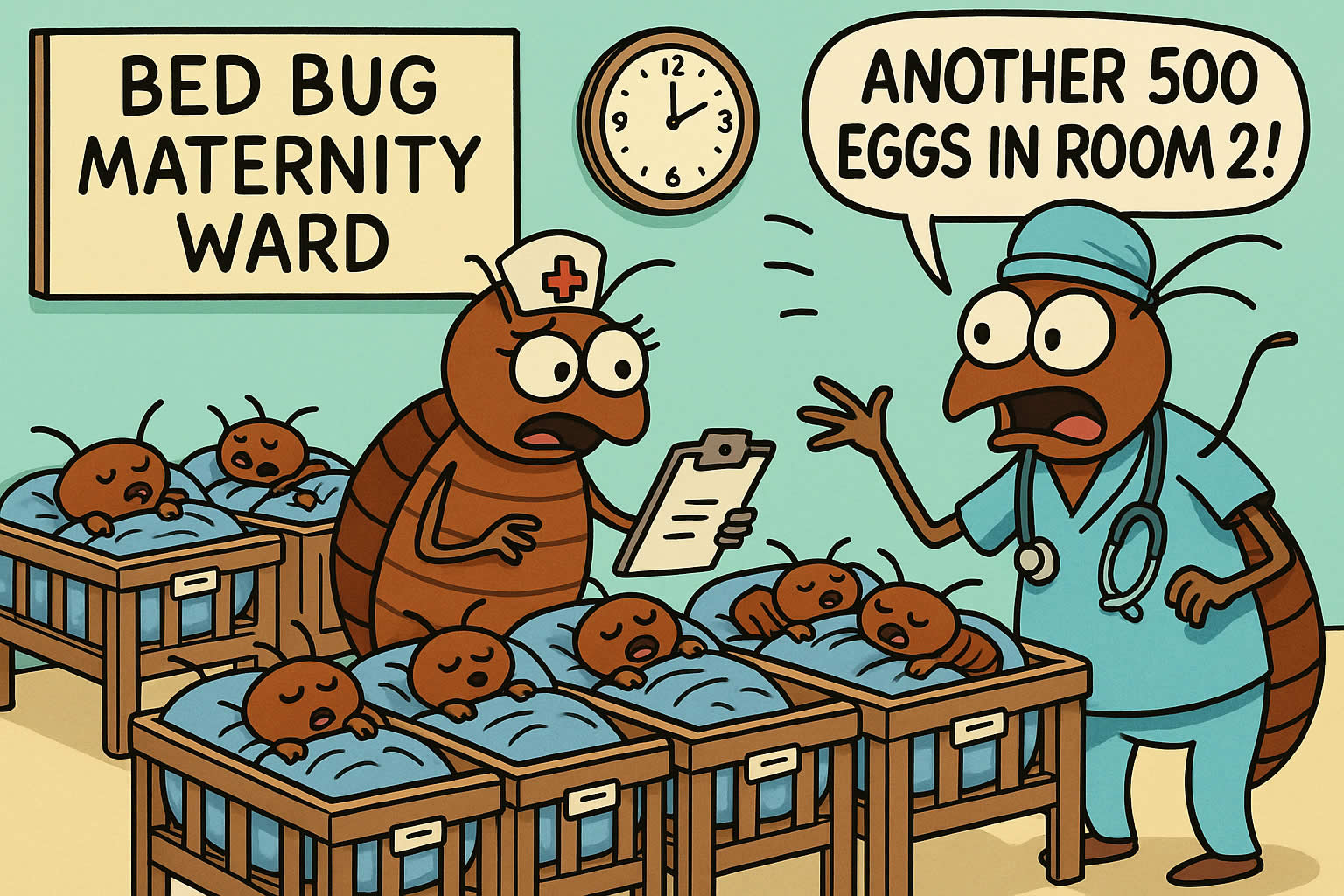
ToggleBed bugs can multiply from a small introduction into a serious infestation in a matter of weeks, not months, when the room is warm and people are sleeping nearby. A single mated female can lay eggs after feeding, and those eggs can become biting nymphs quite quickly in a heated bedroom.
The speed depends on temperature, access to blood meals, hiding places, treatment pressure and how early the problem is found. In practical inspections, the homes with the fastest spread are not always the dirtiest; they are often cluttered bedrooms, shared buildings, holiday lets, HMOs, flats with frequent visitors, and rooms where luggage or second-hand furniture has recently been brought in.
The Short Answer: Bed Bugs Can Build Up Fast
Under favourable indoor conditions, a female bed bug may lay one to several eggs per day and potentially hundreds during her life. Eggs often hatch in around one to two weeks, and young bed bugs pass through five nymph stages before becoming adults. The Natural History Museum bed bug overview gives a useful background on their biology and why they are so good at hiding.
In a warm UK bedroom, with regular feeding, a new generation can develop in roughly five to eight weeks. Cooler rooms slow everything down. Empty rooms also slow growth because nymphs need blood meals to moult, but bed bugs can still wait for long periods, which is why simply leaving a room unused is unreliable.
Early signs are often subtle: tiny black faecal dots on mattress seams, pale shed skins, small blood marks on sheets, or a sweet, musty smell in heavier infestations. If you are comparing bites, the pattern sometimes described as three bites in a row can be a clue, but bites alone are not enough for a confirmed identification.
| Stage | Typical timing in warm rooms | What it means |
|---|---|---|
| Egg | About 6–10 days to hatch | Very hard to see and resistant to poor cleaning |
| Nymph | Several weeks with feeding | Small, pale, and easily missed |
| Adult | Often reached in 5–8 weeks | Can mate, feed, travel and lay eggs |
Why Infestations Grow: Behaviour, Biology and Hiding Places
Bed bugs do not jump or fly. They crawl, hide close to sleeping areas, and move towards warmth, carbon dioxide and human scent. The reason they multiply so effectively is simple: they stay hidden during the day, feed quickly at night, then return to cracks where sprays, hoovers and casual cleaning often miss them.
The most common harbourages found during inspections are mattress piping, bed frame joints, screw holes, slat ends, headboard fixings, bedside tables, curtain hems, skirting gaps and the backs of pictures near the bed. In severe cases, they move into sockets, wardrobes, sofas and neighbouring rooms.
The spread is often caused by luggage, used furniture, overnight guests, shared laundry areas, connected flats and items moved from an infested room. A deeper look at how bed bugs spread helps explain why one bedroom can become several rooms if belongings are carried around before treatment.
Hygiene affects inspection and control, but it does not create bed bugs. A clean home can still have them. Clutter, however, gives them more harbourages and makes treatment less reliable, especially if drawers, under-bed storage and wardrobes are packed tightly.
Preparation Guide Before Treatment
Good preparation can make the difference between a controlled infestation and one that keeps returning. The aim is not to strip the room bare and scatter bugs around the house. The aim is to expose harbourages, contain washable items and make treatment areas accessible.
What to check: inspect mattress seams, bed frame joints, headboards, bedside furniture, skirting boards, sockets, curtain folds, sofa seams and any luggage stored near the bed. Use a torch and look for live insects, black spotting, eggs, cast skins and blood marks.
Tools and materials: torch, disposable gloves, sealable bags, sticky tape, vacuum with crevice tool, laundry bags, mattress encasement, steam cleaner if suitable, and a notebook for recording where activity is found. Avoid foggers as a first response because they can push bed bugs deeper into voids.
Safety considerations: do not spray mattresses, bedding, pet areas or electrical fittings unless the product label specifically allows it. Keep children, pets and vulnerable people away from treated areas until labels or professional instructions say it is safe. UK public health advice notes that bed bugs are not known to spread disease, but bites and stress can still be significant; see the UKHSA bed bug prevention advice for public health context.
Preparation steps: bag bedding before carrying it out, wash and tumble-dry on hot settings where fabric allows, reduce clutter carefully, empty under-bed storage, move beds slightly away from walls, and keep sleeping in the usual room if advised. Moving to the sofa often spreads the problem.
Main instructions: vacuum cracks slowly, empty the vacuum outside into a sealed bag, launder washable items, isolate clean items in sealed bags, fit interceptors if used, and keep records of sightings. For laundry details, washing infested bedding safely is worth reviewing before loading machines.
When Multiplication Becomes a Bigger Problem
The problem: numbers can rise quietly because eggs are tucked into cracks and nymphs are tiny. By the time adults are seen walking in daylight, the infestation is often established.
The causes: delayed identification, moving belongings between rooms, untreated bed frames, second-hand furniture, adjoining flats, missed eggs and incomplete DIY spraying. Pest pressure also varies by property type, weather, access points, occupancy, housekeeping and infestation severity.
The fastest solution: confirm the insect, contain fabrics, stop moving items around, then arrange a targeted treatment plan. Chemical treatments, steam, vacuuming, encasements and monitoring can work together. In suitable cases, professional heat treatment may help reach hidden stages, although preparation and follow-up still matter.
How to fix it: treat the bed, frame, surrounding furniture and cracks where activity is confirmed. Repeat visits are often needed because eggs may hatch after the first visit. Monitors should remain in place for several weeks, and occupants should report new bites or sightings rather than repeatedly moving rooms.
Serious signs: multiple life stages, black spotting on several items, bugs in daytime, activity in more than one room, bites across several occupants, or insects found in sockets and furniture away from the bed. In rented homes, responsibility can depend on tenancy terms and the cause, and Shelter’s pest infestation guidance is a useful UK reference.
Prevention: inspect luggage after travel, avoid collecting mattresses from the street, check second-hand furniture, use protective encasements, keep beds accessible for inspection, and act on small signs quickly. If you need local treatment options, services such as pest control in Essex can help with assessment and follow-up planning.
What to Expect After the First Visit
It is normal to see some activity after treatment, especially if products have a residual effect or eggs hatch later. Seeing a bed bug after the first visit does not automatically mean failure. The important points are whether sightings are reducing, whether they are in treated zones, and whether preparation instructions were followed.
A practical monitoring period is usually several weeks. Interceptor traps, careful bed checks and bite diaries can help, but bites are inconsistent because people react differently. Some people show marks quickly, while others show little or no visible reaction.
Do not introduce new furniture, move beds into new rooms, or deep clean treated cracks too soon unless instructed. Disturbing treated areas can reduce effectiveness. If activity continues at the same level after follow-up, the plan should be reviewed, not simply repeated blindly.
FAQ
How many eggs can one bed bug lay?
A well-fed female can lay eggs regularly, often one to several per day in favourable conditions. Over her lifetime, that can add up to a large number.
She needs blood meals to keep producing eggs. If feeding is interrupted, egg laying slows down, but it may not stop permanently.
This is why one mated female brought home in luggage can be enough to start a problem.
How quickly do bed bug eggs hatch?
In warm indoor rooms, eggs commonly hatch in about a week to ten days. Cooler conditions can extend that timing.
Eggs are small, pale and usually glued into seams or cracks. They are easy to miss during casual cleaning.
Because eggs may survive an incomplete treatment, follow-up monitoring is an important part of control.
Can bed bugs multiply without feeding?
No. Bed bugs need blood meals to moult, mature and reproduce. Without feeding, development slows or pauses.
That does not make starvation a reliable control method. Bed bugs can hide and wait far longer than most people expect.
A vacant room may still contain live insects, especially in cooler parts of the year.
Does a clean house stop bed bugs multiplying?
Cleanliness does not prevent introduction. Bed bugs travel on belongings, furniture and clothing rather than appearing because of dirt.
However, clutter helps them survive by creating more hiding places. It also makes inspection and treatment harder.
Keeping the bed area simple, accessible and easy to inspect reduces the chance of a small issue becoming large.
Can I stop them multiplying with DIY sprays?
DIY sprays may reduce exposed insects if used correctly, but they often miss eggs and deep harbourages. Misuse can scatter bed bugs.
Always follow the product label and avoid unsafe spraying on bedding, skin-contact surfaces or electrical areas.
If activity is in several rooms, keeps returning, or involves vulnerable occupants, contact a qualified pest control technician.
How do I know if the infestation is spreading?
Signs include bites in new rooms, spotting on sofas, insects away from the bed, or cast skins in wardrobes and skirting gaps.
Bed bugs can spread when people sleep elsewhere or carry unsealed laundry through the home.
Keep items contained and inspect nearby rooms before moving furniture or bedding.
Are bed bugs worse in summer?
Warmth speeds development, so activity can increase in warmer months. Travel also increases the chance of new introductions.
Heated homes mean bed bugs can remain active throughout winter, especially in bedrooms and flats.
Season matters, but property layout, access, treatment quality and infestation age are often more important.
When should I call a professional?
Call when you find live bed bugs, repeated spotting, activity in more than one room, or bites continuing after careful preparation.
A technician should identify the pest, inspect harbourages, explain treatment options and provide safe preparation instructions.
No responsible treatment should promise instant permanent removal. Bed bug control relies on inspection, correct treatment and monitoring.
Bottom Line
Bed bugs multiply quickly because they hide well, feed at night and produce eggs in protected cracks. In a warm, occupied room, a few insects can become a much larger infestation within weeks.
The best response is early confirmation, careful containment, sensible preparation and targeted treatment. DIY steps can help at the very start, but established or spreading infestations usually need a planned professional approach with follow-up checks.