Related Queries
ToggleIt doesn’t take much to make you feel unsettled when it comes to mice. A single dropping on a countertop, a faint scratching sound behind a wall, or a glimpse of something darting across the floor is enough to set off concern. Nobody wants mice in their home, so it’s understandable that people look for quick, low-cost solutions before turning to traps or calling a professional. One of the most talked-about home remedies is the idea that Irish Spring soap can repel mice.
The soap is strongly scented, easy to find and inexpensive, which makes the idea appealing. But does it genuinely work? And if it does anything, how much can you realistically expect from it?
This guide breaks down why people try Irish Spring, how it affects mice, what it can and cannot do, and how to use it in a way that fits into a proper mouse-proofing strategy.
The Claim That Irish Spring Soap Repels Mice
The idea behind using Irish Spring is based on scent. Mice rely heavily on smell to understand their surroundings. Their scent trails help them locate food, move safely through walls and hidden gaps, recognise family groups and find returning shelter locations. The claim is that the strong, lingering fragrance of Irish Spring disrupts these scent signals and makes certain areas less appealing for mice to travel through.
People often place pieces of the soap in areas such as:
- Kitchen cupboards
- Under sinks where pipes enter
- Garages and sheds
- Caravan and camper interiors during winter
- Loft or attic access points
The hope is that the scent deters mice from exploring or nesting in those spaces.
However, mice are highly adaptive creatures. When food, warmth or nesting materials are available, mice will tolerate or avoid scents rather than give up the location entirely.
What the Evidence Shows
Some homeowners report short-term success when using Irish Spring soap. In very specific spaces — such as a cupboard corner or a drawer — the scent may temporarily discourage a mouse from passing through. But results are inconsistent. Others find that mice simply chew around or move directly past the soap once they adjust to the smell or find an alternative route.
Pest control professionals generally note the same pattern:
- Irish Spring may discourage a mouse briefly
- But it rarely prevents, removes or solves infestations
- And once mice find food, they’ll ignore the smell entirely
The situations where Irish Spring appears to work are usually ones where conditions were already borderline — meaning the problem was small or temporary anyway.
This makes Irish Spring a supplementary measure, not a standalone fix.
How to Use Irish Spring Soap (If You Want to Try It)
- Cut the soap into small chunks rather than using whole bars — more surface area increases scent strength.
- Place the pieces directly in tight, enclosed areas where mice travel, such as corners of cupboards or behind appliances.
- Replace the soap once the scent weakens — usually every few days to a week.
- Avoid scattering soap in open spaces where the smell disperses too quickly.
- Do not rely on soap before sealing gaps or removing food access — scents only work as a finishing touch.
Why Irish Spring Alone Isn’t Enough
Mice are resourceful and determined. Once they know a location provides easy access to food and warmth, they will continue returning no matter how strong a smell is.
The core elements that keep mice in a space are:
- Availability of crumbs, unsealed food containers or pet food
- Small gaps around pipes, skirting boards or appliances
- Warm, hidden areas suitable for nesting
- Lack of disturbance or human activity
If these conditions remain unchanged, mice will find a way to stay.
Scent-based deterrents like Irish Spring do not address:
- Entry points
- Food supply
- Shelter availability
Does Irish Spring Really Repel Mice?
Irish Spring can only play a role after you change the environment to make it less attractive.
Other Natural Scents People Try
Irish Spring is part of a wider group of scent-based mouse deterrent suggestions. Each has a similar purpose — masking scent trails and discouraging exploration — but all share the same limitations.
Lavender
Lavender has a strong floral-herbal scent that some homeowners use in cupboards or linen storage. It may disrupt scent trails in very small areas and can help reduce new exploration. But like Irish Spring, it fades quickly and mice return once the scent weakens. It works best as a finishing step after proofing the space.
Citronella is widely used outside to help deter insects. Indoors, its sharp scent may discourage mice from using certain narrow gaps or cabinet edges — but again, the effect is brief. It is not strong enough to clear out a space where mice have already been nesting or feeding.
Peppermint, clove and eucalyptus oils
These have stronger initial smells than lavender, but evaporate quickly and require near-constant reapplication to have any noticeable effect.
The pattern is consistent:
Scent = short-term inconvenience
Shelter and food = long-term motivation
Mice choose motivation every time.
A Practical Mouse-Proofing Method That Works
For lasting results, focus on shaping the environment rather than masking it.
A reliable approach is:
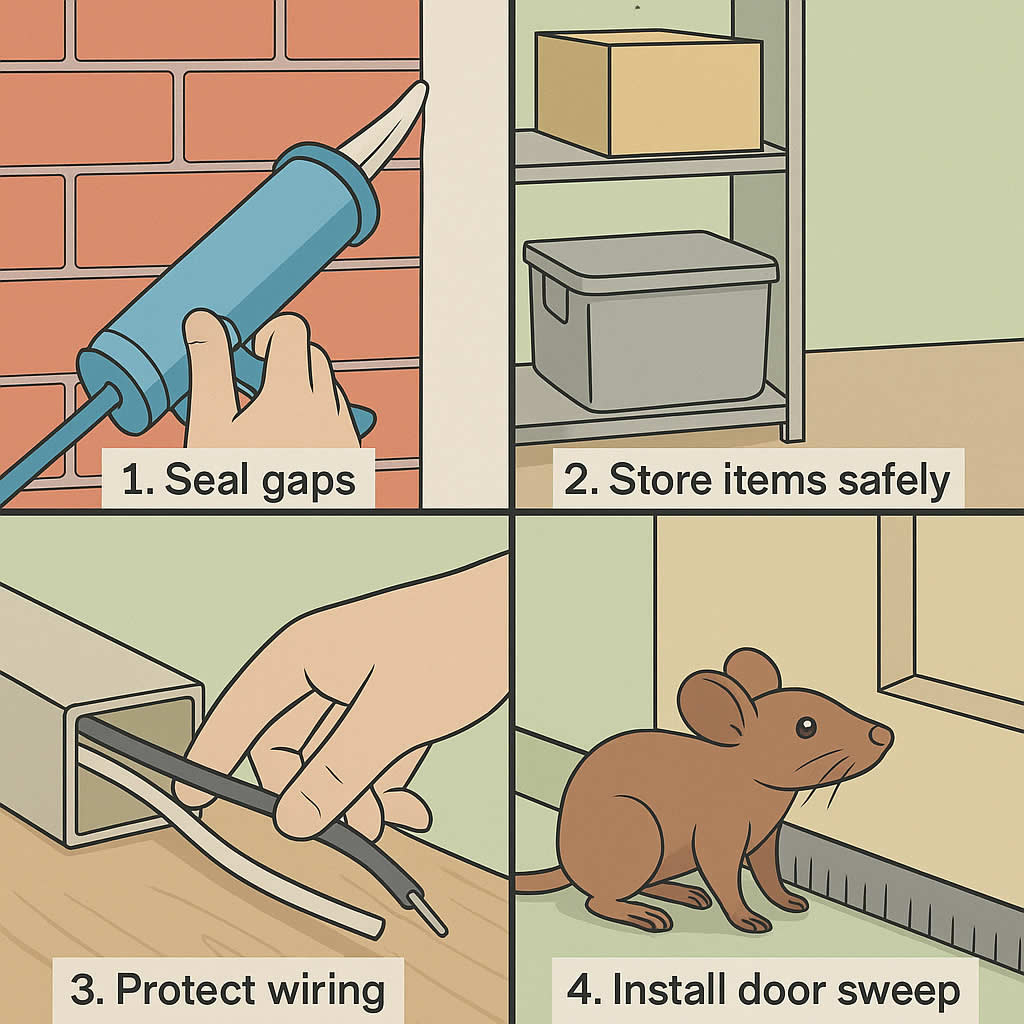
Find where mice are entering. Look under sinks, behind cookers, at the back of cupboards, near radiators and around floor edges.
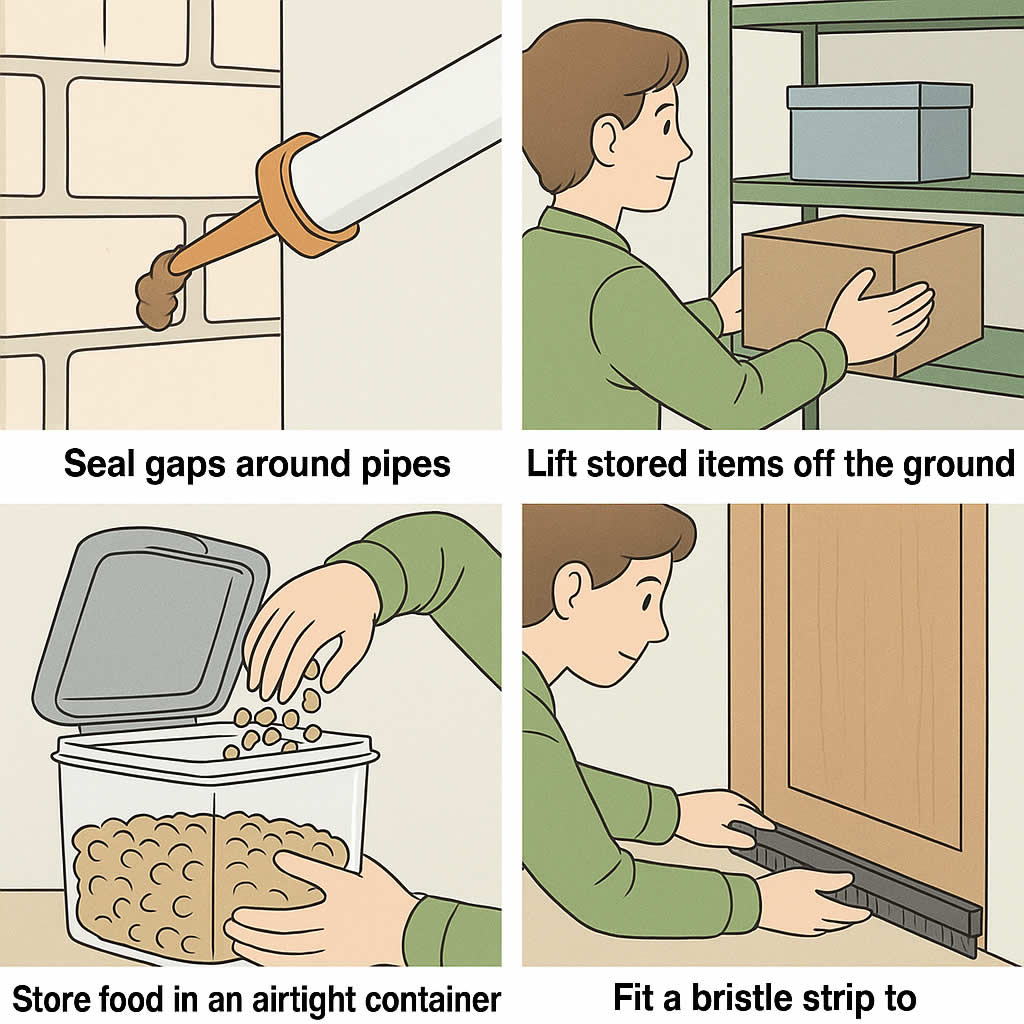
Seal gaps properly. Steel wool packed into holes and sealed over with filler works well because mice cannot chew through it.
Store all food in airtight containers. This includes cereal boxes, snacks, bread bags, pet food and even bird seed.
Clear crumbs and wipe surfaces daily. Even small crumbs are enough to support a mouse.
Place traps along wall edges where mice naturally travel. Mice rarely walk through open middle spaces.
Once these steps are in place, then Irish Spring soap can help discourage fresh exploration — but it becomes a supporting detail, not the strategy.
Troubleshooting If Mice Keep Returning
If you still see:
- Droppings reappearing
- New gnaw marks
- Scratching inside walls at night
- Shredded fabric or insulation
This usually means:
- A nest already exists, or
- One or more entry points have not yet been sealed.
In these cases, adding more scent will not stop the issue. The missing step is identifying and blocking the access route or nesting location.
Once the entry point and food access are removed, the activity stops — regardless of whether scented deterrents are used.
Our Final Say
Irish Spring soap can play a small, temporary role in making certain areas less appealing to mice, but it does not remove the reasons mice stay. For real and lasting results, focus on sealing entry points, controlling food access and maintaining clean, undisturbed spaces. Only then does Irish Spring, lavender, citronella or any other scent become useful as a finishing touch — not the fix.
When the environment no longer supports mice, they leave. That’s the part that works every time.