Related Queries
ToggleIf you’ve ever walked through your citrus trees and found half-eaten oranges or fruit scattered on the ground, chances are you’re dealing with citrus rats – also known as roof rats or fruit rats. These agile climbers can cause serious damage to citrus orchards, backyard fruit trees, and even nearby buildings. They gnaw through fruit, strip bark, and contaminate crops, leaving frustration and loss behind.
It’s worth noting that citrus rats aren’t native to the UK. They’re most commonly found in warmer regions such as Florida, California, and other parts of the southern United States, as well as Australia, Southeast Asia, and Mediterranean climates where citrus farming thrives. These environments offer the warmth, fruit availability, and dense tree cover that roof rats love.
While they don’t pose a direct problem for British growers, understanding how to manage and prevent infestations is useful for anyone involved in international agriculture, pest control, or property management in warmer countries. In this guide, you’ll learn exactly how to identify citrus rat activity, how to prevent infestations, and how to develop a sustainable management plan to protect your trees all year round.
Recognising the Problem
Knowing the early signs of citrus rats is essential before the problem spirals out of control. These rodents are nocturnal, which means you might not see them during the day, but the damage they leave behind gives them away.
Signs of Citrus Rat Activity
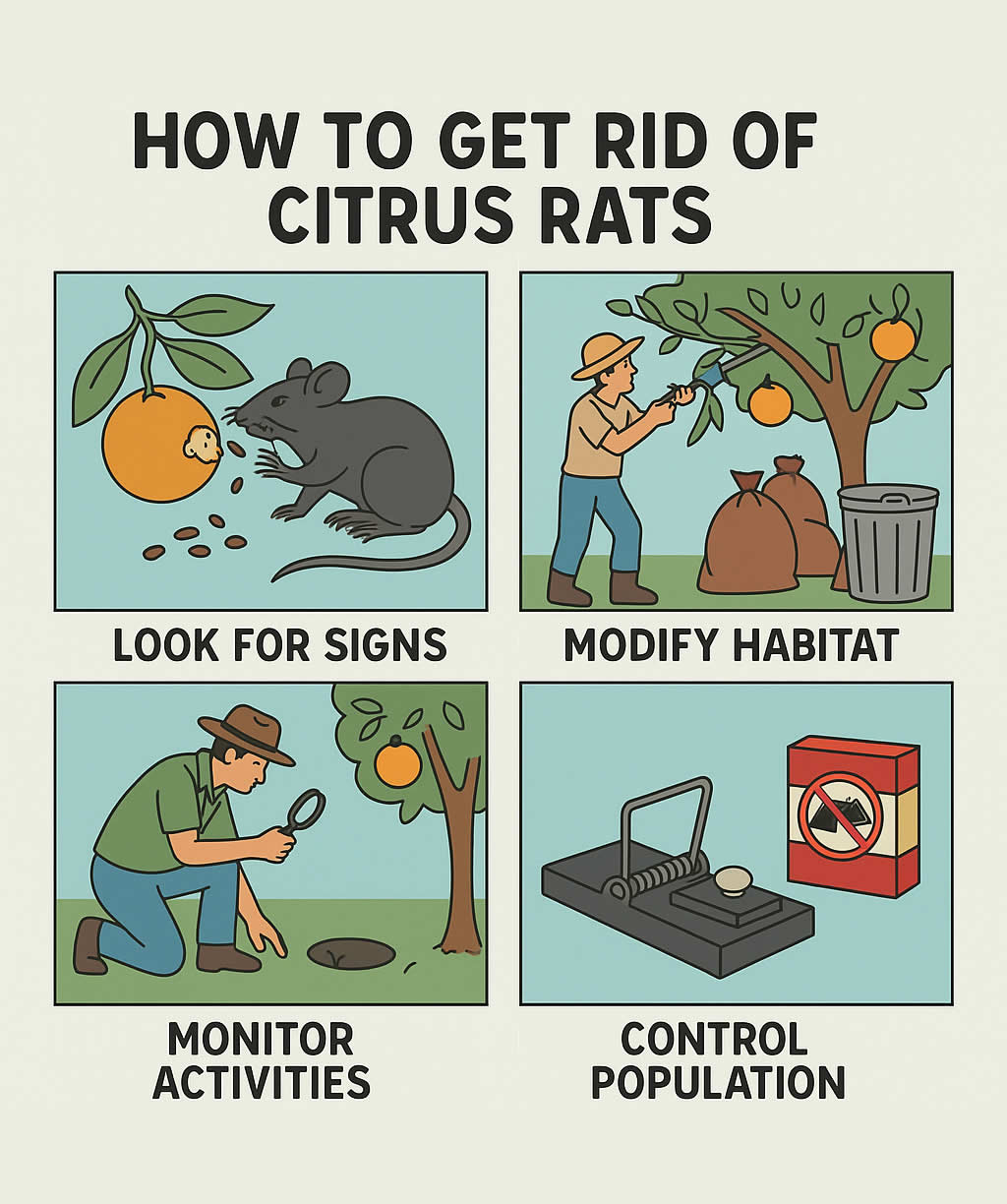
Start by looking closely at your fruit. Roof rats often chew holes in the skin and hollow out the inside, leaving peelings hanging or fruit half-eaten on the tree. You might notice droppings along branches or around the base of trees — small, dark, and pointed at both ends. Gnaw marks on irrigation tubing or plastic containers are also common.
Look for nests made of leaves, twigs, and fibres built high in trees, especially where branches meet power lines or fences. You might even hear scratching sounds at night if they’ve made their way into storage sheds or roofs nearby.
Why Citrus and Fruit Trees Attract Rats
Citrus trees provide everything a rat could want — abundant food, cover from predators, and easy access between branches. The sweet scent of ripe fruit draws them in, and once they find a reliable source of food, they’ll build nests nearby.
Rats love dense canopies and untrimmed vegetation because it gives them safe passage from one tree to another without touching the ground. If there are fallen fruits, piles of debris, or compost heaps close by, the attraction becomes even stronger.
Types of Rats in Citrus Environments
While many people refer to them simply as “rats,” not all species behave the same way. Understanding what type of rat you’re dealing with can help you choose the right control method.
Roof Rats vs Other Species
Roof rats (Rattus rattus) are the main species found in citrus orchards. They’re smaller and sleeker than Norway rats and are excellent climbers. You’ll often see them using power lines or tree branches as highways to move between feeding and nesting sites.
They originated in Asia but have spread worldwide through trade and agriculture. Today, they’re common in the southern and coastal United States, Australia, tropical islands, and many citrus-producing regions. In contrast, Norway rats tend to stay at ground level and burrow under structures or rubbish piles. Knowing this difference helps determine where to set traps and bait stations. Roof rats prefer elevated spots, while Norway rats stick to lower hiding areas.
Why Species Matters for Control
Each species requires a slightly different control strategy. Because roof rats are arboreal (tree-dwelling), traps and bait stations need to be placed above ground — along fences, branches, or rafters. Ground-based setups that might work for Norway rats won’t be nearly as effective for roof rats. Understanding this distinction helps you save time, reduce frustration, and get quicker results.
Preventive Cultural Controls
Prevention is always better than chasing a full-blown infestation. Good orchard management and hygiene go a long way toward keeping citrus rats away.
Habitat Modification and Pruning
Start by trimming trees so that no branches touch fences, roofs, or neighbouring trees. Rats use these connections like bridges, so breaking those pathways can slow them down. Prune lower branches so fruit doesn’t touch the ground, and thin dense canopies to reduce shelter.
Remove debris piles, wood stacks, and thick ground cover that might serve as hiding places. A tidy orchard or garden not only discourages rats but also makes it easier to spot early signs of activity.
Sanitation and Food-Source Management
Rats are opportunistic feeders. If fallen fruit, spilled animal feed, or compost piles are lying around, you’re giving them a constant buffet. Collect dropped fruit daily and keep bins sealed. Clear away leftover crops promptly and remove any vegetation or clutter that could shelter them.
By cutting off their food supply, you make your trees far less inviting. Clean surroundings also make traps and bait more attractive since there’s less competition for food.
Monitoring and Early Intervention
Early detection is key to keeping citrus rats under control. Regular checks and monitoring tools can help you act before they multiply.
Tracking and Evidence Gathering
Use simple methods to monitor rat movement — footprint tracking cards, non-toxic bait blocks, or motion cameras. These can show where rats are most active, helping you decide where to focus control efforts. Look for new droppings, gnaw marks, or fresh fruit damage during your inspections.
Setting Thresholds and Deciding When to Act
If you start seeing regular activity or damaged fruit across multiple trees, it’s time to act. Don’t wait until you see rats during the day — by then, the population may already be large. Early intervention reduces long-term costs and keeps your crop losses minimal.
Control Methods for Citrus Rats
Once you’ve confirmed rat activity, it’s time to take control. The best strategy often combines multiple methods for a more effective outcome.
Trapping Strategies
Trapping is one of the most effective and targeted control methods, especially for smaller infestations. Use snap traps or tunnel traps placed along branches, fences, or rafters where rats travel. Secure them firmly and bait with fresh fruit, nuts, or peanut butter.
Check traps daily and replace bait often to maintain interest. Be sure to position traps carefully to prevent accidental contact with birds or other wildlife.
Rodenticides and Baiting Systems
In larger infestations, bait stations can help when used responsibly. Always follow local regulations and safety guidelines, especially when using rodenticides near crops or animals. Place bait stations above ground, near feeding areas or known travel routes.
Choose weather-resistant, tamper-proof stations to protect non-target species. Rotate baits if rats appear to avoid them and remove uneaten bait after treatment to prevent contamination.
Integrated Approach for Best Results
No single method works in isolation. Combining cultural control (like pruning and sanitation) with monitoring, trapping, and limited baiting creates a more sustainable solution. This integrated pest management (IPM) approach keeps rat numbers low and reduces environmental risk.
Factors That Influence Success
Even with the right tools, results can vary depending on your property layout, environment, and consistency of effort.
Tree Structure, Orchard Layout and Travel Paths
Rats use branches, fences, and power lines as pathways. If your trees are too close together, they can move freely between them. Restructure your orchard spacing if possible and keep branches trimmed back from utility lines or neighbouring properties.
Population Size, Reinfestation and Neighbouring Habitat
Rats reproduce quickly, and even after you’ve cleared your property, they can return from nearby fields or homes. Working with neighbouring growers or homeowners to coordinate control efforts can stop reinfestation and save time in the long run.
Compliance, Safety and Environmental Impact
Always use traps and baits in line with local pest control laws. Avoid using unapproved products or homemade poisons, as they can harm wildlife and contaminate soil or water. Prioritise safety by wearing gloves, handling bait responsibly, and keeping children and pets away from treatment areas.
Maintenance, Follow-Up and Long-Term Protection
Rat management doesn’t end once the visible signs disappear. Consistent follow-up keeps your orchard or garden protected year-round.
Checking for Reinfestation and Ongoing Monitoring
Schedule regular inspections, especially during harvest season when fruit is abundant. Look for signs of new droppings or chew marks. Keep traps and monitors in place as an early warning system so you can act before populations rebound.
Orchard-Wide Coordination and Neighbourhood Effort
Rats don’t recognise property boundaries. Coordinating with neighbours ensures control is effective across a wider area. When multiple properties manage sanitation, pruning, and trapping together, reinvasion rates drop significantly.
Final Thoughts
Citrus rats might not be a problem in the UK, but in parts of the world where they thrive — like Florida, Australia, and the Mediterranean — they’re a major concern for growers and homeowners alike.
Getting rid of citrus rats takes patience, consistency, and a well-rounded plan. There’s no quick fix, but by combining good hygiene, regular monitoring, and smart control methods, you can protect your fruit and restore balance to your environment.
Remember — prevention is just as important as removal. Keep your trees pruned, your grounds clean, and your bait stations maintained. If you’re struggling with persistent infestations, it may be worth seeking professional pest management advice to ensure compliance and efficiency.
With the right approach, you can reclaim your orchard, protect your harvest, and enjoy peace of mind knowing your fruit is safe from these unwelcome visitors.