Related Queries
ToggleWhen you notice the first sign of mice in your kitchen, it can feel unsettling. You might see a small dropping behind an appliance, hear a faint sound at night, or spot a tiny hole around pipework. Kitchens are the last place you want mice to appear, which is why understanding exactly how mice get into kitchens gives you a reassuring sense of control.
Your kitchen is warm, filled with food scents, and full of hidden spaces that mice can move through without being seen. When you learn the routes they use, the access points they rely on, and the behaviour that guides them, you can prevent problems far more effectively.
This guide explains the hidden ways mice enter kitchens, the patterns they follow, and the small changes that make a remarkably big difference in keeping them out.
How Do Mice Get Into Kitchens?
How mice get into kitchens depends on the paths they follow through your home. They rarely appear suddenly. Instead, they travel quietly through wall cavities, under floors, behind appliances, and around pipework until they reach the food-rich, warm environment of your kitchen.
Most kitchens offer multiple access routes without homeowners realising it. Gaps under cabinets, holes around pipes, damaged kickboards, or tiny openings behind appliances give mice easy, concealed paths into the room. Kitchens often sit close to external walls, which means mice can enter the house from outdoors and reach the kitchen quickly.
Because mice are excellent climbers and can squeeze through gaps as small as a pencil, almost any small opening becomes a potential entry point. Once they discover warmth and food scents, they make your kitchen part of their regular nightly territory.
Why Wall Cavities Lead Mice Into Kitchens
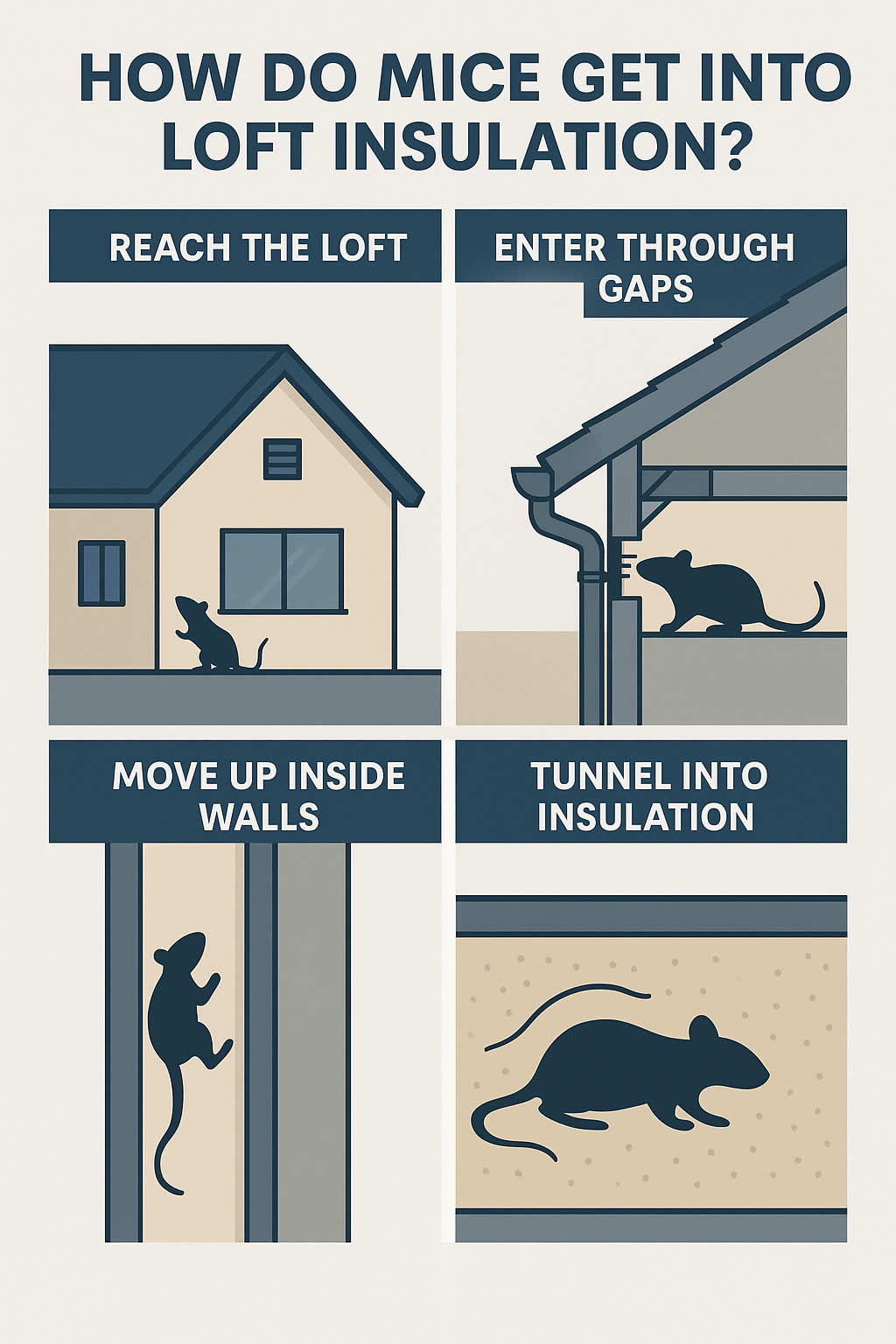
Why wall cavities lead mice into kitchens is linked to how homes are constructed. Wall cavities run through the structure of your house, connecting lofts, floors, and rooms without exposing mice to open spaces.
When mice enter through an air brick, pipe opening, or damaged mortar, the wall cavity becomes their safe highway. From there, they emerge through:
- Gaps behind kitchen cupboards
- Holes around sink pipework
- Cracks where walls meet floors
- Openings behind plasterboard
- Voids under worktops
A mouse may travel several metres unseen before appearing inside a cupboard or exploring behind your fridge. This is why homeowners often spot signs in the kitchen before discovering where the mice originally entered.
Mice rely heavily on scent trails. Once one mouse follows a wall cavity route, others quickly do the same.
How Pipework Brings Mice Into Kitchens
How pipework brings mice into kitchens is simple: gaps around pipes create perfect entrance holes. Kitchens contain multiple pipes that pass through walls and floors, which means mice have several potential access points.
These include:
- The hole where the sink waste pipe enters the wall
- Gaps around hot and cold water pipes
- Openings behind dishwashers
- Voids behind washing machines
- Holes behind the fridge water feed
Even small gaps are enough. Mice squeeze through them, enlarge them slightly by gnawing, and then use them night after night. Because pipes create warm, sheltered routes, mice follow them naturally.
You may first notice droppings under the sink, nibble marks on plastic pipe insulation, or food debris pulled into hidden corners. These are signs that pipe gaps are the main route.
Why Mice Enter Kitchens Through Gaps in Cupboards
Why mice enter kitchens through gaps in cupboards relates to how cupboard units are fitted. Most kitchen cabinets don’t sit flush against walls. Instead, there are small voids behind them where cables and pipes run. Mice treat these voids as corridors.
Once inside, mice often appear:
- Beneath the sink cabinet
- Behind drawer units
- Inside corner cupboards
- Along the backs of base units
- Behind kickboards
The underside of kitchen cupboards usually contains thin panels, small cracks, or unfinished edges. These open areas allow mice to enter easily. A mouse may emerge into a cupboard at night, forage for crumbs, and then retreat into the void again by morning.
Cupboards often store food, bin bags, or packaging, which increases the attraction.
How Mice Use Floor Gaps to Reach Kitchens
How mice use floor gaps to reach kitchens depends on underfloor voids and structural gaps around skirting boards. Many kitchens sit above cavities where wires, pipes, and joists run. These spaces stay warm and dark, making them appealing to mice.
Floor gaps allow entry through:
- Spaces between floorboards
- Gaps under skirting boards
- Cracks where flooring meets cupboards
- Openings around heating pipes
- Voids created by uneven flooring
Because mice are small and flexible, they squeeze through spaces you may not even notice. If the skirting has shrunk over time, or if flooring has been replaced, small new openings can appear without you realising.
You might hear faint scurrying under the floor if mice are using these routes, especially late at night.
Why Mice Enter Kitchens Through External Walls
Why mice enter kitchens through external walls comes down to opportunity. Kitchens often sit along the outer edge of a home, which means external walls may contain:
- Cracked brickwork
- Damaged air bricks
- Loose pointing
- Gaps around vent pipes
- Openings for boiler flues
- Spaces around external taps
Once a mouse enters the external wall structure, it can follow wall cavities until it reaches the kitchen. When the weather gets colder, these external routes become busier because mice search for indoor warmth and food.
If you find droppings near the back door or under a window ledge, your kitchen may be receiving mice through an outdoor-to-indoor pathway.
How Loose Kickboards Allow Mice Into Kitchens
How loose kickboards allow mice into kitchens isn’t obvious until you remove one. Kickboards sit under your cabinets and hide the gap beneath them, but they often become loose or poorly fitted over time.
Because the space behind a kickboard is dark, warm, and spacious enough for mice to run or nest, it becomes one of their favourite routes.
Mice use kickboard gaps to:
- Enter the room unseen
- Forage for crumbs under appliances
- Drag food into hiding spots
- Build nests behind cabinets
If you spot droppings emerging from under the cabinets, the kickboard gap is almost certainly the access point.
Why Appliance Gaps Bring Mice Into Kitchens
Why appliance gaps bring mice into kitchens relates to warmth and food scent. Behind a cooker or dishwasher, there is often a significant void where pipework, wiring, and ventilation sit.
Mice are especially drawn to:
- The warm air behind ovens
- Loose crumbs that fall under cookers
- Hidden areas behind fridges
- Uncleaned space under dishwashers
- Gaps behind washing machines connected to kitchen plumbing
These large, dark voids allow mice to access multiple cupboards, skirting gaps, and pipe routes. Because appliances create heat, especially ovens and fridges, mice treat these areas as safe resting spots.
If you’ve heard scratching behind appliances, this is usually the reason.
How Do Mice Get Into Kitchens During Winter?
How mice get into kitchens during winter is linked to the drop in outdoor temperature and the disappearance of natural food sources. Kitchens become one of the warmest, most inviting places in the house.
In winter, mice follow:
- Radiators and heating pipes
- Warm oven units
- Boiler cupboards
- Wall cavities heated by internal warmth
The colder it gets, the more determined mice become to reach the kitchen. You may notice increased activity after the first frost or heavy rainstorm, as mice seek reliable indoor heat.
Where Mice Enter Kitchens From Outdoors
Where mice enter kitchens from outdoors depends on the layout of your home and garden. Mice tend to approach kitchens from areas that offer cover and protection.
They often come from:
- Decking gaps
- Garden borders
- Bushes near the kitchen wall
- Under sheds or garages
- Compost heaps
- Overgrown shrubs
From there, they search for weak points in external walls. Even tiny openings are enough. Kitchens located near gardens, patios, or bin storage areas experience more frequent activity.
If you see small holes outside, even the size of a coin, they may be entry points that connect directly into the house structure.
How to Block the Routes Mice Use to Get Into Kitchens
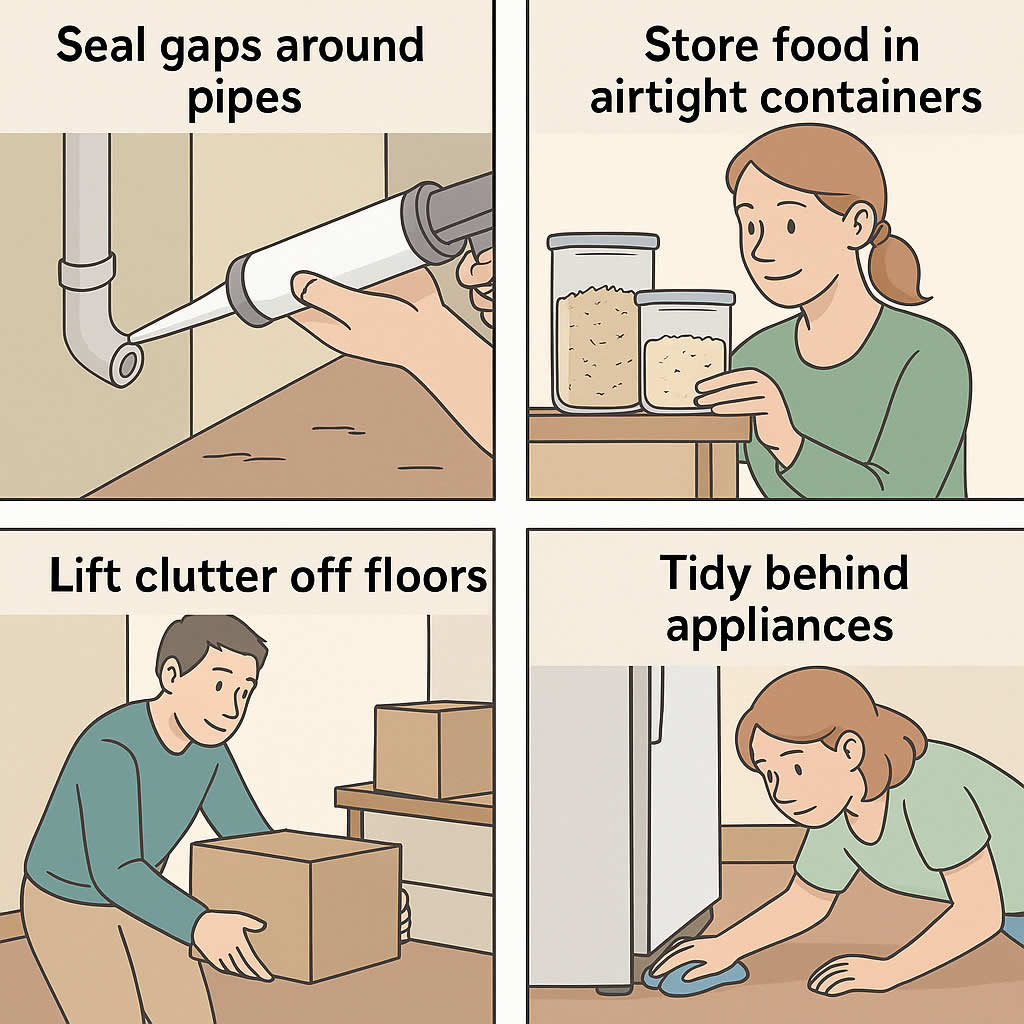
To reduce the routes mice use to enter your kitchen, start by focusing on the areas where pipework, flooring, and cupboards meet. These small structural points usually contain gaps that you barely notice, yet they provide mice with simple, hidden entrances. When you seal the spaces around sink pipes, tighten the fit of kickboards, and block the tiny openings around boiler flues or utility penetrations, you remove some of the most reliable pathways mice use every night.
It also helps to think about the environment mice encounter once they reach the kitchen. If crumbs fall behind appliances, or small spills remain around the base of cupboards, these subtle scents act as powerful attractants. By cleaning behind cookers, wiping surfaces thoroughly, and keeping floors tidy, you limit the cues that encourage mice to keep returning. When food is stored in airtight containers rather than open bags, mice are less likely to smell what’s inside and far less motivated to explore cupboards.
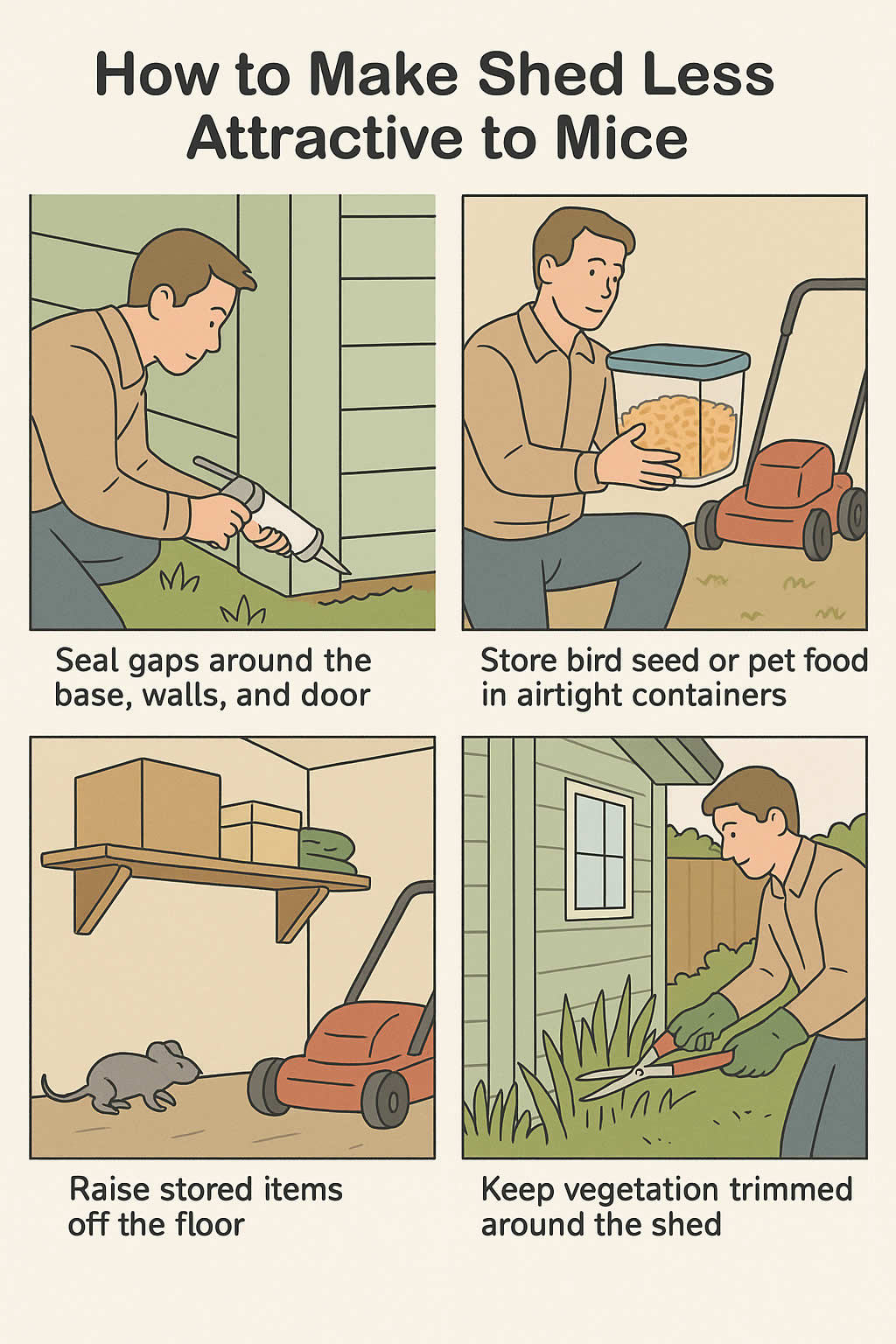
Finally, look at the outside of your home. Damaged air bricks, crumbling mortar, loose vents, or uncovered pipe openings often lead directly into the wall spaces that connect to the kitchen. Repairing these weaknesses and fitting metal mesh where needed stops mice from reaching the internal structure in the first place. Even small improvements to external access points make a noticeable difference, turning your kitchen from an easy target into a far less appealing option.
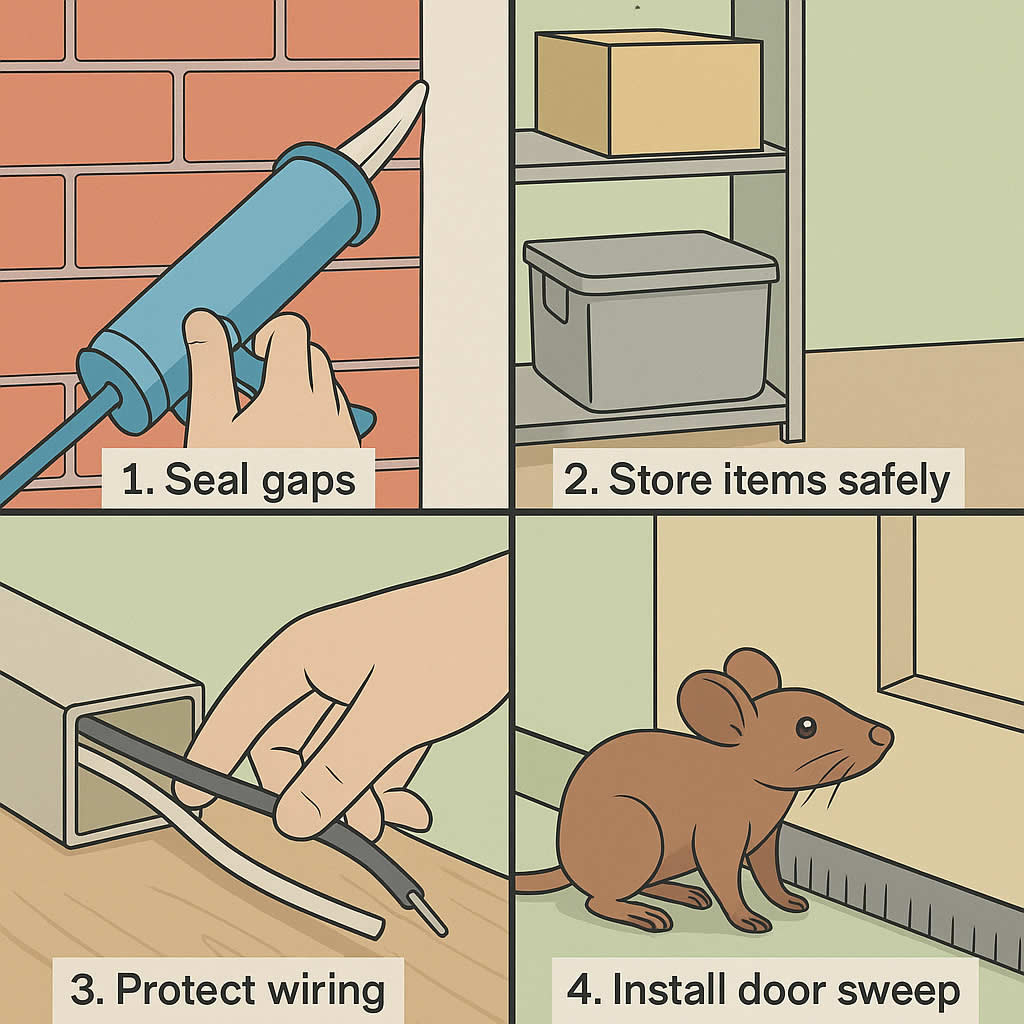
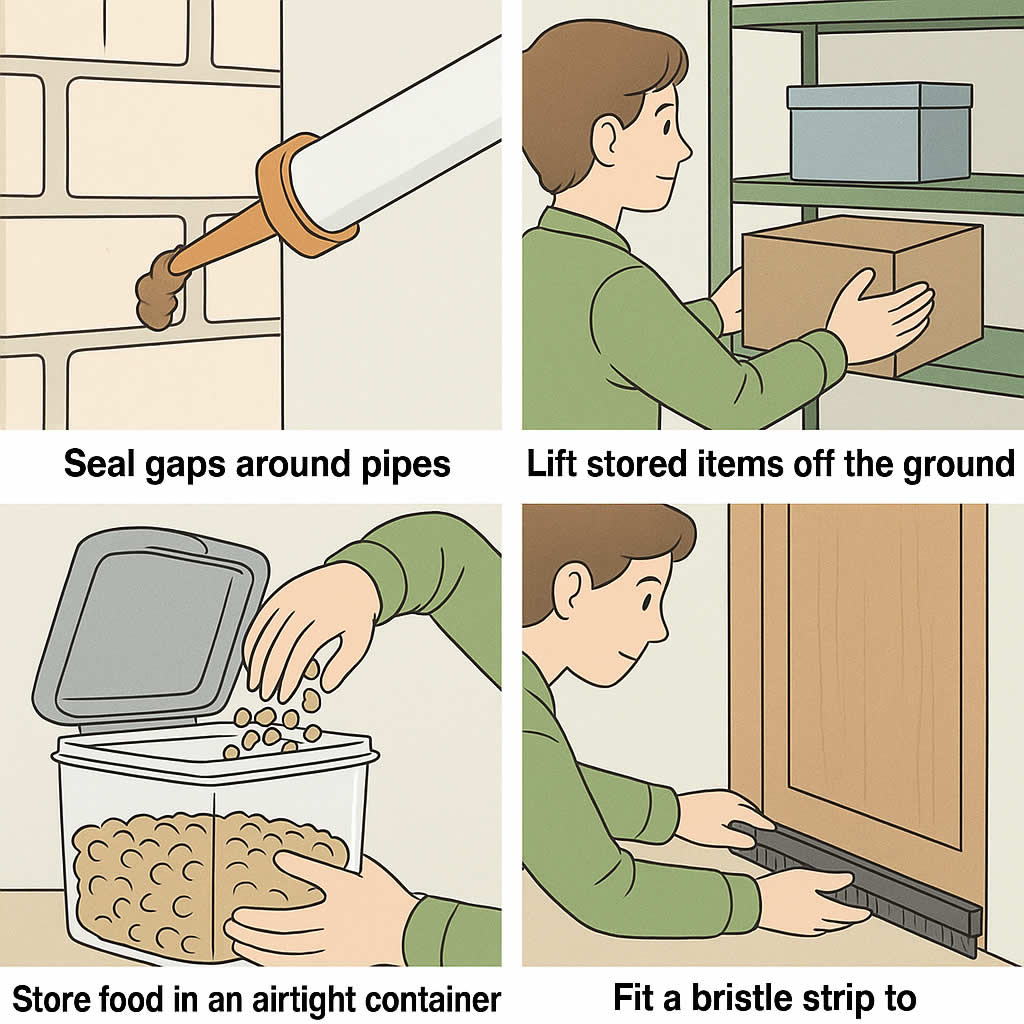
- Seal visible holes around sink pipes using strong filler that mice cannot chew through.
- Fit bristle strips to the bottom of external doors to reduce gaps mice use at night.
- Reinforce kickboards and ensure they fit tightly to block hidden cabinet access.
- Clear crumbs under appliances and wipe surfaces so mice don’t follow food scents.
- Repair damaged air bricks, mortar cracks, or loose vents on the outside wall.
- Use metal mesh to cover larger gaps around pipes or boiler flues.
- Lift food into airtight containers inside cupboards and keep floors clean.
- Tidy under-sink areas and remove clutter that provides shelter or nesting materials.
These steps significantly reduce the attractiveness of your kitchen and interrupt the routes mice naturally rely on.
Why Kitchens Become Mouse Hotspots First
Why kitchens become mouse hotspots first is due to the strong smell of food, warmth from appliances, and the constant presence of small crumbs or spills. Even tiny traces of food attract mice instantly.
If a mouse finds one speck of cereal or a small breadcrumb, it remembers the route and repeats it nightly. Kitchens provide the most consistent reward for their efforts, so once they enter, they tend to stay.
Warmth from appliances such as ovens, fridges, and dishwashers makes kitchens even more appealing during cold weather. Combined with numerous hiding places, it’s easy to see why they are the first room to show clear signs of activity.
Our Final Say!
Understanding how mice get into kitchens helps you act calmly and confidently. Mice rarely appear out of nowhere. They follow predictable pathways through wall cavities, pipe gaps, floor voids, and cupboard spaces until they reach the warmth and food scents of your kitchen.
By sealing small gaps, tidying concealed spaces, reinforcing weak areas, and managing food storage carefully, you make your kitchen far less appealing. These small changes break the patterns mice rely on and give you greater control over your home environment.