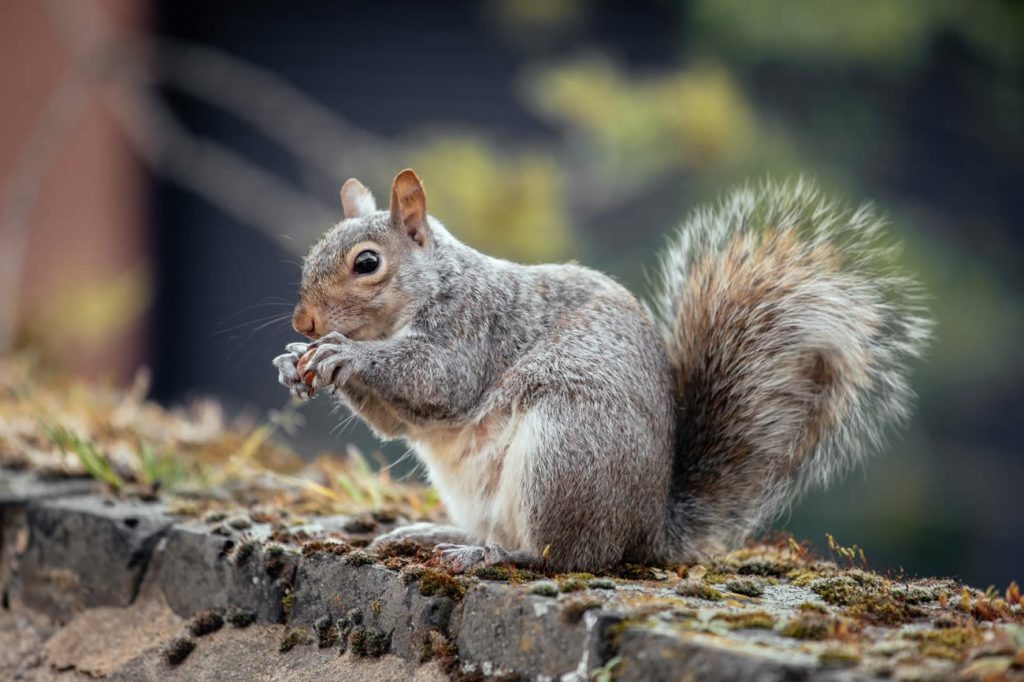
When autumn arrives, squirrels go into full “food mode.” You’ve probably seen one darting across a garden or leaping through trees with an acorn in its mouth before vanishing into the undergrowth. What looks like random foraging is actually a well-organised system — one that shows how intelligent these little animals really are.
Do squirrels just bury nuts wherever they land and hope to find them later? Not quite. They follow clever strategies to maximise their chances of retrieving food months later, all while minimising the risk of losing their stash to competitors. Let’s explore how squirrels organise their nut caches, what influences their choices, and how they remember it all.
The Two Main Storage Strategies: Larder vs Scatter Hoarding
Most squirrels use one of two main caching strategies when storing food for the winter.
- Larder hoarding is when a squirrel stores many nuts in a single or small number of locations — a kind of “pantry” for future meals. It’s efficient to access but risky because if another animal finds it, everything could be stolen.
- Scatter hoarding, on the other hand, involves burying nuts in hundreds of small caches spread across a wide area. This reduces the risk of total loss but requires an exceptional memory to recover them later.
Tree squirrels, such as greys and reds, mainly use scatter hoarding. By spreading their food out, they ensure that even if some caches are discovered by others, plenty still remain hidden for winter.
Chunking: How Squirrels Sort Their Stashes
One of the most fascinating discoveries in recent years is that squirrels may use a mental strategy known as chunking. This means grouping similar items together to make them easier to remember — much like how humans organise food cupboards or files on a computer.
Research has shown that some species, such as fox squirrels, seem to bury specific types of nuts in different areas — for example, almonds in one zone and acorns in another. By organising their stores this way, squirrels reduce the effort needed to find what they’re looking for later on.
When food is plentiful, squirrels invest more time in sorting and caching nuts by type and quality. When food is scarce, they may become less selective, storing whatever they can find in a hurry.
What Influences Where and How Squirrels Cache Food
Squirrels make a surprising number of decisions when it comes to caching food. Everything from the quality of the nut to who might be watching can affect their behaviour.
Nut Quality and Freshness
Squirrels often inspect each nut carefully, weighing it, shaking it, and even biting it to test for damage or rot. Nuts that are lighter or cracked are usually eaten immediately rather than stored. Hardier, high-quality nuts are saved for the colder months.
Ease of Handling
If a nut is particularly hard to open or large to carry, a squirrel might decide it’s more efficient to bury it rather than eat it straight away.
Competition and Thieves
Squirrels are smart enough to know when others are watching. If another squirrel or bird is nearby, they might pretend to bury a nut but actually hide it elsewhere later. This behaviour — known as a fake cache — is a clever form of deception used to protect their food.
Location and Landmarks
Squirrels don’t just bury nuts at random. They often choose areas with distinctive features — like tree roots, stones, or fallen logs — which act as landmarks to help them remember where each cache is hidden.
Memory and Retrieval
Squirrels possess excellent spatial memory, allowing them to relocate their buried food months later. They rely on a combination of memory, visual cues, and possibly even scent to pinpoint caches, even when the landscape changes with the seasons.
What Science Says About Squirrel Memory
Experiments have confirmed that squirrels remember the locations of their caches rather than relying solely on smell. In studies where scientists buried food in the same areas as squirrels, the animals consistently found their own caches more often than random ones.
They’ve also been observed moving nuts between caches — possibly to refresh their memory or move them to safer locations if they sense risk nearby. This behaviour suggests a form of ongoing management, similar to someone reorganising a pantry.
Why Organisation Matters
Squirrels depend on their caches to survive the winter, so efficiency and organisation make a big difference. Here’s why their method matters:
- Better retrieval rates: Grouping nuts by type helps squirrels remember where they stored specific foods.
- Reduced theft risk: Spreading caches across large areas means even if some are stolen, plenty remain safe.
- Energy conservation: Finding food quickly during winter saves vital energy when conditions are harsh.
In other words, their caching behaviour isn’t just instinct — it’s strategy.
Tricks of the Trade: Deception and Misdirection
To protect their hard-earned food, squirrels sometimes go to great lengths. They may dig a small hole, pretend to place a nut inside, then cover it up and move on. Once the observer leaves, the squirrel returns to hide the nut somewhere else.
This deceptive caching shows advanced problem-solving and awareness of others’ behaviour — rare qualities among animals. It also highlights how fiercely competitive their world is, especially in urban areas where space and food are limited.
How Long Can a Squirrel Remember?
A squirrel’s memory is remarkable. Studies suggest they can remember hundreds — possibly thousands — of cache locations for months at a time. They often prioritise retrieving the oldest or most perishable nuts first, showing they can recall both where and what they’ve stored.
It’s not perfect, though. Some nuts are inevitably forgotten — but that’s not all bad news. Forgotten caches can sprout into new trees, meaning squirrels unknowingly help reforest their habitats.
What We Still Don’t Fully Understand
There’s still much to learn about the fine details of squirrel caching. Scientists continue to explore questions like:
- How do squirrels decide which nuts to eat and which to save?
- How does changing weather affect their memory and success rates?
- Do different species use different caching strategies?
Each discovery reveals more about the intelligence and adaptability of these small but remarkable animals.
Final Thoughts
So, do squirrels really organise their nuts? Absolutely — and far more effectively than you might think. Their caching system is part instinct, part learned behaviour, and part clever strategy. From sorting by nut type to creating decoy caches, squirrels are master planners of the animal world.
The next time you see one busily burying acorns in your garden, remember: it’s not just storing food. It’s building a complex, carefully mapped network of tiny pantries — each one a little insurance policy for the cold months ahead.
And in doing so, squirrels aren’t just surviving; they’re shaping the very forests we depend on.