Mice can be unsettling to deal with at home. The sudden sight of one darting across the floor or hiding behind cupboards can make you feel as though your space has been invaded. Because of that, many people look for gentle, natural or pleasant-smelling remedies before trying traps or calling in a professional. Lavender is one of the most common suggestions you’ll see shared online – but does it genuinely work, and how far can it go?
There’s a difference between repelling mice and removing them. Repelling simply means making an area less attractive or comfortable for them. Removing means preventing access, eliminating food sources and breaking their route through your home. Lavender is sometimes used as a scent-based deterrent — but it’s not powerful enough to handle an active infestation on its own. Understanding where it fits into a wider plan is the key.
This guide walks you through how lavender works, how to use it if you decide to try it, where it helps, where it doesn’t, and what actually stops mice from coming back for good.
Does Lavender Repel Mice?
Lavender has a strong, distinctive aroma that many people find relaxing. Mice, however, have highly sensitive noses. Strong scents can interfere with the smell trails they rely on when moving around a space. Because of this, lavender can discourage mice from exploring certain areas, particularly tight access points like cupboard corners, airing cupboards and under-sink pipe gaps.
However, the effect is limited. Lavender doesn’t overpower a reliable food source, and the scent fades quickly. It may help as a short-term deterrent in well-chosen places, but it won’t drive out mice that have already established shelter, nesting materials and food routes.
In short:
- Lavender may discourage mice.
- It will not solve a mouse problem on its own.
- It is most useful only when combined with sealing entry points and controlling food sources.
How Lavender Affects Mice
Mice use scent to navigate. They follow consistent smell pathways left by themselves and other mice. Lavender’s strong fragrance can disrupt these trails in very localised spots. When a mouse encounters a space that “smells wrong,” it may hesitate or choose a different route.
That said, scent deterrents are temporary. Lavender essential oil evaporates quickly, and dried lavender loses strength over time. To be effective, you’d need to refresh placements frequently.
If you choose to use lavender, treat it as one tool, not the whole solution.
How to Use Lavender to Help Deter Mice
This section includes the only bullet points in the article.
- Place a few drops of lavender essential oil on cotton balls or small cloth pads.
- Position them in very targeted locations: behind appliances, inside cupboard corners, near air gaps, under the sink, or along skirting board edges where droppings have been found.
- Refresh the scent every 2–4 days, or sooner if the aroma fades.
- Avoid leaving essential oils where children or pets can reach them.
- Use lavender only after you’ve identified likely entry points and cleaned surfaces, so mice are more likely to be disrupted.
Lavender Plants vs Dried Lavender vs Essential Oil
Living lavender plants in pots or beds outside don’t prevent mice entering your home. Outdoors, the scent disperses too widely to make any real difference. Indoors, dried lavender in sachets has a mild fragrance that may help in very contained spaces, such as a drawer, but won’t hold long-term strength.
Essential oil is the strongest form because the scent is more concentrated. However, strength also means faster fading — especially in warm rooms. This is why scent needs topping up regularly to have any noticeable effect.
Peppermint Oil
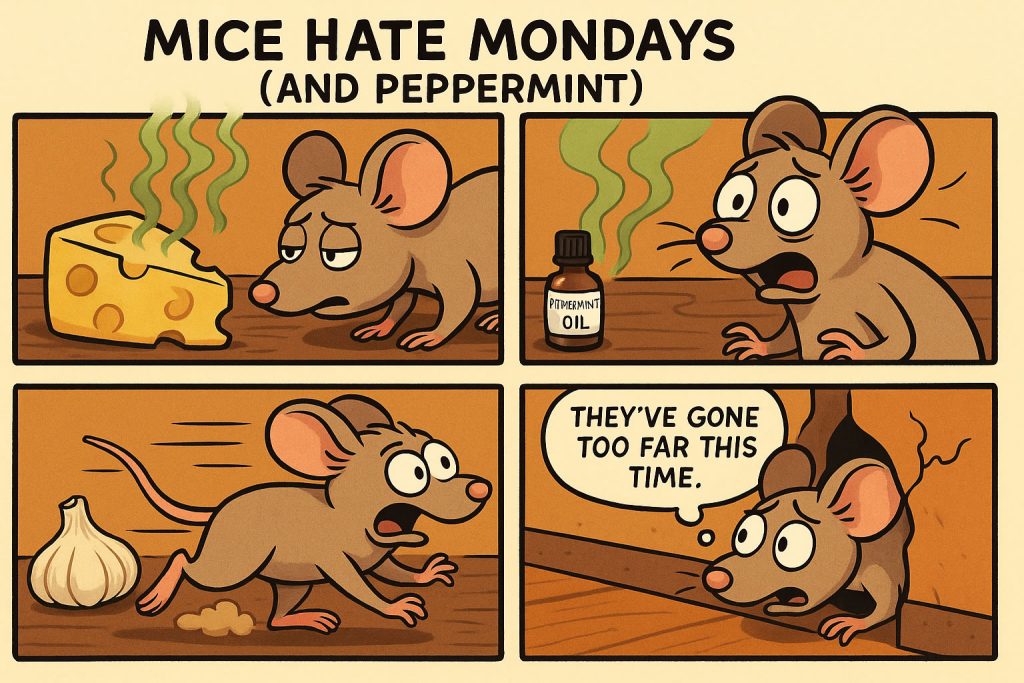
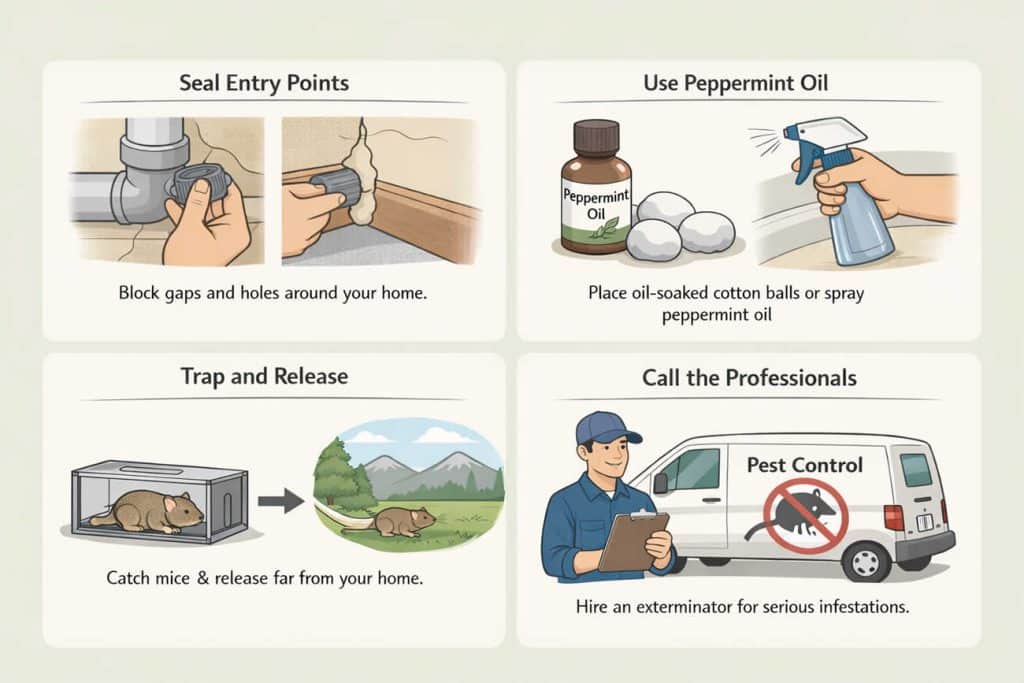
Peppermint oil is another common home remedy used for mice deterrence. It carries a sharp, menthol scent that mice tend to avoid in small, enclosed areas. Like lavender, peppermint oil only works when freshly applied and placed exactly where mice travel, such as skirting edges or cupboard gaps. On its own, it cannot clear an infestation, but it can support a wider prevention routine when you repeatedly refresh the scent and combine it with sealing entry points.
Citronella Oil
Citronella is better known for outdoor insect repellent products, but its strong lemon-grass aroma is sometimes used in the same way as peppermint and lavender to deter mice in small indoor areas. Its effect is short-lived and depends entirely on constant scent strength. It works as a supplementary measure rather than a main solution. If you decide to use citronella, limit application to cotton pads or small enclosed placements rather than spraying surfaces.
The Limits of Scent-Only Mouse Control
Relying on lavender or any other scent alone leads to disappointment because scent fades. Once the fragrance weakens, mice simply return. If food or warmth is available, they’ll tolerate scent to access it. Mice are persistent survival animals — a pleasant smell won’t outweigh hunger or shelter.
You will only see real progress when scent deterrents are used after:
- Cleaning food residues
- Removing access to crumbs and stored food
- Blocking entry routes with proper materials
- Monitoring activity patterns
Think of lavender as a small finishing touch, not the core method.
The Real Foundation of Mouse Control
To stop mice from returning, you need to focus on the environment, not just the scent.
This means:
- Closing up holes, cracks and pipe gaps where mice squeeze through
- Using something mice cannot chew, such as steel wool combined with sealant
- Storing food in airtight containers
- Wiping surfaces every evening to remove crumbs and residue
- Keeping pet food in sealed tubs, not open bowls overnight
When the house becomes less rewarding, mice move on.
Traps and Monitoring
If you have signs of an active mouse population, such as droppings, gnaw marks or scratching inside walls, you’ll likely need traps. Place them along walls where mice naturally travel, rather than randomly in open spaces. Check traps daily, and continue to seal entry points at the same time. Traps remove, sealing prevents return.
Lavender can then be used as a final deterrent to discourage new explorations, not as the main tactic.
Safety Notes
Essential oils, including lavender, peppermint and citronella, can irritate skin and airways, particularly in babies, children and pets. Some oils can be harmful to cats if licked or inhaled in concentrated form. Always place scented cotton balls out of reach and avoid spraying oils on surfaces where food is prepared.
Where Lavender Fits Into the Plan
Lavender can help:
- As a short-term discouragement
- In small, defined spaces
- As part of a combined approach that includes sealing, cleaning and trapping
Lavender cannot:
- Remove mice on its own
- Replace structural prevention
- Control a well-established nest or colony
Our Final Say
Lavender can play a role in repelling mice, but only in a very limited, short-term way, and only when the scent is strong and refreshed regularly. It’s not a replacement for the proven essentials of mouse control: sealing entry points, removing food access and using traps where needed. If you choose to use lavender, think of it as a complement, not the core solution.
With the right combination of prevention, monitoring and small scent-based deterrents, you can make your home far less inviting to mice and restore your peace of mind.