Related Queries
ToggleA shed can look unimportant from the outside, but to a mouse it can be a dry, quiet, low-risk shelter with plenty of places to hide. The usual attractants are stored bird seed, grass seed, pet food, cardboard, insulation, clutter, water, warmth and gaps small enough to miss during a quick look.
On shed inspections, the signs people often overlook are not dramatic. A few black droppings under a shelf, shredded paper behind a paint tin, greasy rub marks on a timber edge, or a faint musty smell can all point to mouse activity. The pattern can vary a lot depending on the property type, hygiene, access points, weather and how long the mice have been using the shed.
DIY prevention can help when activity is light and the shed is easy to proof. If mice are entering the home, damaging wiring, appearing in daylight, or returning after repeated attempts, a qualified pest control technician should inspect the whole property and create a safe treatment plan.
Why sheds become attractive to mice
Mice are small, cautious and excellent at exploiting gaps. A young mouse can squeeze through a surprisingly small opening if its skull can pass. Sheds often provide several advantages at once: shelter from rain, protection from predators, soft nesting material and stored food.
Autumn and winter are the busiest times for shed-related mouse calls, especially after colder nights or heavy rain. Mice will move towards warmer structures, compost areas, garages, outbuildings and wall voids. In spring and summer, sheds can still be active if food is stored there or if the structure sits close to dense planting.
The British Pest Control Association mouse advice highlights why correct identification and proofing matter. Treating mice as a one-off nuisance without finding the food source or entry point usually leads to repeat activity.
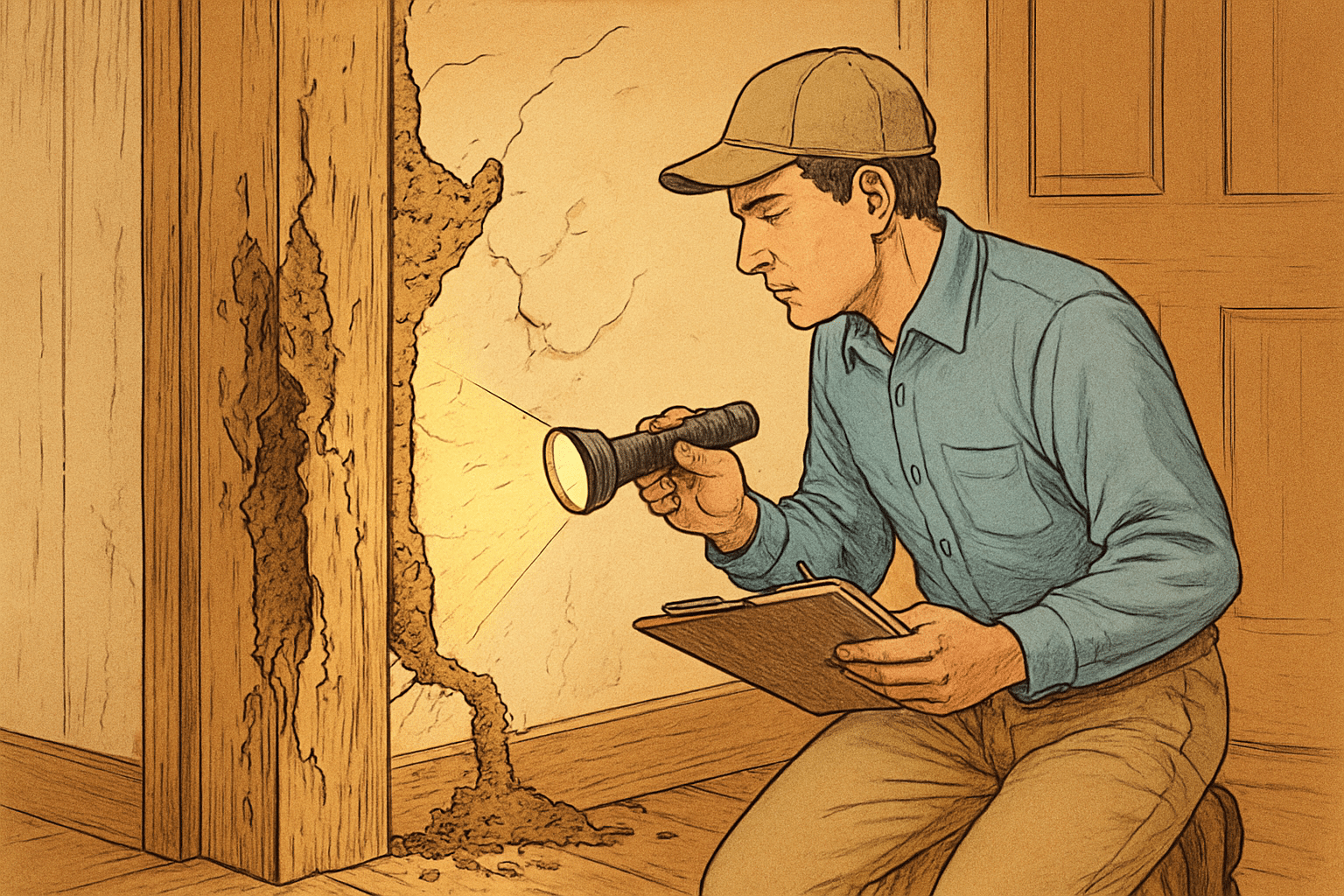
It is also worth remembering that not every gnaw mark or pile of debris is caused by mice. In some properties, rats, squirrels, birds, wasps or insects may be involved. Timber damage can sometimes cause confusion too, which is why wider pest identification skills matter. For example, the signs are very different when checking timber pests, as shown in practical termite activity signs.
The biggest shed attractants and what to do first
The fastest way to reduce mouse interest is to remove what makes the shed useful. Food, nesting material and access gaps should be tackled together. Removing only one usually slows activity but does not solve it.
| Attractant | Why mice like it | Fastest practical action |
|---|---|---|
| Bird seed and pet food | High-energy food, easy to gnaw into | Move into sealed metal or thick plastic containers |
| Cardboard and paper | Warm nesting material | Recycle damaged boxes and lift storage off the floor |
| Cluttered corners | Safe routes and hiding places | Create clear inspection gaps along walls |
| Gaps under doors | Easy entry from garden edges | Fit a brush strip, threshold strip or metal plate |
| Leaking taps or damp trays | Water source and soft nesting spots | Dry the area and repair the leak |
The common problem is that a shed slowly becomes a storage overflow. Bags split, boxes soften, old fabrics sit undisturbed and mice gain cover. The cause is rarely poor housekeeping alone; weather, shed age, decking voids, damaged felt and nearby vegetation all play a part.
The fastest solution is a controlled clear-out. Do not drag everything into the garden and scatter droppings. Work in sections, bag contaminated soft items, seal food, and keep a record of where droppings or gnawing are found.
Signs of a more serious problem include fresh droppings after cleaning, repeated gnawing, sounds in walls, mice seen indoors, or activity around several buildings. Prevention means storing food correctly, cutting back cover, sealing gaps and checking the shed after cold weather.
Preparation guide before you clear or proof a shed
Before starting, check the shed calmly in daylight. Look along the base, under shelves, behind stored bags, around pipe holes, under the door and where the roof meets the walls. Mice usually travel tight to edges rather than across open floor space.
Safety matters because mouse urine and droppings can carry disease risks. The NHS guidance on leptospirosis is a useful reminder to avoid direct contact with contaminated water, soil or animal urine. Wear gloves, avoid dry sweeping droppings, and dampen contaminated dust before wiping.
Useful tools and materials include disposable gloves, a mask for dusty areas, refuse bags, disinfectant, paper towels, a torch, a scraper, sealant, wire wool, galvanised mesh, metal kick plates, storage tubs and a notebook. If using traps or rodenticide, follow the product label exactly and keep them away from children, pets and non-target wildlife.
Preparation steps are simple. Remove pets and children from the area, ventilate the shed, photograph suspicious signs, clear the central floor first, then work around the walls. Keep food items separate from contaminated items. Do not handle dead rodents bare-handed.
If you are unsure whether a product is appropriate, do not guess. The Health and Safety Executive biocides information explains why pest control products must be used responsibly and according to approval conditions.
Step-by-step shed mouse-proofing plan
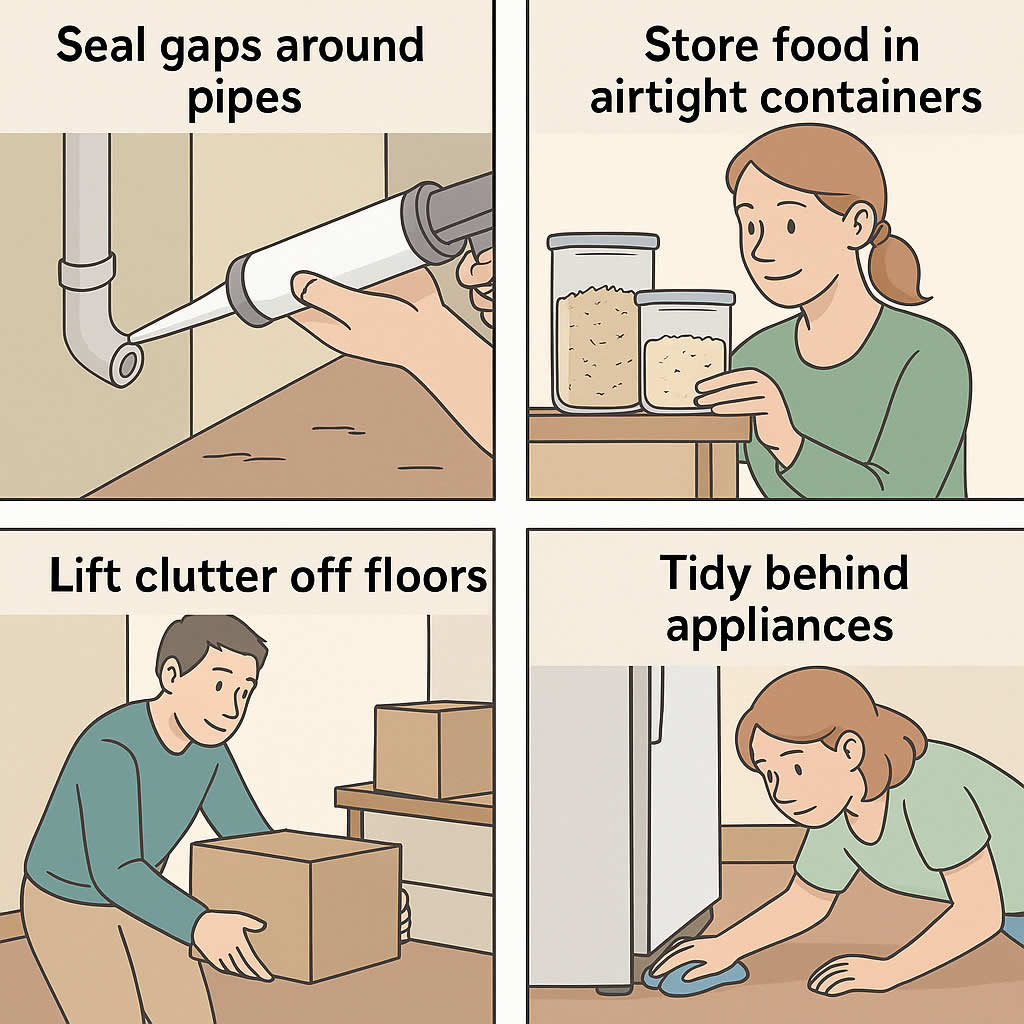
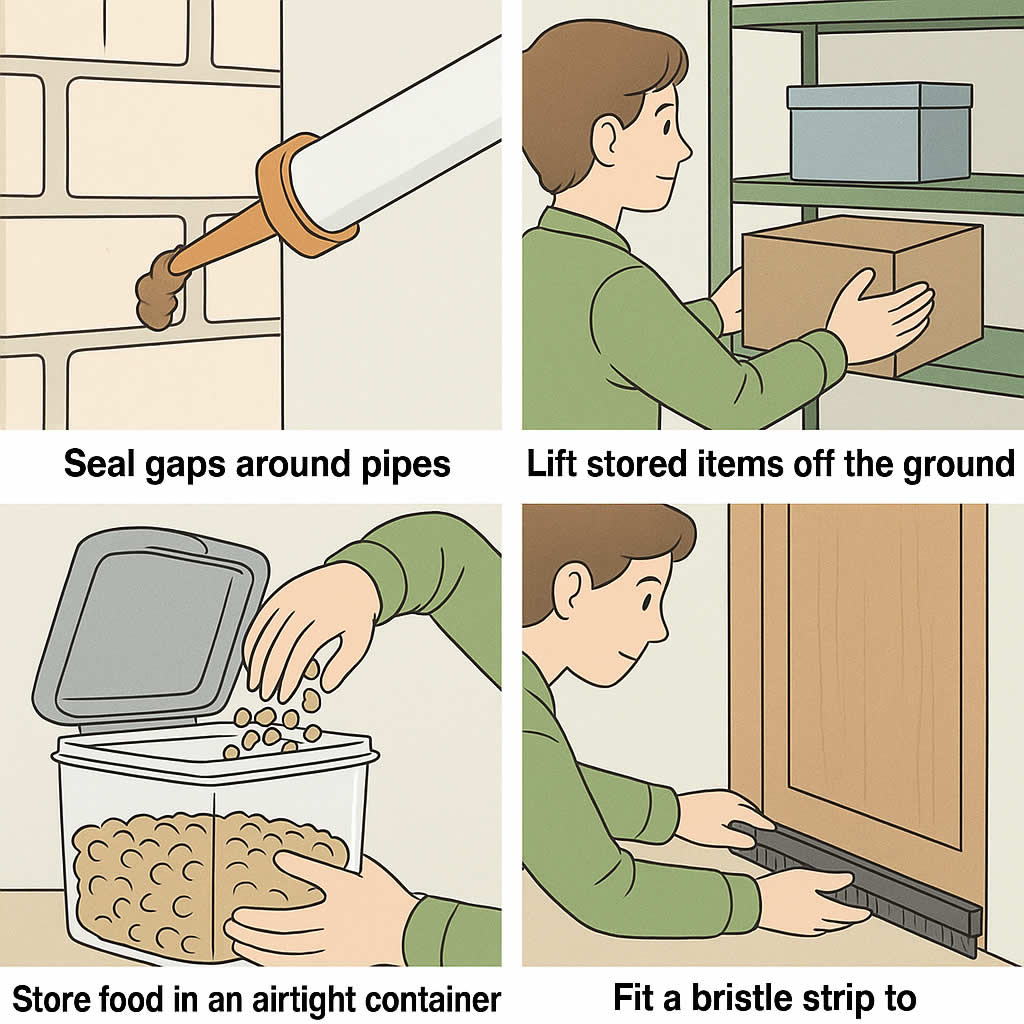
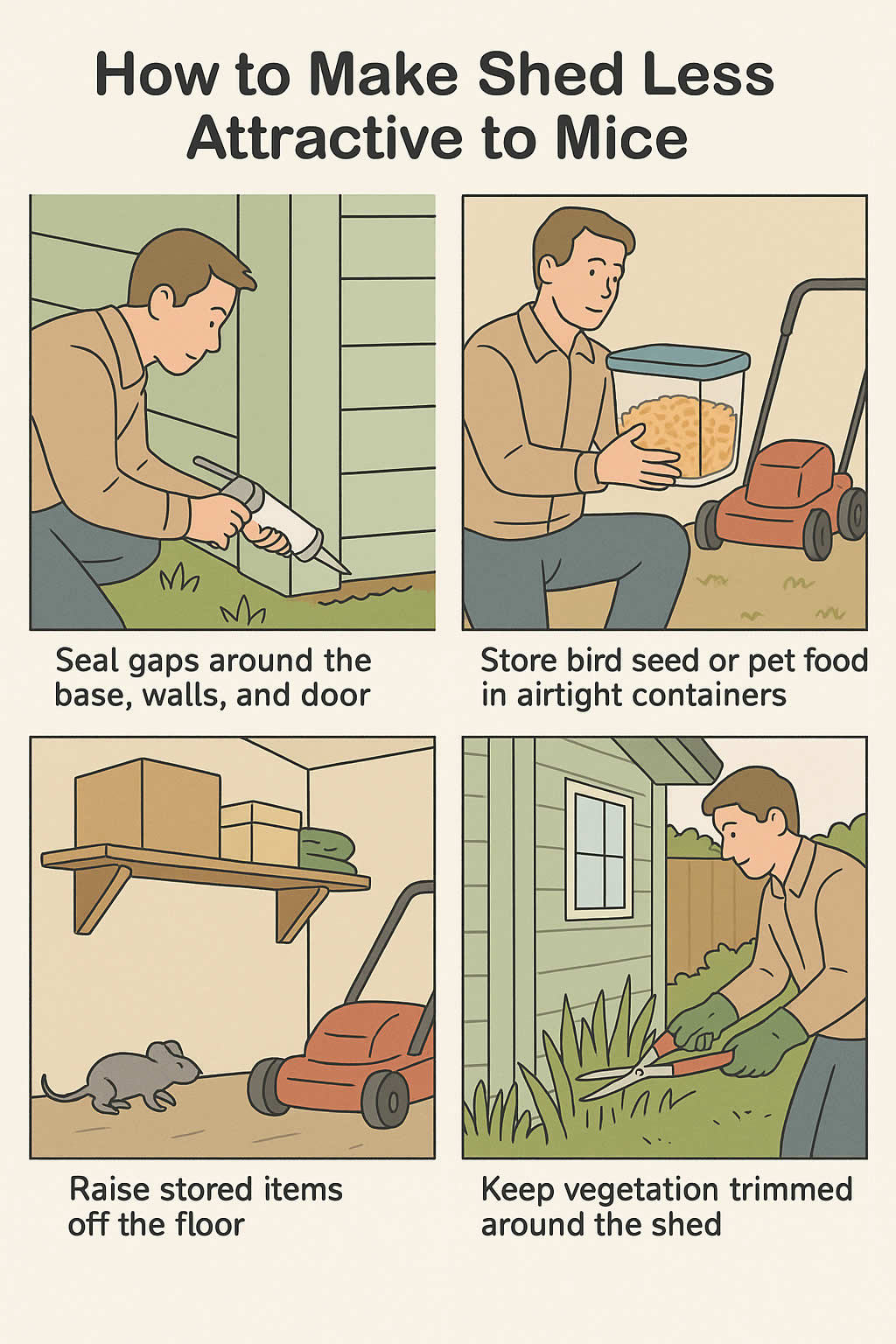
Start with food control. Put bird seed, chicken feed, lawn seed and pet food in tight-lidded containers. Thin plastic storage boxes are sometimes gnawed through, so use stronger tubs or metal bins where mice have already been active.
Next, reduce nesting material. Cardboard, bubble wrap, old cushions, insulation offcuts and fabric bags should be removed if contaminated. Keep essential items on shelves, not directly on the floor, and leave a small inspection gap around the walls.
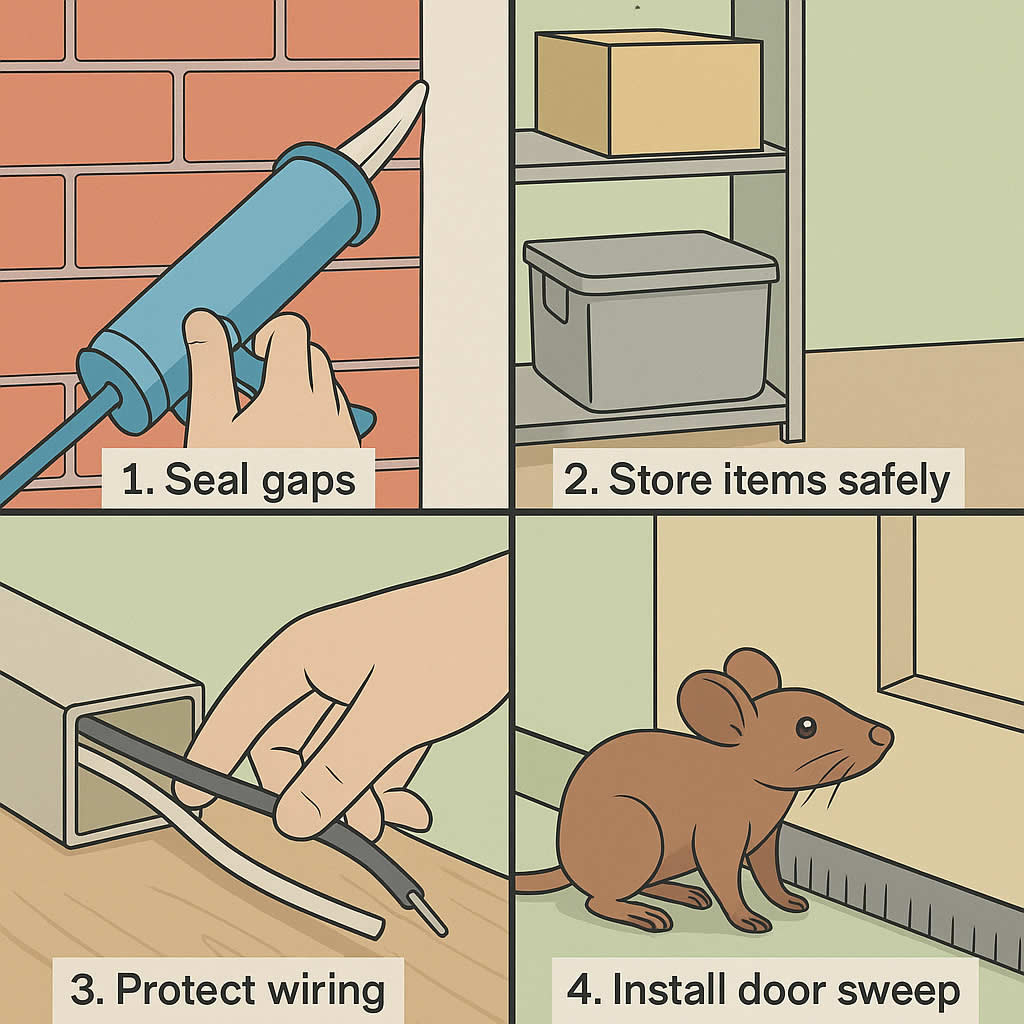
Then proof the structure. Seal gaps around pipes and cable holes with suitable sealant backed by wire wool or mesh. Cover larger holes with galvanised mesh. Fit a threshold strip or brush strip to the door, but remember that soft rubber alone can be gnawed.
Check the roof and walls. Damaged felt, warped boards and loose overlaps can give mice and other pests access. If timber has unusual galleries, blistering or structural weakness, compare the evidence carefully. A resource on termite damage on drywall shows how different pest damage can look from ordinary gnawing or damp staining.
Use monitoring before assuming the job is complete. Non-toxic monitoring blocks, traps in protective boxes, or a fine dusting of tracking powder alternatives such as flour in a small test area can show whether movement continues. Do not place loose bait where children, pets or wildlife can reach it.
If treatment is needed, correct placement matters more than quantity. Mice follow edges, squeeze behind stored goods and investigate familiar routes. A professional will normally inspect first, identify risks, choose safe locations and review activity rather than simply leaving products and hoping for the best. Similar principles apply across pest control: identification, safe product choice and follow-up are just as important in guides such as choosing termite control products.
When the problem is bigger than a shed
A shed infestation can be the visible part of a wider property issue. Mice may be nesting under decking, feeding from bird tables, entering air bricks, using cavity walls, or moving between neighbouring gardens. Older terraces, rural homes, commercial yards and properties near watercourses can all behave differently.
The problem is more serious when activity continues after food removal and proofing. Causes may include hidden entry points, nearby harbourage, shared walls, damaged drains, livestock feed, compost bins or poor waste storage. The fastest solution is a full perimeter inspection, not more random bait.
How to fix it depends on the findings. Air brick covers, door repairs, pipe sealing, vegetation clearance, improved waste storage and targeted trapping may all be needed. In some cases, professional rodenticide use is appropriate, but it should be planned to reduce risks to pets, wildlife and people.
Warning signs include scratching in the house, droppings in kitchen cupboards, chewed wiring, repeated dead mice, strong smells, or activity during the day. If these appear, contact a qualified technician. Local support can be useful where regional housing styles and rural pressures affect rodent behaviour, such as pest control services in Berkshire.
Prevention is ongoing. Recheck the shed every season, especially before winter. Keep vegetation trimmed, clear fallen fruit, manage bird feeding, repair shed damage quickly and keep a simple log of sightings. For structural pest concerns beyond rodents, broader treatment planning such as removing termites from homes shows why inspection-led control is safer than guesswork.
FAQ: mice in sheds
What smell attracts mice to a shed?
Food smells are the main draw. Bird seed, pet food, grass seed, spilled grain, old barbecue grease and even food residue on gardening gloves can attract mice if the shed is quiet and protected.
Nesting smells also matter. Mice are attracted to areas that already hold mouse scent, urine marks or familiar travel routes. That is why cleaning and proofing need to happen together.
Strong household smells do not reliably solve the problem. Peppermint and similar scents may disturb mice briefly, but they do not remove food, shelter or entry points.
Will mice leave my shed if I remove the food?
Sometimes they will, especially if the shed was only being used as a feeding stop. Removing food is one of the best first steps and should be done straight away.
However, mice may stay if they have nesting material, warmth and safe entry routes. A shed with cardboard, insulation and clutter can still be useful even without obvious food.
Check again after a few nights. Fresh droppings, new gnawing or disturbed monitoring points mean the shed still needs proofing or treatment.
Are mouse droppings in a shed dangerous?
They can be a hygiene risk, so avoid touching them directly. Wear gloves, ventilate the area and dampen droppings before wiping them up to reduce dust.
Do not use a vacuum cleaner on dry droppings because it can spread fine particles. Bag contaminated waste securely and wash hands thoroughly afterwards.
If there are heavy deposits, a strong smell, or contamination on items used indoors, treat it more cautiously. A professional clean-up may be sensible for severe contamination.
Can mice damage tools, wiring or stored items?
Yes. Mice gnaw to manage their teeth and to open routes through packaging. They may damage electrical cables, plastic handles, seed bags, furniture pads and insulation.
The cause is usually a combination of shelter and accessible materials. A cluttered shed lets mice move and gnaw without being disturbed.
The quickest fix is to remove damaged soft goods, protect wiring where possible, lift storage and proof entry points. If wiring is chewed, ask a qualified electrician to check it.
Should I use poison in my shed?
Rodenticide can be effective, but it is not always the best first choice for a domestic shed. Poor placement can risk pets, children, wildlife and non-target animals.
If using any product, follow the label exactly and use tamper-resistant bait stations where required. Never scatter bait loosely around a shed.
For recurring activity, indoor spread, or uncertainty about safe use, call a qualified pest control technician. A planned approach is safer than repeatedly adding more bait.
How do I find where mice are getting in?
Inspect low first. Look under doors, around corners, beside pipes, where boards meet the base, and behind stored items along walls.
Use a torch at floor level. Greasy rub marks, gnawed edges, droppings and small gaps with disturbed dust are useful clues. Check outside as well as inside.
If you cannot find the entry point, monitor likely routes for a few nights. Persistent activity often means there is a hidden gap under cladding, decking or the shed base.
Do mice come back after treatment?
They can if the attractants remain. Treatment may reduce the current population, but new mice can move in from nearby gardens, outbuildings or neighbouring land.
What customers should realistically expect after a first visit is a reduction in activity, better understanding of entry points and a follow-up plan. Instant permanent removal is not realistic without prevention.
Keep checking after treatment. If fresh signs continue, the plan may need adjusting because pest problems vary with access, weather, hygiene and infestation pressure.
When should I call a pest control technician?
Call when activity is repeated, widespread, close to living areas, or linked with chewed wiring, strong odour or dead rodents. Daytime sightings can also suggest heavier pressure.
A technician should inspect, confirm the pest, identify entry points, assess risks and explain the treatment plan. Safe control is not just about placing traps or bait.
DIY steps are useful for proofing and hygiene, but serious or recurring infestations need proper assessment. That is the most reliable way to protect the shed and reduce the chance of mice moving indoors.