Related Queries
ToggleTermites are often described as silent destroyers because they can feed inside timber, flooring, wall voids and structural gaps long before obvious damage appears. The difficult part is that many early signs look like ordinary damp, ageing wood, old paint, woodworm, or minor settlement cracks.
In UK homes, true termite infestations are uncommon compared with countries where subterranean and drywood termites are established. The British Pest Control Association termite guidance notes that termites are not a widespread native household pest in Britain. That said, imported timber, travel, unusual local conditions, and misidentified wood-boring insects can still lead to genuine concerns.
On inspections, the most useful approach is simple: look for patterns. One mark on a skirting board may mean nothing. Hollow timber, mud tubes, shed wings, moisture, frass, distorted paint and live insects together deserve closer attention. Pest problems also vary depending on property type, hygiene, access points, weather, timber condition and the severity of the infestation.
Why Termites Are Difficult to Spot Early
Termites avoid light and open air where possible. Subterranean termites usually move between soil and timber through protected mud tubes. Drywood termites can live inside timber itself, producing tiny pellets as they hollow it out. Either way, the insects are usually hidden while the damage quietly develops.
Homeowners often check the obvious places first, such as exposed beams or a damaged door frame. In practice, activity is more often found around damp timber, hidden floor edges, service penetrations, subfloor voids, built-in cupboards, loft timbers, stored wood, and wall areas behind furniture.
Seasonal patterns can also confuse things. Swarming termites, where winged reproductive termites leave a colony, are more noticeable during warm, humid periods. However, feeding can continue unseen outside that short window. A house can look calm on the day you check and still have active insects inside a concealed timber run.
Early Signs of Termites in a Home
One of the clearest warning signs is hollow-sounding wood. Tap skirting boards, architraves, floorboards and exposed joists with a screwdriver handle. Timber that sounds papery, thin or drum-like may have been eaten from the inside. Do not stab hard into structural timber, but gentle probing can reveal soft galleries beneath a thin outer layer.
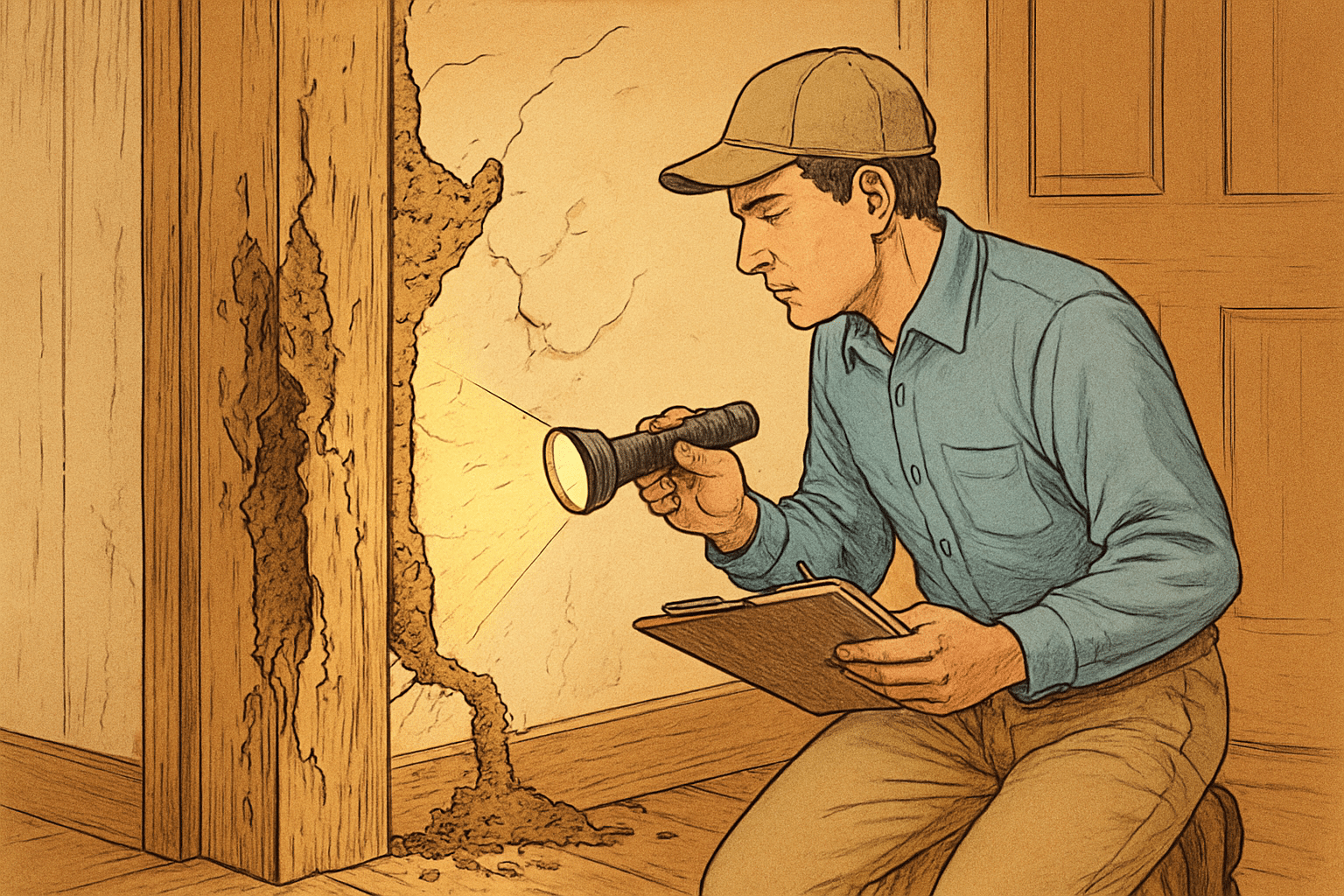
Mud tubes are another important clue. These narrow, brown, soil-like lines may appear on walls, foundations, masonry, timber joints or around pipe entries. They allow termites to travel while staying moist and protected. If you break a small section and it is rebuilt within a day or two, that suggests current activity.
Look for shed wings near windowsills, door thresholds, light fittings and spider webs. Winged termites are attracted to light, so their discarded wings often collect where homeowners clean without thinking much of it. If you are unsure what the insect looks like, compare key features with a reliable identification guide such as what termites look like.
Drywood termite droppings, known as frass, look like tiny, hard, ridged pellets. They may gather beneath pin-sized holes in timber, furniture or trim. Unlike sawdust, frass tends to be grainy and uniform. In routine inspections, these small piles are easy to miss because they are often mistaken for dirt, crumbs or old wood dust.
Paint and plaster can also show signs. Bubbling, blistering, rippling or faint lines in drywall may happen when termites feed behind the surface or when moisture supports pest activity. For wall-specific clues, it is worth comparing your observations with termite damage on drywall before assuming every mark is pest-related.
Where to Inspect Before You Panic
Start outside. Check the base of external walls, air bricks, damp-proof course areas, decking posts, fence timbers, wood stores, raised beds, tree stumps and any timber touching soil. Termites need access to cellulose, and soil-to-wood contact is one of the most common risk factors in places where subterranean termites are active.
Move indoors and follow moisture. Kitchens, utility rooms, bathrooms, cellars, conservatories and poorly ventilated floor voids deserve careful checks. Leaking pipes, blocked gutters, failed sealant and condensation do not create termites by themselves, but damp timber is easier for many pests and decay organisms to exploit.
Use a torch, gloves and a flat screwdriver. Look along skirting boards, under sinks, around pipe boxing, behind stored cardboard, and inside cupboards that back onto external walls. Avoid pulling apart electrics, structural panels or asbestos-risk materials. If access is poor, a technician may use moisture meters, inspection mirrors, borescopes and careful timber probing.
If you find insects, collect a sample in a sealed container or take clear close-up images. Correct identification matters because termite treatment, woodworm treatment and damp remediation are not the same. Misidentification can lead to wasted money and unnecessary chemical use.
Termites or Another Timber Problem?
Many UK callouts that begin with “I think I have termites” turn out to be common furniture beetle, deathwatch beetle, damp rot, wet rot, dry rot, ants, or old historic damage. That does not mean the concern should be dismissed. It means the inspection needs to separate active infestation from past damage and from building defects.
Woodworm usually leaves neat round exit holes and powdery bore dust. Rot often leaves cracking, cubing, fungal growth or a musty smell. Termites can leave internal galleries, mud tubes, frass, shed wings and live pale-bodied workers. The signs overlap, so it is rarely wise to diagnose from one photograph alone.
The United States Environmental Protection Agency gives a useful overview of termite identification and control, particularly for understanding why safe product choice and correct pest identification matter. The biology is relevant even if local UK risk is much lower.
Also consider the building history. Older properties, converted buildings, extensions, timber-framed structures and homes with previous leaks can show defects that look alarming but are inactive. A professional assessment should include moisture, ventilation, timber condition, access points and whether there is evidence of live insects now.
What to Do If You Find Possible Termite Activity
Do not spray random household insecticide into holes, cracks or sockets. It may scatter insects, contaminate surfaces, or make later inspection harder. Over-the-counter products must be used only as the label allows, and they are rarely a complete answer for structural termite activity.
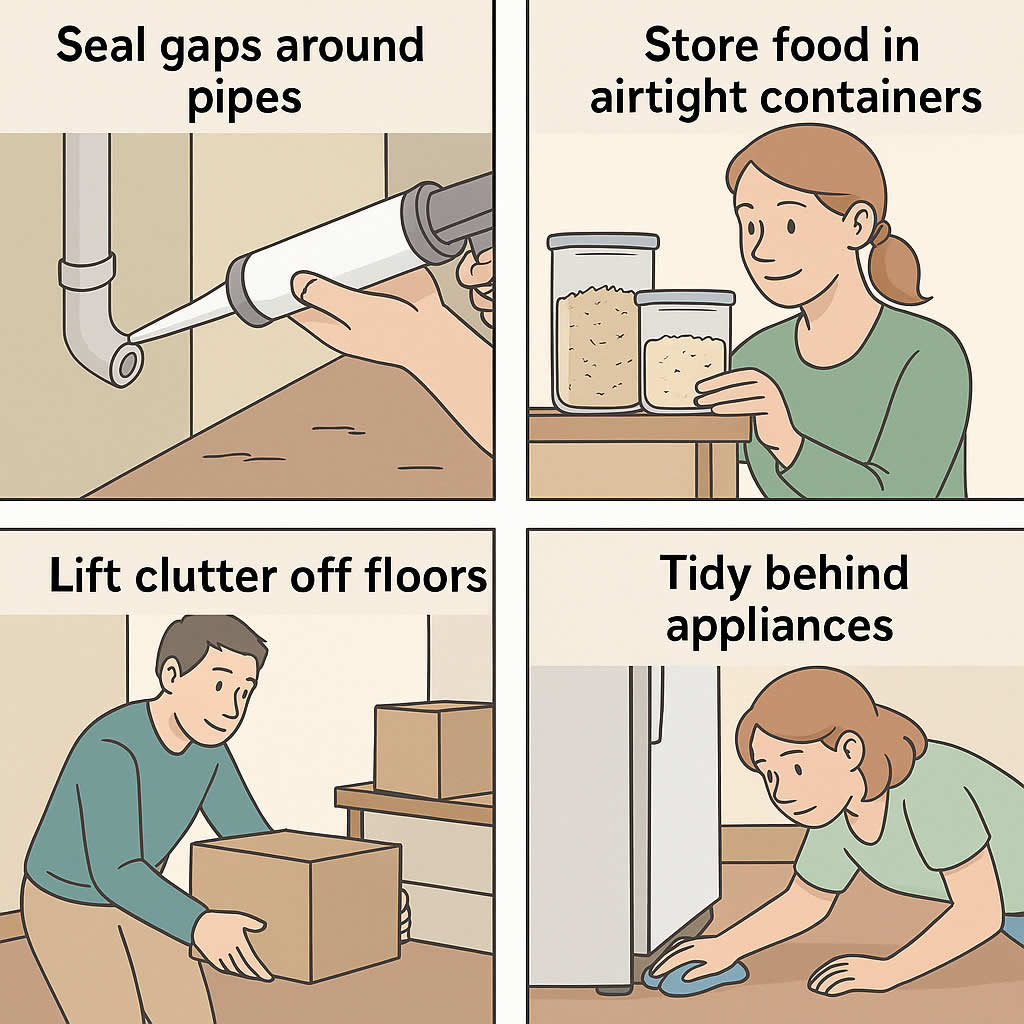
Reduce conditions that favour pests while waiting for advice. Fix leaks, clear blocked gutters, improve ventilation, remove timber and cardboard from direct floor contact, and keep firewood away from the house. These steps will not remove a serious colony, but they support any safe treatment plan.
If damage appears structural, if mud tubes are present, or if live termites are seen, call a qualified pest control technician. Treatment may involve monitoring stations, baiting, targeted residual products, timber treatment, soil barriers, or, in some regions, fumigation. The right approach depends on species, access, building design and infestation extent. For treatment options, compare the basics in how termite treatment works.
After the first visit, expect inspection, identification, risk assessment and a plan. Serious infestations are not normally solved in one quick appointment. Follow-up monitoring is often needed to confirm whether activity has stopped. If tenting is ever recommended, preparation is detailed and safety-led; the practical steps in house tented for termites show why planning matters.
Local conditions can influence what help is available. For example, homeowners comparing pest control services in Bristol should still ask about timber pest identification, safe product use, monitoring, insurance, and whether the technician can distinguish termite signs from beetle or rot damage.
FAQ: How to Tell If You Have Termites
What is the first sign of termites most people notice?
The first sign is often not an insect. Homeowners usually notice bubbling paint, a soft skirting board, a door that suddenly sticks, small pellets near timber, or unexplained wings near a window.
On inspections, the overlooked clue is the combination of moisture and hidden timber contact. A tiny mark on its own may be harmless, but several signs in the same area are more concerning.
If you find possible evidence, take photographs before cleaning it away. A sample of wings, pellets or insects can make identification much more reliable.
Can you hear termites in the walls?
Sometimes, but it is not a dependable test. In heavy infestations, faint clicking, rustling or tapping may be heard in quiet rooms, especially near damaged timber.
Most homes with early activity will have no obvious sound. Background noise, wall construction and the location of the colony make listening unreliable.
If sound is your only clue, check for physical signs such as mud tubes, hollow timber, frass or moisture damage before drawing conclusions.
Do termites only attack dirty homes?
No. Termites feed on cellulose, not household dirt. Clean homes can still be affected if there is suitable timber, moisture and access.
Hygiene still matters because clutter, stored cardboard and blocked access make inspection harder. In pest control work, packed cupboards and garages often hide early signs.
Good housekeeping supports prevention, but it does not replace building maintenance, moisture control and proper pest identification.
Should I break open a mud tube?
You can break a small section if it is safe and accessible, then check whether it is repaired. Rebuilding can suggest active termite movement.
Do not remove all evidence before an inspection. A technician needs to see tube location, direction, moisture conditions and nearby entry points.
Avoid disturbing suspected structural areas, electrics or sealed voids. If the tube is extensive, take photos and arrange a professional assessment.
What do termite droppings look like?
Drywood termite droppings are small, hard pellets that may look like coarse pepper, sand or tiny seeds. They often appear in neat piles below kick-out holes.
Subterranean termites do not usually leave obvious dry pellet piles because they use soil and moisture in their tunnels. Their signs are more likely to include mud tubes and damaged timber.
If you find dust beneath wood, do not assume it is termites. Beetle frass, sawdust, plaster dust and old debris can look similar without magnification or inspection.
Can DIY termite sprays solve the problem?
DIY sprays may kill insects directly contacted, but hidden colonies are the main issue. Surface spraying often fails to reach the colony or the protected galleries inside timber.
If you are considering products, read labels carefully and understand their limits. The guide on sprays that kill termites covers why treatment choice depends on species and location.
For confirmed structural activity, professional assessment is the safer route. A poor treatment can delay proper control while damage continues unseen.
How quickly can termites damage a property?
Damage speed depends on species, colony size, moisture, timber type, temperature and access. Small colonies may take a long time to create visible harm, while established colonies can cause more serious weakening.
University extension research, including UF/IFAS termite biology information, shows why colony behaviour and environmental conditions are central to risk.
The safest approach is not to guess based on time. If timber feels hollow, soft or structurally compromised, arrange inspection promptly and avoid loading or disturbing the area.
When should I call a pest control technician?
Call when you find live termite-like insects, mud tubes, repeated frass piles, hollow structural timber, or damage spreading across more than one area. Also call if you are buying a property and timber defects appear on a survey.
A technician should inspect, identify the pest, assess safety risks, explain treatment options and discuss follow-up monitoring. Be wary of instant guarantees without a thorough inspection.
If timber is already weakened, you may also need a builder or structural surveyor. Pest control can address activity, but damaged timber may still require repair.