Flying ants are one of those summer nuisances that always seem to appear out of nowhere. One minute, your garden feels calm and peaceful, and the next, you’re surrounded by clouds of winged ants circling plants, patios, and garden furniture. It’s frustrating, and it can make even the nicest outdoor space uncomfortable to enjoy. But while flying ants might seem intimidating, getting rid of them doesn’t have to be complicated — and that’s exactly what this guide will help you do.
Pest control experts spend a lot of time working on exterior spaces across the UK, and we know how quickly pest problems can spread if they’re ignored. So, we’ve pulled together this practical, down-to-earth guide to help you understand why flying ants appear, how to get rid of them safely, and what to do to stop them returning.
Understanding Flying Ants in Your Garden
Before you can deal with flying ants effectively, it helps to know what they are and why they behave the way they do. Flying ants are not a separate species — they’re just regular ants in their reproductive phase. When conditions are right, usually in mid to late summer, the males and new queens develop wings and take part in what’s known as the “nuptial flight.” This mass swarming helps them mate and start new colonies.
You’ll often notice them on warm, humid days, especially after rain, when the air is still. They’re attracted to moisture and heat, which makes gardens a perfect environment for their brief but chaotic mating season.
Here’s what to look for if you think you might have a flying ant problem developing:
- Small piles of soil or sand near paving cracks or flowerbeds.
- Clusters of winged ants crawling on paving stones or climbing plants.
- A sudden appearance of swarms in the air above lawns, patios, or fences.
If you spot these signs, you’re likely seeing ants preparing for flight — and now is the best time to take control before they multiply.
Why Flying Ants Appear and How to Prevent Them
Flying ants don’t just show up randomly. They appear when conditions are ideal for mating and establishing new colonies. Gardens provide plenty of what they need — food, water, shelter, and loose soil for nesting.
The main reasons flying ants are drawn to your garden include:
- Moisture: Damp soil, garden ponds, or leaky taps can create the perfect breeding environment.
- Food sources: Sweet drinks, fruit trees, bird feeders, and compost heaps are all irresistible to ants.
- Shelter: Ants love nesting under paving slabs, decking, and garden ornaments where it’s dark and undisturbed.
- Weather conditions: Warm, still days with a bit of humidity often trigger the start of the flying ant swarms.
So how can you make your garden less inviting to them?
- Keep your garden clean and tidy. Remove food scraps, clear up fallen fruit, and empty compost bins regularly.
- Seal cracks and gaps. Check paving edges, decking boards, and walls for openings where ants can build nests.
- Control moisture. Repair dripping taps or hoses, and avoid overwatering your plants.
- Store food properly. If you’re eating or barbecuing outdoors, keep food covered and clean up straight away.
Preventing flying ants is all about being consistent. Small steps like sweeping patios daily and sealing entry points can make a big difference over time.
How to Get Rid of Flying Ants in the Garden
If flying ants have already started appearing in your garden, don’t worry — there are several effective ways to deal with them. You don’t need to resort to harsh chemicals straight away, and in most cases, a combination of simple treatments will work well.
Here’s a step-by-step guide to help you tackle the problem safely and efficiently.
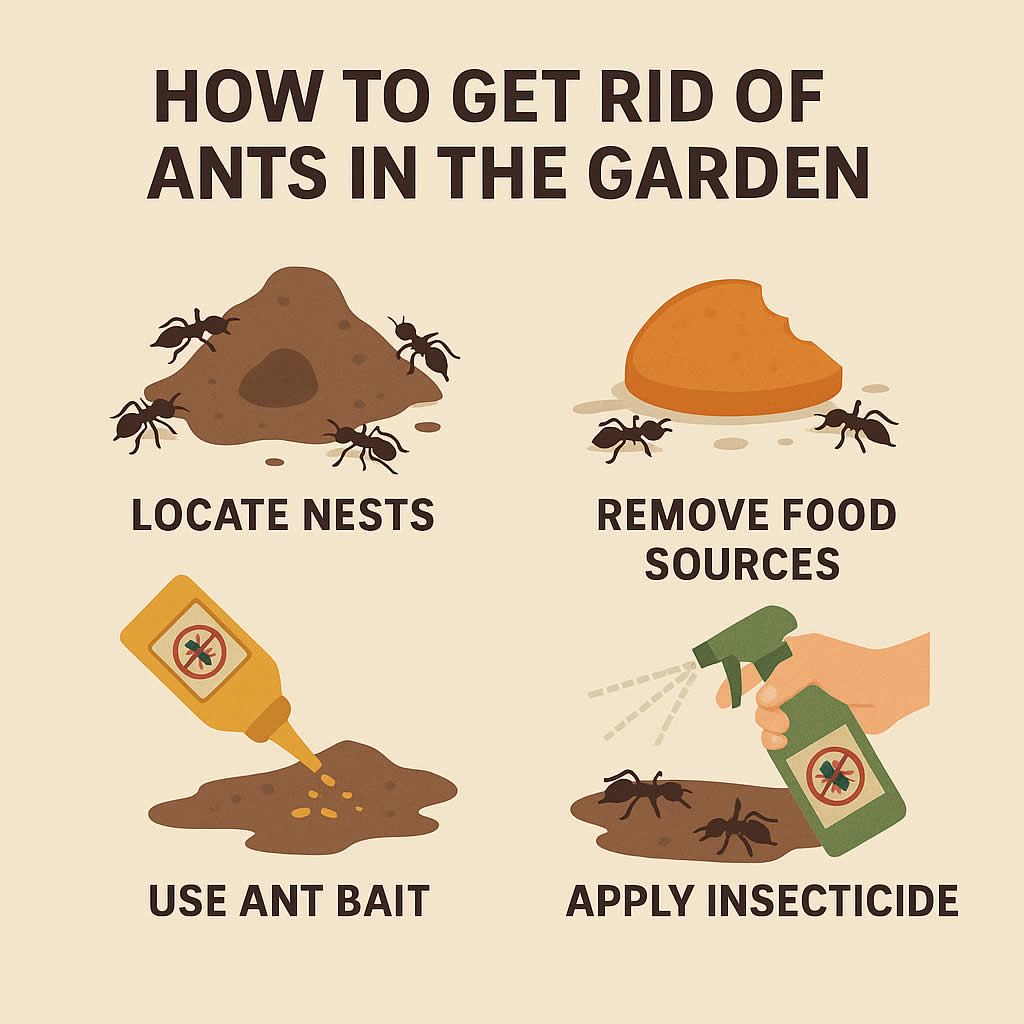
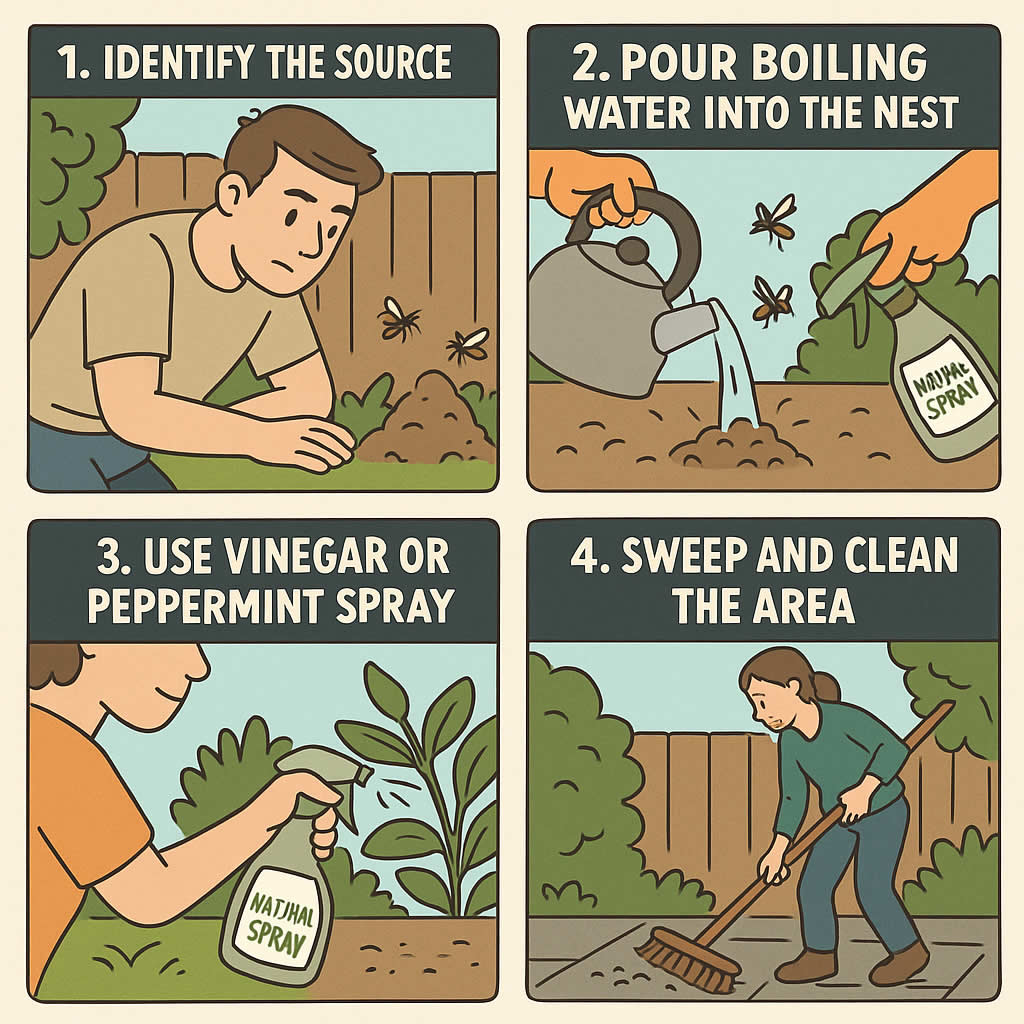
Step 1: Find the source of the ants.
Look for small mounds or holes in soil, cracks in paving, or signs of movement under decking. If you can locate the nest, you’ll be in a stronger position to deal with the root of the problem instead of just the surface swarm.
Step 2: Pour boiling water directly into the nest.
This is one of the simplest and most effective methods for small infestations. Pouring boiling water into the nest’s entrance helps kill ants and disrupt the colony’s structure. Repeat this for a few days until the activity stops.
Step 3: Use natural deterrents.
If you prefer an eco-friendly approach, mix vinegar and water in equal parts and spray it around affected areas. Lemon juice, peppermint oil, and cinnamon powder also work well as natural ant repellents.
Step 4: Apply insecticidal powder or ant bait.
For stubborn infestations, you might need to use a professional ant powder or bait gel. Apply these near nest entrances, along garden walls, or under decking. Always follow the product’s safety instructions carefully.
Step 5: Sweep and clean affected areas.
Once the swarm has gone, sweep away dead ants, remove debris, and hose down the area. Clean surfaces thoroughly to eliminate the scent trails ants leave behind, which can attract new colonies later.
Step 6: Call in a professional pest control company.
If the ants keep coming back, or if you notice multiple nests, it’s worth contacting a pest control expert. They’ll identify the type of ants, locate the main colony, and treat the problem safely and permanently.
With patience and consistency, you can clear flying ants from your garden without damaging your plants or soil.
Preventing Flying Ants from Coming Back
Once you’ve dealt with the immediate problem, it’s important to make sure the ants don’t return next season. Flying ants are incredibly persistent, and they’ll happily come back if your garden remains a comfortable place to nest.
Here are a few long-term prevention tips:
- Maintain your garden regularly. Sweep paths, clean gutters, and remove debris where ants might hide.
- Treat cracks and joints. Fill in small gaps in paving stones or patio joints to stop new nests forming.
- Trim plants and lawns often. Overgrown plants can trap moisture and provide shade — ideal for ant colonies.
- Use ant deterrents before summer. Early preventative sprays or powders around the garden perimeter can stop swarms forming later.
- Inspect wooden decking. Flying ants often nest beneath decking boards, so check for soft, damp, or rotting areas and repair them promptly.
- Keep bird feeders and bins clean. Ants are drawn to sugary residues, so regular cleaning helps cut down on attractants.
By keeping your garden tidy, dry, and well-maintained, you’ll make it much harder for ants to settle in again next year.
Final Thoughts
Flying ants can be annoying, but with a calm and consistent approach, you can get rid of them and keep them from returning. The key is to act quickly, stay observant, and combine prevention with treatment. Regular garden care and a few natural remedies can go a long way to keeping your space ant-free all summer long.
If you’ve tried everything and the problem still persists, it’s worth contacting a professional pest control company. They can assess your garden, find hidden nests, and treat the area properly without causing damage.
By tackling the issue early, you’ll protect your garden, your home, and your peace of mind — letting you enjoy those sunny afternoons in the garden without any unwanted visitors buzzing around.