Rats have lived alongside humans for centuries, drawn to the food, warmth, and shelter our homes and businesses provide. While you may only ever see the odd rodent outdoors, an infestation inside your property can cause serious problems. Rats breed quickly, spread disease, and cause structural damage, meaning a small issue can rapidly escalate into something far harder to control.
Understanding why rat infestations happen is the first step to stopping them. These pests are opportunistic, so when they find easy food, safe shelter, and ways to get inside, they settle in. By recognising the causes and taking preventive steps, you can protect your property and avoid the risks that come with an infestation.
In this article, we’ll look at the most common causes of rat infestations, the dangers they bring, the signs you need to watch for, and the measures that help keep them at bay.
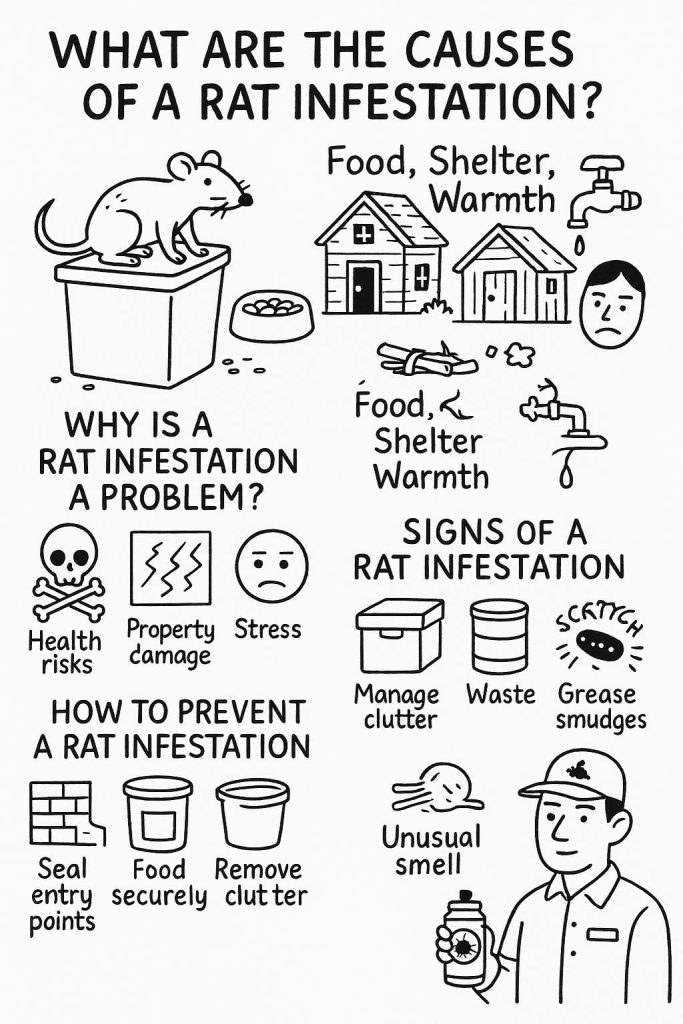
What Causes a Rat Infestation?
Rats rarely arrive without reason. They are resourceful animals that adapt quickly to their surroundings, and an infestation usually starts when your home or workplace offers them everything they need to survive. Let’s break down the key causes.
Food availability
One of the biggest attractors for rats is food. They will eat almost anything, but leftover waste, uncovered bins, bird seed, compost piles, and even pet food are among the main draws. A steady food source means rats can feed, breed, and remain close to your property without needing to travel far.
Shelter and nesting sites
Rats seek safe, hidden spaces to build nests. Lofts, basements, sheds, garages, and piles of clutter all provide perfect cover. Once inside, they shred paper, insulation, or fabrics to create warm bedding, making your home a base for breeding.
Warmth and water
Cold weather drives rats indoors in search of warmth. Central heating, boilers, and even the insulation in walls and lofts provide cosy spots. Access to water is just as important. Leaking pipes, dripping taps, or outdoor water butts give rats the moisture they need to survive.
Human behaviour
Simple mistakes often encourage infestations. Poor waste management, leaving pet bowls out overnight, or failing to repair cracks and gaps around the property all make it easier for rats to thrive. Once they find a way in, they’ll explore and settle quickly.
Seasonal and environmental factors
Infestations are often worse in autumn and winter when rats move indoors to escape the cold. Construction work, changes in local food supply, or nearby infestations can also push rats towards your home.
Why Is a Rat Infestation a Problem?
It’s tempting to think of rats as just a nuisance, but the reality is far more serious. Infestations come with multiple risks that affect both health and property.
Health risks
Rats carry and spread diseases such as leptospirosis, salmonella, and hantavirus. These can pass to humans through direct contact, contaminated food, or water tainted by rat urine. Pets are also at risk of catching illnesses spread by rodents.
Property damage
Gnawing is one of the biggest dangers. Rats chew through wood, plastics, and electrical wiring. This can weaken structures, damage insulation, and even increase the risk of fire from exposed wires.
Food contamination
Rats contaminate food stores with droppings, urine, and hair. In a commercial setting like restaurants or warehouses, this can lead to costly stock losses and health code violations.
Stress and disturbance
The presence of rats can cause real anxiety. Scratching sounds at night, bad smells, and sightings during the day disrupt peace of mind and make it hard to relax in your own home.
Signs of a Rat Infestation
Spotting the warning signs early is vital. Rats rarely stay hidden for long, and they leave behind several clues.
Droppings
Fresh droppings are dark, moist, and shaped like a grain of rice. Finding them in cupboards, under sinks, or along skirting boards is a clear indicator of activity.
Gnaw marks
Look for small teeth marks on wood, wires, and packaging. Rats gnaw constantly to keep their teeth sharp and short.
Scratching noises
Rats are most active at night. Scratching or scurrying sounds in walls, lofts, or under floorboards often mean they are moving around.
Grease marks and tracks
As they move, rats leave greasy smudges along walls and floors. You might also notice footprints or tail marks in dusty areas.
Nests and burrows
Shredded paper, fabric, or insulation tucked away in quiet corners usually means a nest. Outside, burrows near compost heaps or sheds suggest activity.
Unusual smells
A strong, musky odour is a common sign of rats. Dead rodents left behind in walls or under floors can also create an unpleasant, lingering smell.
How to Prevent a Rat Infestation
Prevention is far easier than tackling a full infestation. With a few consistent habits, you can make your property less attractive to rats.
Seal entry points
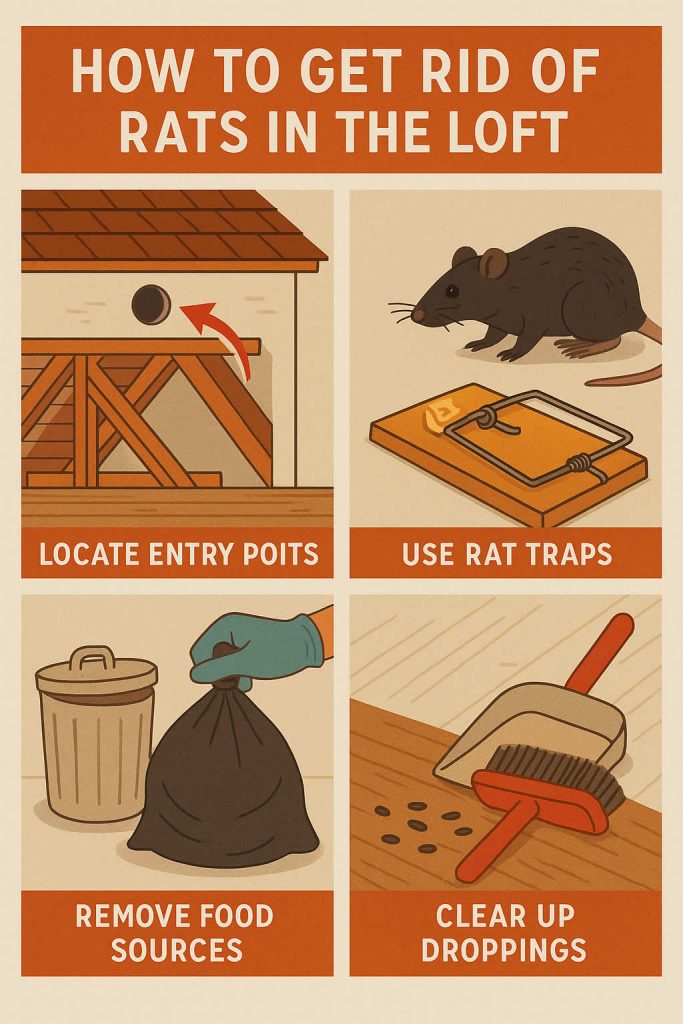
Check for cracks, gaps, or holes in walls, roofs, and around pipes. Use steel mesh or sealant to block potential access points.
Store food securely
Keep all food in sealed containers and avoid leaving leftovers or pet food out overnight.
Manage waste correctly
Bins should have tight-fitting lids and be emptied regularly. Outdoor rubbish should be kept away from the property where possible.
Remove clutter
Stacks of boxes, piles of clothes, or unused furniture all make ideal nesting sites. A tidy home gives rats fewer places to hide.
Tidy gardens and outdoor areas
Trim overgrown plants, move firewood away from walls, and keep compost heaps well covered. Rats are less likely to settle where shelter is scarce.
Regular inspections
A quick check around your home every few weeks can help you spot early signs of activity before it turns into an infestation.
When to Seek Professional Help
Even with the best prevention, sometimes rats still find their way in. Once established, infestations can be very difficult to control without professional help.
Pest control experts not only remove existing rats but also identify how they got in and apply long-term measures to stop them coming back. Professionals use safe, targeted treatments that are more effective than over-the-counter products, and they ensure infestations are dealt with thoroughly.
Working in rat infestation can be dangerous if the right precautions aren’t taken. Protective clothing, gloves, and masks should always be worn to reduce the risk of contact with droppings, urine, or contaminated surfaces. Avoid disturbing nests or handling rodents without specialist equipment, and never attempt to use strong poisons or traps in busy areas without professional guidance.
If you’re facing a recurring or large-scale problem, calling in experts is the quickest and safest option.
Our Final Say!
Rat infestations are caused by a combination of food, shelter, warmth, and access created by human activity. Left unchecked, they bring serious health risks, property damage, and stress.
By recognising the causes, watching for early signs, and following prevention tips, you can protect your home or workplace. And if the problem becomes too big to manage alone, professional pest control ensures a safe and lasting solution.
Taking action today means a safer, cleaner, and more comfortable environment tomorrow.