Bed Bugs

Bed Bug Heat Treatment

Bed Bug Heat Treatment: How It Works and When to Use It

Heat treatment has become one of the most effective ways to eliminate bed bugs, especially when you want a method that reaches deep hiding places and kills every stage of the insect’s life cycle. Many people turn to heat when sprays, powders and DIY treatments are not enough, or when an infestation keeps returning despite repeated attempts to get rid of it. Understanding how heat treatment works helps you decide whether it is the right approach, what results you can expect, and how to prepare your home properly before any heating begins. Bed bugs hide in cracks, mattress seams, furniture joints, carpet edges and electrical housings. Chemical sprays only reach exposed surfaces, leaving deep hiding spots untouched. Heat treatment works differently because it raises the temperature of an entire room or property to a level that bed bugs cannot survive. When the heat is consistent and long-lasting, it penetrates fabrics, wood, upholstery and walls, killing insects and eggs hidden in places that chemicals cannot reach. What Heat Treatment Actually Is Heat treatment is a process where specialist equipment is used to warm a room or home to temperatures that are lethal to bed bugs. While sprays require direct contact, heat works by increasing the temperature of everything inside the treated area. Professional systems use powerful heaters, industrial fans and temperature sensors to ensure the heat remains evenly distributed and controlled. Bed bugs die when exposed to sustained heat above a certain temperature. Professionals typically aim for temperatures between 50°C and 60°C, maintained for several hours. At these levels, bed bugs cannot survive, and even eggs are destroyed. Since eggs are often the hardest stage to kill using other methods, heat treatment becomes particularly effective in heavy infestations where eggs are hidden deep out of sight. The process is designed to be thorough. Walls, furnishings, beds, skirting boards and carpets all absorb heat, leaving insects no cool areas to hide. This makes it very difficult for bed bugs to survive once the treatment starts. Why Bed Bugs Respond So Strongly to Heat Bed bugs have a simple biological weakness: their bodies cannot regulate temperature. They rely on stable environments and rapidly become stressed when exposed to heat. When temperatures rise, their internal systems fail, and they die quickly if the heat is maintained. Heat also affects bed bug eggs, which normally survive chemical treatments because many sprays cannot penetrate the egg casing. High temperatures break down the structure of the eggs, preventing them from hatching. This is why heat treatment has such a strong reputation for eliminating entire infestations rather than providing short-term control. In homes with deep harbourages or cluttered environments, heat becomes a valuable tool. Insects hiding inside furniture, behind skirting boards or inside wall cracks receive the same heat exposure as insects on the surface, which is something other treatments struggle to achieve. When Heat Treatment Is the Best Option Heat treatment is particularly effective in situations where bed bugs have spread widely around rooms or property, especially when they are hiding in multiple pieces of furniture. It is also chosen when infestations keep returning because heat kills eggs that other treatments miss. Heat treatment is ideal when: You have a heavy infestation Bed bugs are spread across several rooms Eggs continue to hatch after other treatments You want a fast, single-day solution You have furniture that bed bugs can hide deep inside You need treatment without chemical residues Some people prefer heat treatment because it avoids the use of insecticides, making it attractive for homes with children, allergies, pets or sensitive individuals. The absence of chemical odours is also appealing when you want to use rooms again quickly without dealing with strong smells. What Professional Heat Treatment Looks Like Professional heat treatment is a controlled, organised process. Before anything begins, the technician surveys the property to understand which rooms need to be heated and where bed bugs may be hiding. Once the preparation is complete, powerful heaters are placed inside the rooms and plugged into specialist power supplies or external generators. Industrial fans move the warm air around to ensure every corner receives enough heat. Technicians continuously monitor temperatures with sensors placed throughout the room, including inside items such as drawers or upholstery. This ensures the heat reaches the necessary level and remains stable long enough to kill all stages of bed bugs. During treatment, temperatures gradually rise, and the heating process continues for several hours. Because the heat penetrates through furniture and materials, the insects lose their hiding places. Once the treatment ends, the room cools naturally, and technicians carry out a final inspection. How Long Heat Treatment Takes The duration depends on how many rooms are being treated and the size of the area. Most professional treatments take between six and eight hours for a standard home. Properties with multiple rooms or challenging layouts may require longer. Although the treatment itself takes several hours, the benefit is that it usually only needs to be done once, whereas chemical treatments require multiple visits over several weeks. This makes heat treatment efficient when you want a quick result without a long waiting period. How to Prepare Your Home for Heat Treatment You cannot simply heat a home without preparing it properly. Certain items need to be removed, some need to be opened and others need to be protected. Proper preparation helps the heat reach every part of the home and prevents damage to sensitive items. Here are the main preparation steps: Remove candles, aerosols, cosmetics, oils and anything that could melt Take out plants, pets, food items and medications Open drawers, wardrobes, cupboards and storage boxes to allow air circulation Move furniture slightly away from walls to help airflow Unplug electronics that cannot tolerate heat Remove delicate items that may warp or soften This preparation ensures nothing blocks the flow of hot air and helps the treatment work efficiently. Technicians provide a detailed checklist before treatment so you can follow the steps safely. What Happens After

Bed Bug Heat Treatment: How It Works and When to Use It Read More »
How to Treat a Bed Bug Bite

How to Treat a Bed Bug Bite

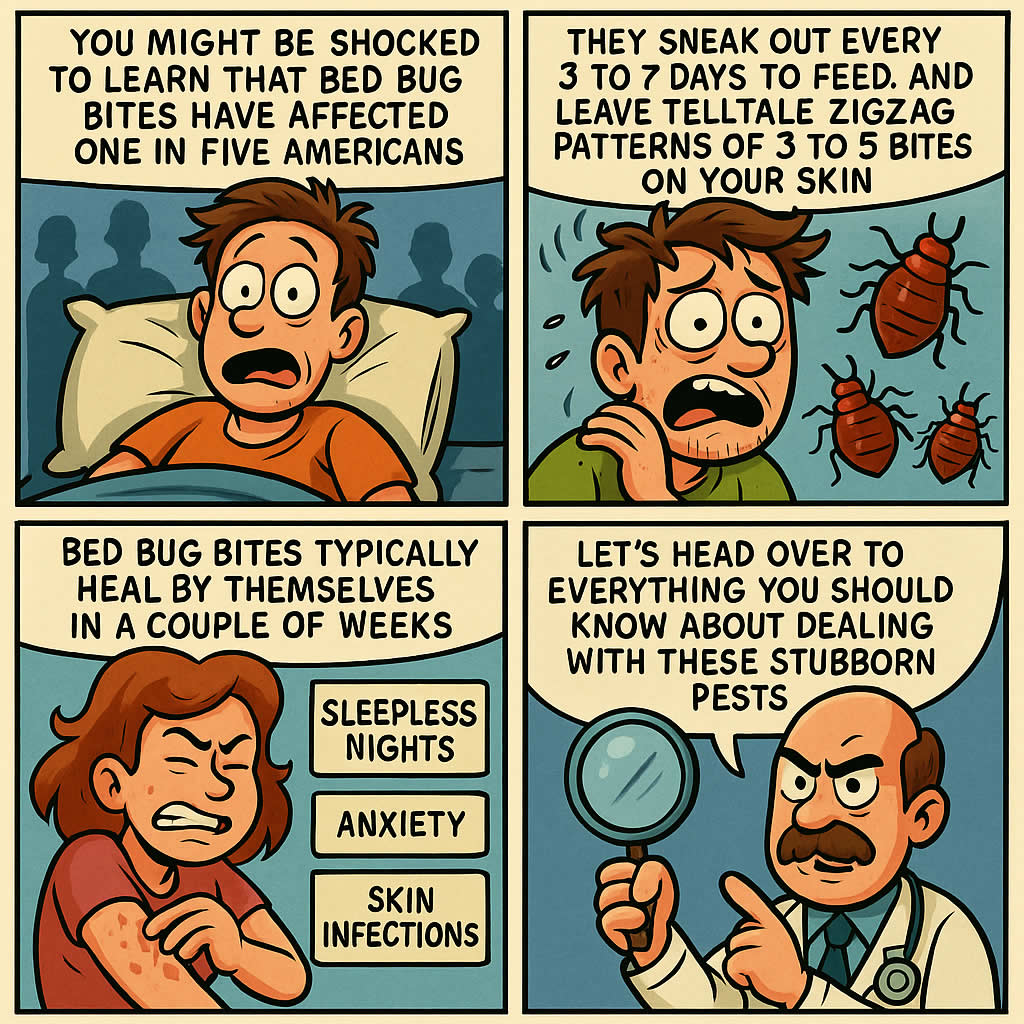
You might be shocked to learn that bed bug bites have affected one in five Americans either directly or through someone they know. These tiny nighttime pests can survive up to 24 months. They lurk in your furniture, clothes, and carpets, which makes them hard to spot. They sneak out every 3 to 7 days to feed, and leave telltale zigzag patterns of 3 to 5 bites on your skin. The silver lining is that bed bug bites typically heal by themselves within a couple of weeks. Some people face bigger problems like sleepless nights, anxiety, and skin infections from scratching. A few unlucky ones might experience severe allergic reactions. We know these bites can really stress you out. That’s why we created this detailed guide to help you spot, treat, and handle bed bug bites the right way. Let’s head over to everything you should know about dealing with these stubborn pests. What Do Bed Bug Bites Look Like Proper treatment of bed bug bites starts with accurate identification. These small creatures come out at night and leave telltale bite marks with unique features. Common appearance and patterns The skin shows raised, red welts that itch after bed bugs bite. People with lighter skin see red or pink marks, while those with darker skin tones might notice purple marks that blend more with their skin. Bed bug bites create a unique signature. The marks often line up in zigzag or straight patterns instead of random spots. These tiny vampires usually leave three to five bites in a group. Experts call this the “breakfast, lunch, and dinner” pattern. This happens because bed bugs feed several times as they crawl along exposed skin. The bites can look different on each person: Raised bumps that form lines, zigzags or scattered patterns Pimple-like swellings with dark red centres Small red marks, either flat or slightly raised Sometimes, blisters filled with fluid How to distinguish from other insect bites People often mix up bed bug bites with mosquito, flea, or spider bites. Fleas target legs and feet, but bed bugs attack any skin exposed during sleep—mainly arms, face, neck, and shoulders. Mosquitoes leave random bite patterns across the skin. Bed bugs, however, create neat lines of bites. Spider bites usually happen once, so multiple bites point more toward bed bugs. The bites might look like hives or a rash at first glance. The key difference lies in their behaviour – bed bug bites stay put instead of moving or changing shape. Timeline of bite development Bed bugs inject a natural painkiller while feeding, so their victims rarely notice the bite right away. Studies show that 30% to 60% of people never see any visible signs from bed bug bites. Everyone reacts differently to these bites. Some people see marks within hours, while others might wait up to 14 days before noticing anything. The bite starts as a tiny red dot that grows into an itchy, swollen bump. The body heals most bed bug bites naturally within one to two weeks. The raised welts flatten out as redness and itching fade away. Immediate Treatment Steps Those telltale bed bug bites need quick action to reduce discomfort and avoid potential risks. Quick treatment helps manage symptoms and prevents other infections from developing. Cleaning the bite area Start by cleaning the bites properly. A good wash with mild soap and water removes contaminants. This basic step helps prevent skin infections and gives quick relief from itching. Use a clean towel to pat the area dry instead of rubbing it, which could make the bites worse. Reducing inflammation and swelling Something cool on the bite area works great to handle swelling and inflammation. Place a clean, damp cloth or ice pack wrapped in a towel on the affected area for 10-15 minutes. The cold therapy makes blood vessels contract and numbs the area for a while, which reduces inflammation. You can also mix baking soda and water into a paste. Put this thick mixture on the bites and let it dry fully. Leave it there for about an hour before washing it off with warm water. This home remedy pulls fluid from swollen bites and helps neutralise irritants. Managing the original itch The hardest part about bed bug bites is fighting the urge to scratch. This is a vital step since scratching can tear your skin and cause other infections. Here’s what you can do for quick itch relief: Put over-the-counter hydrocortisone cream (1%) on the bites to reduce inflammation and itching Take oral antihistamines like diphenhydramine (Benadryl) to control allergic reactions Try natural astringents like lemon juice, witch hazel, or aloe vera gel to soothe the skin To handle pain, common anti-inflammatory medications like ibuprofen, naproxen, or aspirin can help with both pain and swelling. Bed bug bites usually heal by themselves within one to two weeks. In spite of that, you should see a doctor if you notice worse pain, swelling beyond the bite area, or any signs of infection. Medical and Over-the-Counter Treatments Medical treatments can provide relief from persistent or severe bed bug bites that don’t respond to home remedies. Most bites need minimal treatment, but knowing your options helps you manage symptoms better. Antihistamine options Oral antihistamines help control bed bug bites by blocking histamine—the compound that causes itching and inflammation. These medications fall into two main categories: First-generation antihistamines like diphenhydramine (Benadryl) give quick relief but might make you drowsy. This side effect can actually help if itching keeps you awake at night. Second-generation antihistamines such as cetirizine and loratadine won’t make you sleepy and work great during the day. Take antihistamines as directed on the package, especially before bed to stop nighttime scratching. A pharmacist can help you choose the right antihistamine that suits your needs. Topical creams and ointments Direct treatment of bite sites often brings the quickest relief. Here are some options that work: Hydrocortisone cream (1%) brings down inflammation and itching faster. You can buy it without a prescription, and it handles most bite reactions well. Just apply

How to Treat a Bed Bug Bite Read More »

How Long Can Bed Bugs Live Without Feeding?

How Long Can Bed Bugs Live Without Feeding?

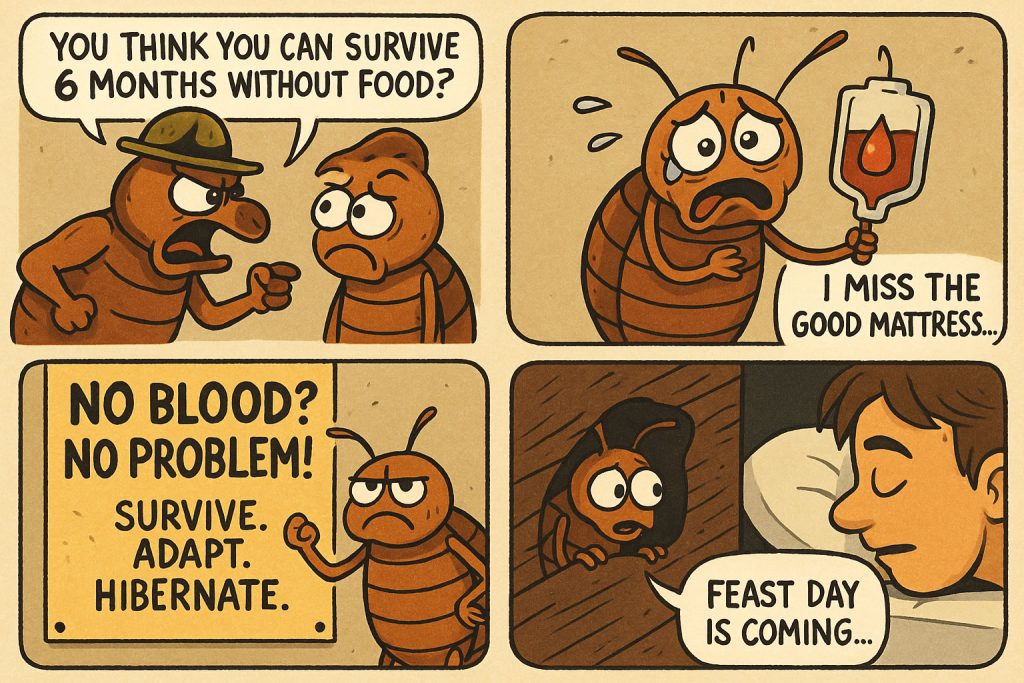
Bed bugs are incredibly tough pests that can go without food for up to 400 days. Let’s break down how these tiny insects manage to survive so long without eating, and you’ll be amazed at their survival tricks. These stubborn bugs adapt easily to their surroundings. Adult bed bugs can last two to five months without a meal at normal room temperature. The cooler weather makes them even tougher – they simply slow down and enter a semi-hibernation state. Baby bed bugs, or nymphs, handle hunger differently. Their survival depends on temperature and humidity levels, and they can go from several weeks to a few months without blood meals. This piece will get into the science behind bed bugs’ impressive fasting abilities. We’ll look at how their environment affects survival and their feeding habits. You’ll also find answers about their life without human hosts and how long they last under different conditions. The Biological Mechanisms Behind Bed Bug Survival Bed bugs have amazing biological adaptations that help them live without food for long periods. These creatures have evolved over thousands of years to become tough pests that thrive in human environments. How bed bugs’ metabolism slows during starvation Bed bugs use a smart strategy to reduce their metabolism when they can’t find food. Their mass-specific metabolic rate drops in a curvilinear pattern as they starve. They use less oxygen to save their energy reserves. Research shows that hungry bed bugs use much less oxygen than those who have eaten. This slowdown follows a pattern that works the same way for adults and young bed bugs alike. The respiratory exchange ratio (the ratio of carbon dioxide produced to oxygen consumed) changes during periods without food. This shows how bed bugs switch what their bodies use as fuel to stay alive when they’re starving. The dormancy state: How bed bugs conserve energy Bed bugs can go into a hibernation-like state called diapause when conditions aren’t good. This happens when temperatures fall below 60°F (15.5°C). Their heart rates and overall metabolic activity drop sharply during this state. This clever adaptation lets bed bugs survive months without eating. Scientists have seen bed bugs stay dormant for about 500 days in labs, though this rarely happens in nature. Dormancy helps bed bugs in two ways: it slows their metabolism and saves energy until things get better. These pests spring back to normal quickly when temperatures rise or they find a host. Physiological changes in starving bed bugs Bed bugs’ bodies change in visible ways when they starve. Adult bed bugs lose body mass each day at a rate that matches their slowing metabolism. You can spot hungry bed bugs by their thin, reddish-brown skin, while young starving bed bugs turn pale yellow. These pests rely on stored nutrients from their last blood meals to keep their vital functions going. Their bodies use these reserves well, which helps them live longer without food. Bed bugs’ behaviour changes along with their bodies. Hungry females, both mated and unmated, react differently to human smells based on how long they’ve gone without food. They also cluster together in their hiding spots to lose less water, which helps them survive when food is hard to find. Environmental Factors Affecting Bed Bug Life Cycle Without Food Environmental conditions determine how long bed bugs can survive without feeding. External factors shape their survival capabilities more than their internal biological mechanisms. Temperature’s critical role in survival duration Temperature emerges as the key environmental factor that affects bed bug survival without food. Adult bed bugs can survive more than 400 days without feeding at cooler temperatures (20°C). Their survival time drops as temperatures rise. Research shows starved bed bugs usually die within 70 days at room temperature (>70°F). The relationship shows a clear pattern – survival time decreases exponentially with each temperature rise. Bed bug death rates increase by a lot above 35°C. They die completely within minutes at 60°C. How humidity levels affect bed bug longevity Humidity creates an intricate survival equation for bed bugs. These insects live longest when temperatures are low (20°C) and relative humidity is high (75-100%). Both extreme conditions—too dry or too wet—create problems. Very high humidity (near 100% RH) can harm bed bugs and reduce their survival. This happens because bed bugs become prone to overhydration. Dry conditions (≤33% RH) speed up dehydration, especially in nymphs. Bed bugs must conserve moisture during starvation since blood meals are their only hydration source. Seasonal variations in bed bug survival rates Natural seasonal changes alter bed bug behaviour and survival patterns. Bed bugs show faster metabolism, need more frequent feeding, and reproduce faster in warmer seasons (spring and summer). The complete bed bug life cycle takes just 21 days under ideal summer conditions. Cold seasons trigger survival adaptations. Bed bugs enter diapause in winter—a state that pauses their development to save energy. Their feeding frequency drops from every 3-4 days to once every three weeks. Egg hatching slows down dramatically, taking up to 45 days in freezing temperatures instead of 10-16 days. Modern heating systems let bed bugs stay active throughout the year in human homes, despite these seasonal challenges. Survival Timelines: How Long Can Bed Bugs Live Without Blood Studies show remarkable differences in how long bed bugs can survive without food at various life stages. Their survival ranges from just weeks to more than a year under certain conditions. Adult bed bugs: 4-12 months without feeding Mature bed bugs show amazing toughness when they can’t feed on blood. Female bed bugs have lived up to 425 days without food at cooler temperatures around 10°C. They usually survive between 99-300 days at normal room temperatures above 70°F. Their fully developed bodies and efficient metabolism let them last this long. Different bed bug strains handle hunger differently. The susceptible strains found rarely in the field can actually outlast resistant ones. This suggests that bed bugs pay a metabolic price for their resistance to insecticides, which reduces their ability to handle long periods without food. Nymphs and their reduced starvation tolerance Young bed bugs don’t live nearly as long without blood: First instars live about 13.8-36.3

How Long Can Bed Bugs Live Without Feeding? Read More »

What Spray to Kill Bed Bugs?

What Spray to Kill Bed Bugs?

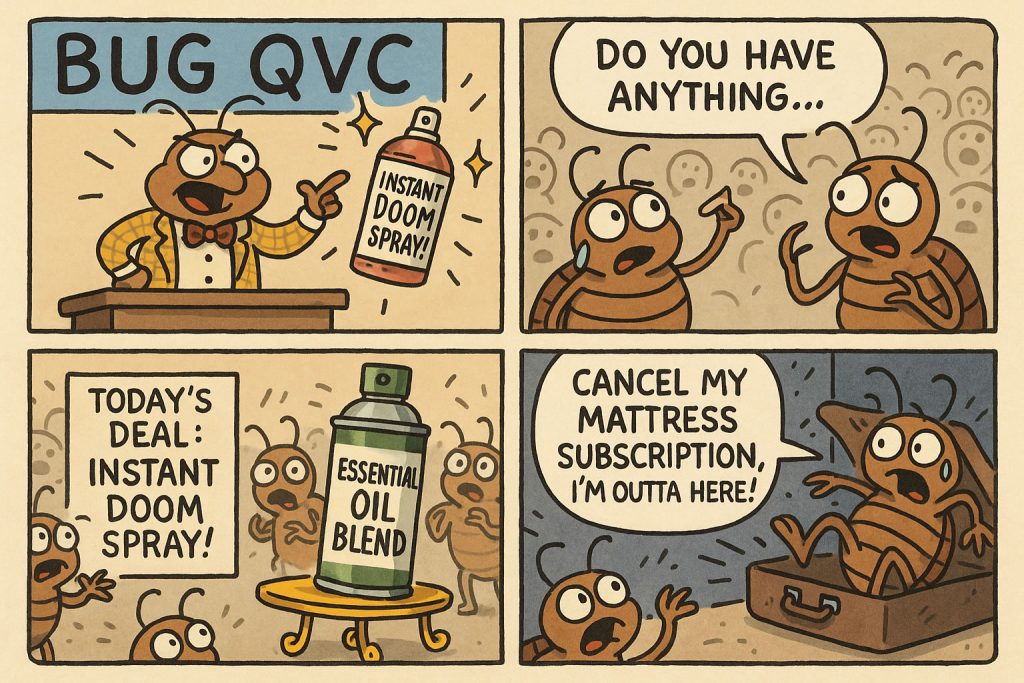
Most common insecticides don’t kill bed bugs effectively. These resilient pests simply hide until the spray dries. The question of what kills bed bugs instantly has become more significant than ever. These tiny 5-millimetre creatures might look harmless, but they’re nowhere near easy to eliminate. A single female bed bug lays up to 500 eggs throughout her lifetime and survives months without feeding. Professional bed bug sprays offer hope because they can curb these persistent pests when selected and applied correctly. The difference between success and failure depends on choosing sprays that actually work. Your options range from chemical-based solutions to natural alternatives, and understanding them helps you make an informed choice based on your situation. This knowledge becomes especially valuable whether you’re tackling a minor infestation or facing a full-blown bed bug crisis. Types of Bed Bug Sprays That Actually Work Picking the right spray is a vital step to get rid of bed bugs. Many products don’t live up to their promises, and learning about your options will save you time, money, and frustration. Let’s get into the best types of bed bug sprays you can find today. Chemical-based commercial sprays Chemical sprays lead the market as the most common bed bug treatment because they’re accessible to more people and work well. These products usually contain active ingredients like pyrethroids – synthetic versions of compounds from chrysanthemum flowers that attack bed bugs’ nervous systems. Products with cypermethrin work great against bed bugs, especially when mixed with other active ingredients. Triple-action formulas that combine cypermethrin, pyriproxyfen (an insect growth regulator), and chrysanthemum extract create a powerful mix that targets bed bugs throughout their life cycle. Some chemical sprays keep bed bugs away for up to 12 weeks after you spray them, which makes them a great long-term solution. But some bed bug populations no longer react to pyrethroids, so you might need different approaches or combinations to tackle stubborn infestations. Natural and eco-friendly alternatives Natural bed bug sprays are a safer choice if traditional pesticides worry you. These products use plant-based ingredients that won’t harm humans and pets as much. Cold pressed neem oil stands out because it’s the only biochemical pesticide officially approved to fight bed bugs. Essential oils like lavender, peppermint, tea tree, and eucalyptus help keep bed bugs away by hiding the scents that draw them in. Desiccants offer another eco-friendly solution. These substances, including diatomaceous earth, destroy bed bugs’ protective outer coating and make them dry out and die. Bed bugs can’t become resistant to desiccants, though these treatments take longer to work. Some natural formulas take unique approaches. To name just one example, plant-based polymer formulas physically coat and neutralise bed bugs when they touch them instead of using pesticides. Professional-grade formulations Professional-grade sprays pack more punch than consumer products because they contain stronger active ingredients. These work faster and give better results for serious infestations. These formulas often mix multiple active ingredients that work together. Neonicotinoids work well against pyrethroid-resistant bed bugs by attacking their nervous system differently. Pyrroles, like chlorfenapyr, disrupt bed bugs’ cell functions and are another professional option. Professional products often include insect growth regulators that stop bed bugs from growing into adults that can reproduce, which breaks their life cycle. Many of these stronger products are now available for home use if you follow safety guidelines. Residual vs. contact sprays Learning the difference between residual and contact sprays helps create a better treatment plan. Contact sprays (also called non-residual sprays) kill bed bugs right away when sprayed directly but stop working once they dry. You need to spray the bed bug directly for these products to work. They work well on visible bed bugs but won’t affect those hiding in cracks and crevices. Residual sprays leave an active chemical barrier that keeps working for weeks or months after you spray them. Bed bugs pick up the insecticide through their bodies when they crawl across treated surfaces. These sprays work best on areas where bed bugs travel, such as bed frames, baseboards, and furniture joints. Experts often suggest using both types to control bed bugs completely – contact sprays for quick kills and residual formulas for lasting protection. Most Effective Ingredients in Bed Bug Killer Sprays The active ingredients in bed bug sprays are vital to pick products that work. A spray’s success depends on its ingredients. Let’s get into the ingredients that kill these stubborn pests. Pyrethroids and their effectiveness Pyrethroids are synthetic versions of compounds found in chrysanthemum flowers and serve as the main weapon against bed bugs. These chemicals target the insect’s nervous system. They cause uncontrolled nerve firing that guides them to paralysis and death. You’ll find ingredients ending in “thrin” such as deltamethrin, cypermethrin, and bifenthrin. The biggest problem is resistance due to widespread use. Research shows bed bugs have developed unique protective mechanisms against pyrethroids. Bed bugs now express resistance-associated genes in their outer skin layer (integument). This creates a barrier that stops the toxin from reaching nerve cell targets. These pyrethroids often fail when used alone against modern bed bug populations. In spite of that, pyrethroids work well when combined with other chemicals. Mixtures containing pyrethroids plus piperonyl butoxide, imidacloprid, acetamiprid, or dinotefuran can beat these resistance mechanisms. Neonicotinoids for resistant bed bugs Neonicotinoids are the next generation of bed bug control. They target pyrethroid-resistant populations. These synthetic nicotine derivatives attack the insect’s nervous system differently than pyrethroids. They make nerves fire continuously until failure. Lab studies show remarkable results—though resistance keeps growing. Scientists compared susceptible laboratory strains with field-collected resistant bugs. They found some populations had become highly resistant. Michigan bed bugs showed resistance 462 times higher to imidacloprid, 198 times higher to dinotefuran, and 546 times higher to thiamethoxam compared to normal strains. Neonicotinoids still work better against pyrethroid-resistant bed bugs than pyrethroids alone. Products that combine both chemical classes show better results because of their dual modes of action. Desiccants and how they work Desiccants take a different approach to bed bug control. Instead of targeting the nervous system, these substances destroy the waxy protective coating on

What Spray to Kill Bed Bugs? Read More »

Can You Feel Bed Bug Bites?

Can You Feel Bed Bug Bites?

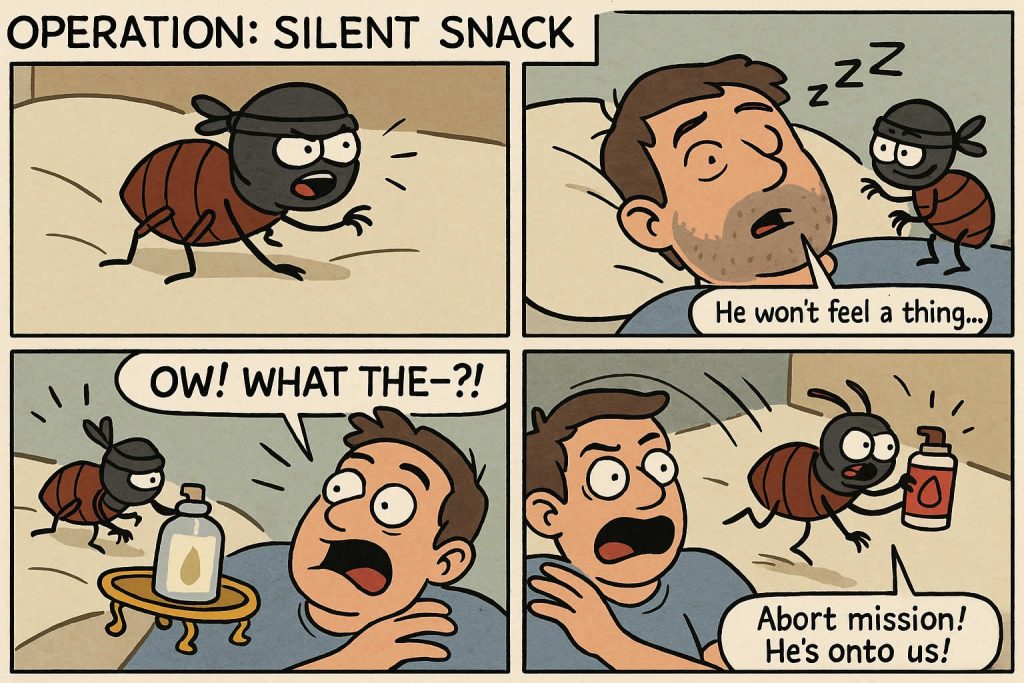
About 20% of people have experienced bed bug bites or know someone who has dealt with these nighttime pests. The surprising fact remains that all but one of these people develop any reaction to bed bug bites. These small insects feed on human blood while we sleep. They are incredibly sneaky. Bed bugs release an anaesthetic that numbs the skin at the time they bite. This makes it almost impossible to notice them feeding. These resilient creatures can live up to 24 months and need to feed every three to seven days. Most people don’t notice their presence until visible signs appear. Let’s look at whether you can feel bed bug bites and what signs you should watch for. The duration of these bites is also worth noting. Knowledge about bed bug bites is a vital part of protection since they can cause different reactions. These range from mild itching to serious skin problems and can affect your sleep quality and mental well-being. The Science Behind Bed Bug Bites Bed bugs have mastered their feeding technique through thousands of years of development. These tiny insects know exactly how to feed on humans without getting caught. They launch perfect stealth attacks while we sleep. How bed bugs feed on humans Bed bugs use a specialised mouth part called a proboscis—basically a straw-like feeding tube—to pierce human skin and suck blood. These pests can feed for 3 to 10 minutes and drink up to six times their weight in blood. Unlike mosquitoes that quickly buzz around and bite, bed bugs take their time with their meal. They look for exposed skin, mostly targeting the face, neck, and arms. The bug finds a good spot, unfolds its proboscis from under its body, and pushes it into the skin. These insects don’t just bite randomly. They create distinct patterns, usually leaving two or three bites in a row. This happens because something often disturbs them while they feed, making them move a bit before starting again. Medical professionals call this pattern the “breakfast, lunch, and dinner” sign. The anaesthetic effect in bed bug saliva Bed bugs feed without detection thanks to their saliva, which contains a complex mix of compounds: Anaesthetic compounds that numb the bite area Anticoagulants (including factor-X inhibitor) that prevent blood from clotting Vasodilatory substances (such as nitric oxide) that expand blood vessels Proteolytic enzymes (like apyrase) that break down proteins and help with feeding This mixture serves several purposes. The anaesthetic keeps you sleeping while the anticoagulant keeps your blood flowing. So the bed bug can feed without waking you up. Scientists have found specific proteins in bed bug saliva that cause allergic reactions in many people. These reactions usually show up hours after the bite, once the numbing effect wears off. Why most people don’t feel the original bite Bed bugs usually feed at night while people sleep. Their bites go unnoticed because of the anaesthetic they inject. Just like when a nurse uses numbing cream before taking blood, bed bugs have their own natural numbing system. Research shows 30 to 60% of people never react to bed bug bites. This makes finding an infestation tough because many people might have bed bugs without knowing it. People who do react might not see symptoms right away. Bite marks can take anywhere from a few hours to 14 days to show up. Your body needs time to process the foreign proteins from the bite and create an immune response. Your sensitivity to bed bug bites often increases with more exposure. You might not show any symptoms at first but develop worse reactions as your immune system gets used to the bugs’ saliva. The numbing effect and delayed reactions explain why many infestations stay hidden for weeks or months. This is a big deal as it means that the bed bug population has time to grow. When You Might Feel Bed Bug Bites Bed bugs leave itchy welts, yet many people don’t notice these insects feeding on them. People react differently to bed bug bites. Some show no signs at all, while others need medical help due to severe allergic reactions. Immediate sensations in sensitive individuals Most people can’t feel bed bug bites during feeding. These insects use sophisticated saliva that contains both anaesthetic and anticoagulant compounds. The chemicals numb the bite area and keep blood from clotting, so bed bugs can feed without interruption. About 30-60% of people never react to bed bug bites. These insects might feed multiple times without leaving any signs, which makes finding infestations tough. Some people are highly sensitive and react right away to bed bug bites. Those bitten multiple times often become more sensitive with each bite. Their bodies react faster to proteins in bed bug saliva, and itchy welts can appear within seconds of a bite. Delayed reactions: when symptoms begin to appear Bed bug bite symptoms usually show up hours or days after feeding. The body starts fighting the foreign proteins from the bite once the bug’s anaesthetic wears off. Visible reactions follow different timelines: Symptoms can develop within hours Signs often appear 2-3 days after bites Reactions might take up to 11 days Some reactions appear after 14 days This delay creates confusion about the timing and location of bites. People often blame mosquitoes, fleas, or other insects, making it harder to spot bed bug problems. The progression of bed bug bite symptoms Symptoms follow a typical pattern. Small red bumps show up first at bite sites. These bumps can grow into welts up to 5 cm wide. You’ll often see bites lined up or clustered, which people call the “breakfast, lunch, and dinner” pattern. Common symptoms include: Raised red bumps with darker centres Intense itching that gets worse over days Burning or pain around bite areas Blisters filled with fluid in some cases Red, inflamed skin around bites Scratching these bites can cause bacterial infections, which take longer to heal and might leave scars. Some people need medical help due to severe reactions. Rare cases show serious body-wide reactions. These include widespread hives, breathing problems, fever, irregular heartbeat, or anaphylaxis.

Can You Feel Bed Bug Bites? Read More »

What Attracts Bed Bugs?

What Attracts Bed Bugs?

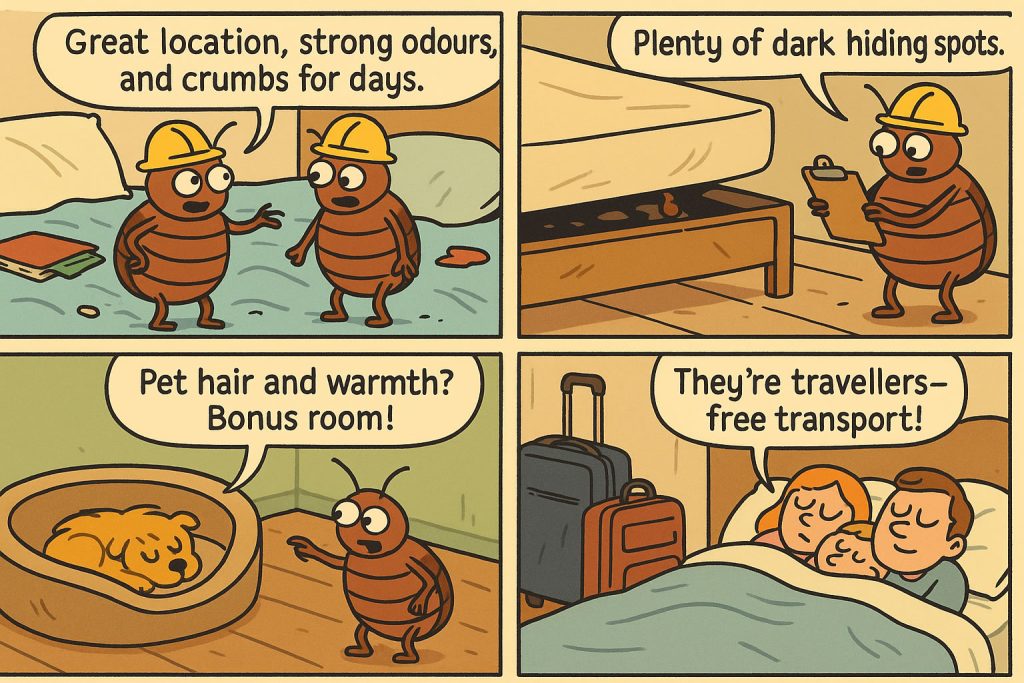
When someone discovers bed bugs in their home, panic often sets in. They start checking everything—the bedding, clothing, furniture—wondering where the pests came from and, more importantly, why. It’s a natural response. Bed bugs feel invasive, and the first instinct is usually to blame something: mess, clutter, or bad luck. But the truth is a bit more complicated. Bed bugs aren’t drawn to dirt or disorganisation. They’re after something much simpler: blood, warmth, and a safe place to hide. That’s it. And they’re very good at finding it. This post breaks down what really attracts bed bugs—without myths, jargon, or fear. It’s written in a grounded, honest tone to help anyone better understand the issue and take steps to deal with it. Do Bed Bugs Prefer Dirty Homes? This is probably the most common misconception. The idea that bed bugs only appear in unclean environments leads many people to feel shame when they spot one. But it simply isn’t true. Bed bugs aren’t interested in crumbs or leftover food. They don’t live off bin scraps or dirty carpets. All they want is blood—human blood. If a person sleeps in a room, bed bugs might settle nearby, whether that room is spotless or messy. While clutter might give them more places to hide, it doesn’t cause an infestation. Clean homes can get them, just as easily as untidy ones. In fact, many infestations begin in hotels, where rooms are cleaned daily but people come and go constantly. So if bed bugs appear, it isn’t a reflection of hygiene. It’s just a matter of access and opportunity. What Actually Attracts Them? Bed bugs are drawn by a combination of things, all related to their need to feed. They’re not motivated by curiosity or preference—they’re simply following survival instincts. Here’s what they seek out: Body heat: Bed bugs are cold-blooded and naturally gravitate toward warmth. Carbon dioxide: Humans exhale CO₂ with every breath. Bed bugs use this as a signal to locate their host. Human scent: Sweat and skin naturally release odours that bed bugs can detect. Stillness: When a person is asleep and still, it becomes safer for bed bugs to emerge and feed. This combination makes beds the perfect target. It’s not that they love mattresses—it’s that beds are warm, still, and full of reliable signs that someone is sleeping there. Can They Smell Humans? In their own way, yes. Bed bugs don’t have noses like humans do, but they can detect chemical signals. The natural scent that builds up in bedding over a few nights can help guide them to the source. Sweaty clothing left near the bed may also draw them in. Used laundry carries human scent and warmth, even after being worn only briefly. That’s why it’s good practice to keep worn clothes in a sealed bag or laundry basket—away from where people sleep. Interestingly, strong artificial scents like perfume or cleaning products don’t make much of a difference to them. They care far more about natural, biological cues. Do Bed Bugs Favour Certain People? Some individuals seem to get bitten more often than others. It can be confusing, especially when two people share the same bed but only one wakes up with bites. But it usually comes down to exposure, location, or skin sensitivity. A person sleeping closer to the bugs’ hiding spot may get more bites. Or they might simply have more visible reactions—itchiness, redness, swelling—while their partner barely notices any marks. It’s not that bed bugs prefer one person over another. They feed on what’s closest and easiest to access. Reactions vary, but the bugs are equal opportunists. What About Furniture—Does It Make a Difference? Bed bugs don’t really care what something is made of, as long as it gives them shelter. They’ll happily live inside wood, fabric, or plastic if there’s a narrow space to crawl into and stay out of sight. Soft furnishings like sofas and upholstered chairs are common hiding spots, especially if someone regularly naps there. Even office chairs can attract them if used daily and left undisturbed for long periods. Second-hand furniture poses a higher risk. Bed bugs can survive without feeding for weeks or even months, so a chair picked up from a charity shop or a bedframe bought online could already have a few hiding inside. Careful inspection is always worth the effort before bringing any used items indoors. Can Bed Bugs Sense Breath? Yes. Carbon dioxide is one of the main signals bed bugs use to find a sleeping person. It’s a reliable cue—steady, rhythmic, and consistent. Even in complete darkness, bed bugs can detect the CO₂ a person exhales. It’s one of the reasons they usually feed at night. The room is quiet, the person is still, and their breathing creates a direct path for the bugs to follow. Lights and noise might delay their movements slightly, but if they’re hungry, they’ll wait patiently until the room is still enough. Will Keeping the Lights On Stop Them? No, not really. Bed bugs are sensitive to light, but they won’t avoid feeding just because the lamp is on. If a person lies still for long enough—light or no light—they’ll come out and feed when they feel safe. Some people try sleeping with the lights on or playing music in hopes of deterring them. But it doesn’t work long term. Bed bugs are remarkably persistent. It’s better to focus on identifying and removing them than trying to spook them away. How Do Bed Bugs Get Into the Home? They don’t crawl in from the garden or sneak through open windows. Bed bugs rely entirely on hitching a ride. That’s how they move from place to place. The most common entry points are: Luggage: Bed bugs often spread through hotel rooms. They climb into suitcases and travel home unnoticed. Second-hand furniture: Mattresses, bedframes, chairs, and wardrobes can all hide bugs in seams and joints. Visitors: Someone with an infestation may unknowingly bring bugs in on clothing or bags.

What Attracts Bed Bugs? Read More »

How to Kill Bed Bugs with Heat

How to Kill Bed Bugs with Heat

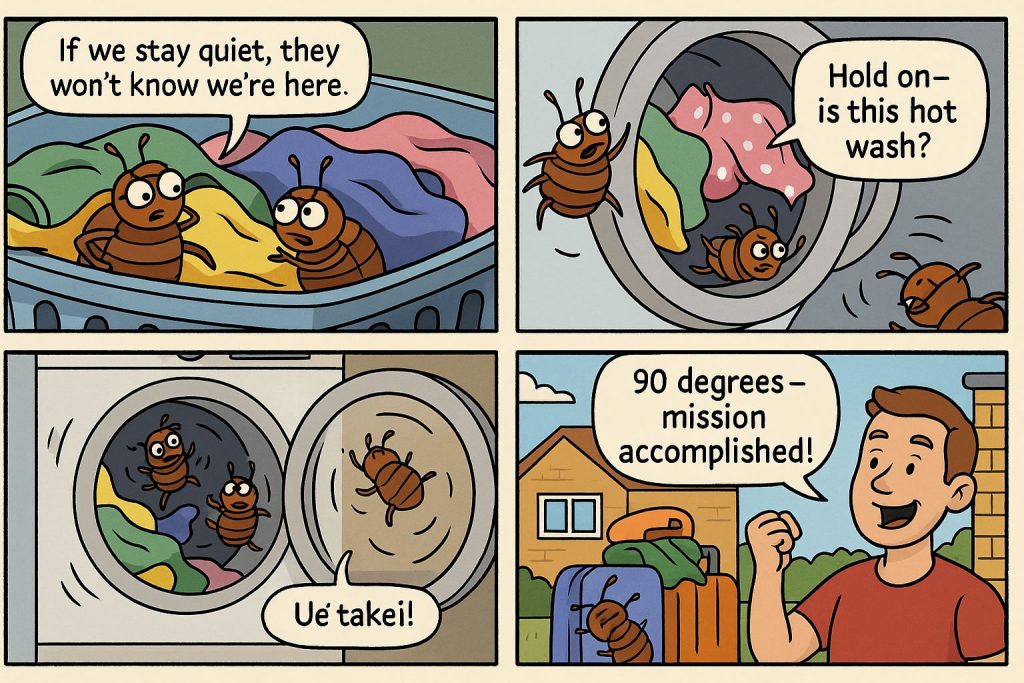
Did you know that a female bed bug can lay up to 500 eggs in her lifetime? Understanding what temp kills bed bugs is crucial if you’re facing an infestation of these persistent pests. While adult bed bugs die at temperatures of 119°F (48°C), their heat-resistant eggs require higher temperatures of at least 125°F (52°C) for elimination. Research indicates that exposure to 140°F (60°C) effectively kills bed bugs at all life stages. However, the duration of heat exposure matters just as much as the temperature itself. According to the Centers for Disease Control and Prevention, bed bug infestations can take weeks to months to eliminate completely, highlighting why proper heat treatment techniques are essential. Throughout this guide, you’ll discover the exact temperatures needed to kill both bed bugs and their eggs, how long to maintain these temperatures for maximum effectiveness, and the safest methods to apply heat treatment in your home. Let’s explore how you can use heat as a powerful weapon against these stubborn invaders. How Heat Affects Bed Bugs and Their Eggs Heat effectively eliminates bed bugs because it disrupts their cellular function at a fundamental level. When bed bugs are exposed to temperatures around 45°C or higher, their cellular DNA begins to break down, causing the cells to stop functioning properly. Furthermore, professional heat treatments work by denaturising the proteins that bed bugs need for survival and simultaneously drying them out, which creates a dual killing effect. Why heat is effective against bed bugs Heat treatment offers several advantages over chemical alternatives. Unlike pesticides that bed bugs may develop resistance to, heat penetrates deep into furniture, mattresses, walls, and other hiding spots where these pests conceal themselves. Since heat treatment targets the biological structure of the insects, they cannot develop immunity to this approach. Additionally, heat treatment is non-toxic and environmentally friendly, making it safer for your home environment. What temperature kills bed bugs instantly For immediate elimination of bed bugs, you need to reach specific temperature thresholds. Research indicates that bed bugs exposed to 50°C (122°F) die instantly. At slightly lower temperatures, the exposure time becomes critical. For instance, bed bugs require: 94.8 minutes of exposure at 45°C (113°F) for adults 71.5 minutes at 48°C (118.4°F) for eggs 30 minutes at 44.6°C (112.3°F) for complete mortality of all life stages Different studies report slightly varying temperatures because of differences in methodology and heating rates. Nevertheless, most professional heat treatments aim for 50°C-52°C (122°F-125.6°F) for one to two hours to ensure complete elimination. Differences in heat resistance between adults and eggs Bed bug eggs consistently demonstrate greater heat tolerance than adults. In controlled studies, adult bed bugs perished after 20 minutes at 44.6°C (112.3°F), whereas eggs required 30 minutes at the same temperature for complete mortality. This difference is significant when planning treatment protocols. The thermal death point for adult bed bugs is approximately 48.3°C (119°F), while eggs require higher temperatures of about 54.8°C (130.6°F). This disparity explains why some treatments fail—they might kill adult bed bugs but leave viable eggs that later hatch and restart the infestation. When temperatures cannot reach these thresholds throughout all potential hiding places, exposure duration becomes even more crucial. For example, at 45°C (113°F), adults die after approximately 95 minutes, but eggs can survive up to 7 hours at this temperature. Consequently, professional heat treatments typically maintain elevated temperatures for several hours to ensure all eggs are eliminated. Exact Temperatures That Kill Bed Bugs Precise temperature thresholds are critical when using heat to eliminate bed bugs from your home. Scientific research has established specific thermal death points for these persistent pests, providing clear guidelines for effective treatment. Minimum lethal temperature for adults Adult bed bugs perish when their cellular structure breaks down at specific temperatures. Research shows that the lethal temperature for 99% of adult bed bugs (LTemp99) is 48.3°C (118.9°F). When immediate mortality is your goal, raising the temperature to 50°C (122°F) for one hour or 52°C (125.6°F) for two hours delivers complete control. At lower temperatures, exposure time becomes crucial. Adult bed bugs die within 90 minutes at 45°C (113°F). Specifically, studies demonstrate that adults require 94.8 minutes of exposure at 45°C for complete elimination. Moreover, all stages of bed bugs can be killed at 60°C (140°F) with brief exposure. Temperature to kill bed bug eggs Bed bug eggs demonstrate notably higher heat resistance than adults. Scientific studies indicate the lethal temperature for 99% of eggs (LTemp99) is 54.8°C (130.6°F), significantly higher than what adults can withstand. To ensure complete eradication of eggs, you must maintain: 54.8°C (130.6°F) for immediate mortality 48°C (118.4°F) for at least 71.5 minutes 45°C (113°F) for 428.5 minutes (over 7 hours) The resistance of eggs explains why some heat treatments fail—they might eliminate adult bed bugs but leave viable eggs that later hatch, resulting in reinfestation. What temp kills bed bugs in Celsius For UK residents using Celsius measurements, these are the critical temperature thresholds: At 45°C, adult bed bugs die after approximately 90 minutes, though eggs may survive up to 7 hours at this temperature. When temperature reaches 48°C, egg mortality occurs after about 71.5 minutes. Raising the temperature to 50-60°C creates an environment where bed bugs at all life stages perish rapidly. Professional heat treatments typically maintain temperatures between 50-60°C for several hours. This approach ensures both adults and heat-resistant eggs are thoroughly eliminated from all potential hiding spots throughout your home. Time and Temperature: The Critical Relationship The success of any bed bug heat treatment hinges on a critical balance between temperature and time. Understanding this relationship is essential for effective eradication of these persistent pests. Why exposure time matters Certainly, reaching the correct temperature is only half the battle when eliminating bed bugs. Research demonstrates that different temperatures are lethal depending on the duration of exposure. At lower temperatures, longer exposure times become necessary to achieve complete mortality. For instance, bed bugs exposed to 45°C (113°F) will die after 90 minutes of continuous exposure, whereas they perish within just 20 minutes at 48°C (118°F). This principle applies differently to eggs, which require 48°C (118°F) for at least

How to Kill Bed Bugs with Heat Read More »

How To Keep Your Pets Safe from Bed Bugs

How To Keep Your Pets Safe from Bed Bugs

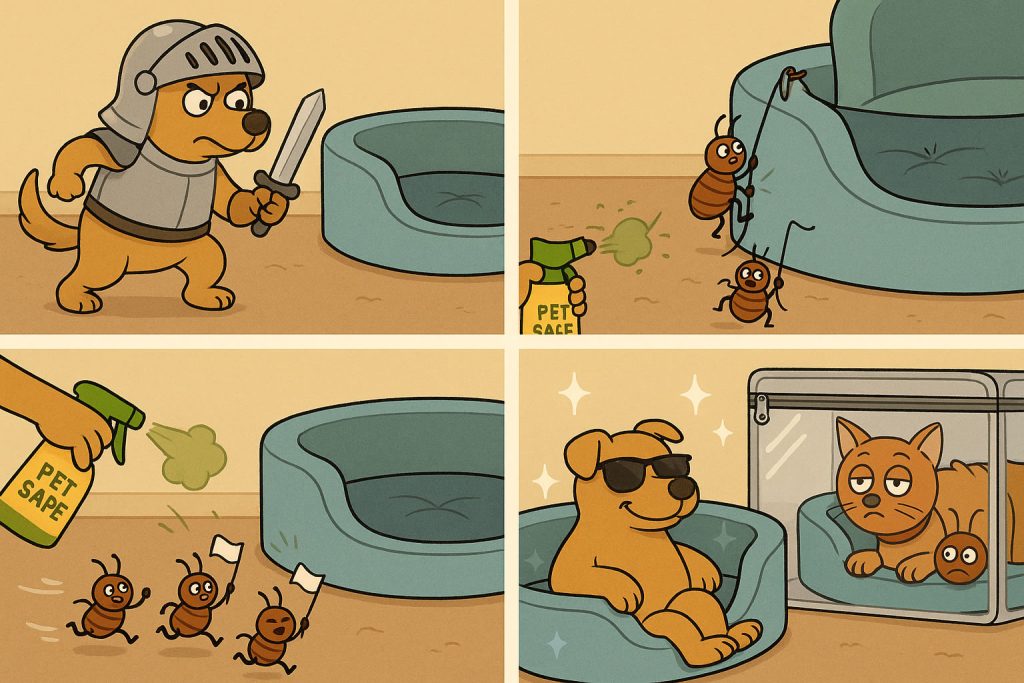
If you’ve ever dealt with bed bugs, you’ll know how stressful it can be. But when you throw pets into the mix, it gets even more complicated. You’re not just trying to protect your bed and your home anymore—you’re trying to make sure your furry friends stay safe too. That’s what this post is all about. You’ll learn how to spot the signs early, keep your pets protected, and handle treatment without putting them at risk. Can Bed Bugs Live on Pets? Let’s get something clear straight away—bed bugs don’t live on pets like fleas or ticks do. They don’t burrow into fur or lay eggs on skin. They hide in crevices, mattresses, furniture, and fabric. That said, they will feed on pets if the opportunity’s there. If your dog or cat sleeps in your bed or lounges on the sofa where bed bugs are hiding, they might get bitten. And while a bed bug bite isn’t usually dangerous to your pet, it can cause irritation, scratching, and anxiety. So even if the bugs aren’t hitching a ride in the fur, your pets are still at risk. What Do Bed Bug Bites Look Like on Pets? It’s a bit harder to spot bed bug bites on animals than it is on people. On you, they’ll show up as small, red, itchy welts—often in a line or a cluster. On pets, the signs are more subtle. You might notice: Excessive scratching or licking Restlessness at night Tiny red spots on the belly, ears, or limbs Scabs or hair loss in irritated areas It’s easy to mistake these signs for flea bites or skin allergies. But if you’ve already seen signs of bed bugs at home—like blood spots on sheets or tiny brown bugs in creases—then your pet’s symptoms could well be related. Can Pets Carry Bed Bugs into the House? Not directly. Bed bugs prefer smooth, warm areas to hide—think bed frames, cracks in the wall, or under carpet edges. Unlike fleas, they don’t cling to hair or fur. But there is a small chance your pet could carry a single bed bug from one place to another, especially if they’ve been in an infested area like a hotel or someone else’s home. A bug might crawl onto a blanket or soft toy and get carried in that way. So while your pet isn’t the main threat, they can be part of the problem. Are Bed Bug Treatments Safe for Pets? That depends on the type of treatment you’re using. Chemical sprays, powders, and foggers can be dangerous to pets—especially if they contain pyrethrins or permethrin, which are toxic to cats. Before using any pesticide or insecticide, read the label carefully. Look for pet-safe alternatives or speak to a pest control company that knows how to treat a home without harming animals. Some safer options include: Heat treatment (raising the temperature of your home to over 50°C to kill all life stages of bed bugs) Silica dust (a fine powder that dehydrates bed bugs but doesn’t harm pets) Diatomaceous earth (natural and non-toxic if food grade, but still best used with care around pets) Whatever you use, always remove your pets from the treated area. Only bring them back once everything’s been cleaned, aired out, and approved as safe. How To Prevent Bed Bugs from Biting Your Pets Once you know you’ve got a bed bug problem—or suspect you might—it’s time to take action. Here’s how you can protect your pets while tackling the issue: Wash Bedding and Pet Accessories Regularly Start by washing your pet’s bedding, blankets, and soft toys on a hot cycle (60°C or above). Dry them on the highest setting too, as heat is one of the most effective ways to kill bed bugs. Use Pet-Specific Bed Bug Barriers Just like you can buy mattress encasements for yourself, you can also find protective covers for your pet’s bedding. These zip up tightly, stopping bed bugs from getting in or out. Vacuum Daily Around Sleeping Areas Focus on floors, baseboards, skirting boards, and corners near your pet’s bed. Use a crevice tool and empty the vacuum immediately into a sealed bag—then get it out of the house. Keep Your Pet’s Sleeping Area Separate If your own bed is infested, avoid letting your pet sleep with you until it’s been fully treated. Move their bed to a different room if you can, ideally somewhere with hard floors and minimal soft furnishings. Monitor for Signs of Bites or Behaviour Changes Keep an eye out for any changes in your pet’s routine. If they seem uncomfortable, anxious, or start scratching more than usual, it might be time to look closer for signs of bed bugs nearby. When To Call in a Professional bed bug remover. If you’re trying everything and still seeing signs of bed bugs—or worse, they’re spreading—it’s probably time to bring in the experts. Professional pest controllers can inspect your home, confirm the infestation, and offer treatment options that are safe for pets. Make sure you tell them you’ve got animals in the house. They’ll take the right steps to keep your dog, cat, rabbit, or any other pet out of harm’s way. Heat treatments are especially effective and don’t involve chemicals. They’re a good choice if you’re worried about toxicity or just want the quickest, most thorough solution. Can Bed Bugs Make Pets Sick? They can definitely make your pet uncomfortable, but bed bugs don’t usually carry diseases like fleas or ticks might. The main problems are irritation and stress. That said, some pets may scratch or chew at bites until they break the skin. This could lead to infections if not treated. And in very rare cases, allergic reactions could cause swelling or breathing problems—so if your pet shows severe symptoms, get them checked by a vet. How Long Do Bed Bugs Live Without Feeding on Pets? Bed bugs can survive for several months without a meal. So even if you’re away for a bit or

How To Keep Your Pets Safe from Bed Bugs Read More »

Keeping Bed Bugs From Student Accommodation

Keeping Bed Bugs From Student Accommodation

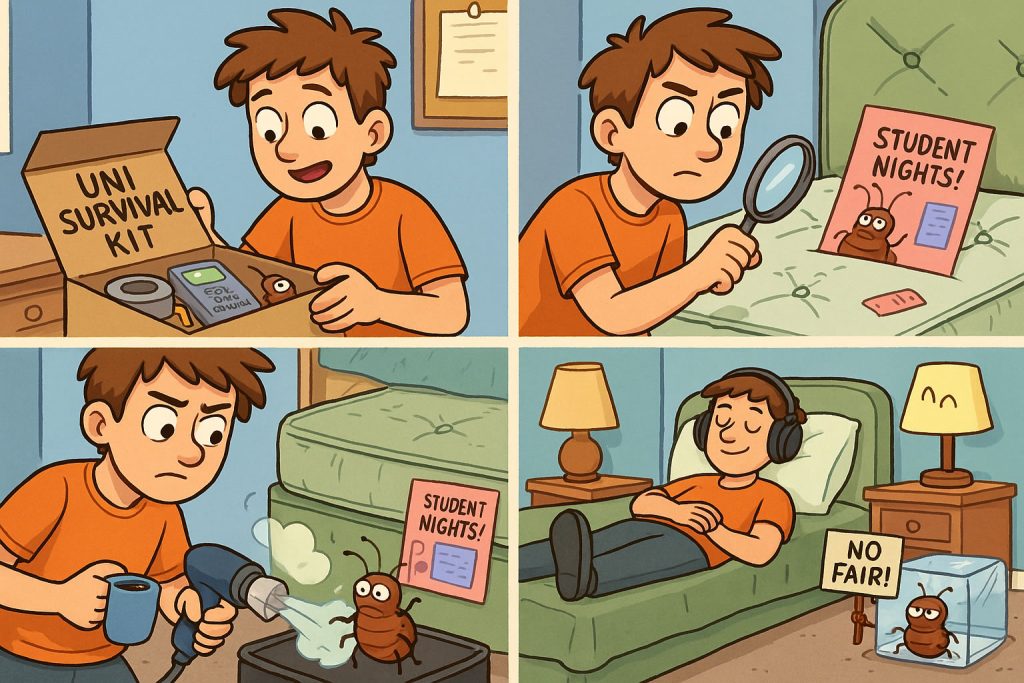
If you’re moving into student accommodation or already living in halls, shared housing, or private student lets, bed bugs probably aren’t something you expected to deal with. But they’re becoming more common in student areas across the UK, and knowing how to spot, prevent, and tackle them early can save you a lot of hassle. In this guide, you’ll find everything you need to know about how bed bugs end up in student properties, how to handle them without panic, and when it’s time to ask for professional help. Why Are Bed Bugs a Problem in Student Accommodation? Student housing is often the perfect environment for bed bugs to spread. You’ve got multiple people living close together, sometimes with high turnover between terms or shared furniture. That means lots of opportunities for these pests to hitch a ride and settle in. Students also tend to travel a lot, moving between family homes, university cities, and even travelling abroad during breaks. All of that movement increases the chances of picking up bed bugs — especially if you’re staying in hotels or hostels. And once you’ve got them, they’re good at hiding and very hard to get rid of. Unlike other pests, bed bugs aren’t attracted by mess or food. They feed on blood and hide during the day, which means even clean homes can get infested. And because they’re tiny and nocturnal, they often go unnoticed until the bites start. How to Spot Bed Bugs in Your Student Room Bed bugs are small — adults are about the size of an apple seed — and they’re usually reddish-brown. You might see them crawling across your mattress or furniture if the infestation is large. But early on, you’re more likely to notice the signs they leave behind. Look out for: Itchy bites in rows or clusters, often on your arms or legs Tiny blood spots on your sheets Small dark marks (their droppings) along mattress seams or baseboards A musty or sweet smell in the room if the infestation is bad If you suspect bed bugs, the first thing to do is not panic — and definitely don’t start moving your stuff around. That’s one of the quickest ways to spread them. What to Do If You Think You Have Bed Bugs If you’re in university-owned halls, report it straight away to the accommodation team. They should organise a pest inspection for you. For private rentals, you’ll need to contact your landlord or letting agent as soon as possible. Under the Housing Act, they may have a responsibility to deal with pest problems depending on the tenancy agreement. Don’t try to hide the issue or wait it out. Bed bugs don’t go away on their own. The longer you leave it, the harder (and more expensive) they are to get rid of. While you wait for inspection or treatment, you can: Avoid sleeping in other rooms or houses — you could carry the bugs with you Keep your room tidy so the pest team can inspect properly Bag up any clothes or bedding you’re not currently using Wash and tumble dry clothes and sheets on the hottest setting you can safely use Avoid spraying over-the-counter insecticides unless advised — they often don’t work well on bed bugs and could interfere with professional treatments. Who’s Responsible for Dealing With Bed Bugs? This depends on your rental situation. If you’re in halls, the university should usually arrange treatment. For private rentals, it depends on whether the infestation was already present or caused by the tenant’s actions. If you’ve just moved in and discover bed bugs within a few days, it’s likely they were already there. In that case, it’s generally the landlord’s responsibility to sort it. But if you’ve been there a while and brought in second-hand furniture or returned from a trip with bugs in your luggage, it might be classed as a tenant issue. That said, landlords often still arrange the treatment even if you’re technically at fault — because it protects their property. You might be asked to contribute to the cost, though. Check your tenancy agreement for any clauses around pest control. And always keep records of your communication, just in case. Can You Get Rid of Bed Bugs Yourself? In small cases, it’s possible. Washing clothes and bedding at 60°C, vacuuming regularly, and using a steam cleaner on your mattress and soft furnishings can help reduce numbers. But bed bugs hide well — inside furniture joints, under carpet edges, behind plug sockets — and DIY methods often miss these. If you live in shared housing, treating only your room rarely solves the issue. They’ll just move next door. That’s why professional treatment is usually the best route, especially if multiple rooms are involved. Professionals use stronger insecticides and sometimes heat treatments that raise room temperatures high enough to kill bugs and eggs. They also know where to look — which makes a big difference. Preventing Bed Bugs in Student Accommodation The best way to deal with bed bugs is to stop them arriving in the first place. Here’s how you can reduce the risk: Be careful when buying or accepting second-hand furniture — inspect it thoroughly Avoid picking up free sofas or mattresses left out on the street When travelling, check hotel beds and keep your suitcase off the floor Don’t bring your luggage straight onto your bed after a trip Wash your clothes after returning from holidays, especially if you stayed in shared accommodation Keep clutter around your bed to a minimum — it gives bed bugs more places to hide Encasements for your mattress and box spring can also help. They trap bed bugs inside so they can’t feed or escape, which eventually kills them off. Can Bed Bugs Affect Your Health or Studies? While bed bugs aren’t known to transmit disease, their bites can still cause a lot of distress. Some people react strongly to the bites, with swelling, itching, or allergic responses. Scratching can

Keeping Bed Bugs From Student Accommodation Read More »